

Jailed Iranian Terror Suspect Accused of Using Coded Prison Calls to Help Plot UK Airbase Attack
Prosecutors allege a jailed Kata'ib Hizballah commander used coded calls as associates prepared a plot against RAF Fairford
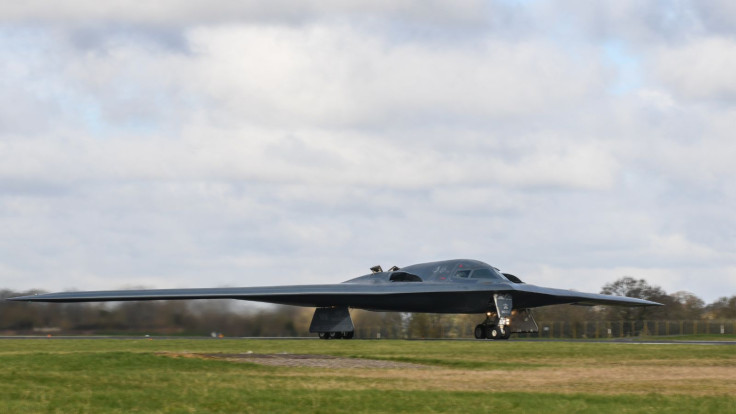
US federal prosecutors have charged three men over an alleged Iran-backed plot to attack RAF Fairford, a British airbase used by the US military, alleging that a jailed commander helped direct the operation from a Brooklyn prison cell using coded messages passed through relatives.
Mohammad Baqer Saad Dawood al-Saadi, 32, a dual Iranian-Iraqi national and alleged commander of Kata'ib Hizballah, was already in US custody on terrorism charges when he allegedly used phone calls with his mother and sister in Iraq to relay instructions to co-defendants Mohsen Mohajeri, 48, and Mohammad Ali al-Hassani, 35.
The eight-count superseding indictment, unsealed on Tuesday, accuses the three men of conspiring to provide material support to the Islamic Revolutionary Guard Corps (IRGC) and Kata'ib Hizballah, supporting terrorist attacks and plotting violence against US nationals and civilian targets, including an alleged bombing of a place of public use.
Coded Prison Communications
Prosecutors in the Southern District of New York allege Dawood al-Saadi used monitored calls at the Metropolitan Detention Center in Brooklyn to pass coded messages to relatives in Iraq.
Al-Saadi has been in federal custody since being arrested abroad on 1 May and transferred to the United States to face terrorism charges. While awaiting trial in New York, he allegedly used telephone and video calls with family members in Iraq to relay coded messages to his co-defendants.
Prosecutors allege that Al-Saadi used the word 'work' as coded language for terrorist activity when communicating with relatives. During a 30 July call, he allegedly asked his sister what was happening with their 'old work' and whether it had been cancelled or postponed.
In another telephone conversation on 24 September, prosecutors allege that Al-Saadi asked his family about the whereabouts of Al-Hassani, whom he referred to as 'Ali'. After being told that Ali had been transferred to the 'International Section', Al-Saadi allegedly instructed his relatives to 'give him [Al-Hassani] money so we can do it.'
The RAF Fairford Plot
The alleged plot targeted RAF Fairford in Gloucestershire, a base that had been used by US B-1 bombers in operations against Iran.
According to the indictment, Al-Hassani allegedly coordinated preparations from Iran, paying associates in Britain to conduct surveillance of RAF Fairford and arrange logistics for the operation. These preparations included procuring vans and barrels of fuel, researching chemical accelerants and purchasing metallic objects that prosecutors say could have been used as explosive shrapnel.
The vehicles were disguised as commercial vans belonging to fuel and swimming pool businesses, prosecutors said. On 26 September, three white vans were driven towards the base. A local farmer also reported suspicious activity involving vans near the base.
British authorities recovered the three vans in the early hours of 27 September and arrested their occupants. The vehicles carried commercial-style decals and some contained barrels of fuel. British prosecutors later told a court that police had found no viable explosive device in the vans.
Broader Network and Legal Proceedings
US officials linked the three defendants to the IRGC and Kata'ib Hizballah, an Iran-backed Iraqi militia, accusing them of involvement in nearly 20 attacks and attempted attacks across Europe and the United States, allegedly carried out on behalf of an Iran-aligned network and targeting Jewish communities and American interests.
These alleged incidents include a March explosive attack on the Bank of New York Mellon in Amsterdam, an April arson attack on a Jewish charity in London and a planned bombing of a Manhattan synagogue.
Al-Saadi has pleaded not guilty to the earlier charges, telling a court through an Arabic interpreter that he was a 'prisoner of war.' Iran has since denied involvement in the Fairford incident.
© Copyright IBTimes 2026. All rights reserved.