

Trump Border Wall Contractor Donated $1M to Campaign as Homan's Firm Received $186K, Democrats Say
Democrats seek an independent review of $7.5 billion in Big Bend border contracts, citing political ties and limited oversight
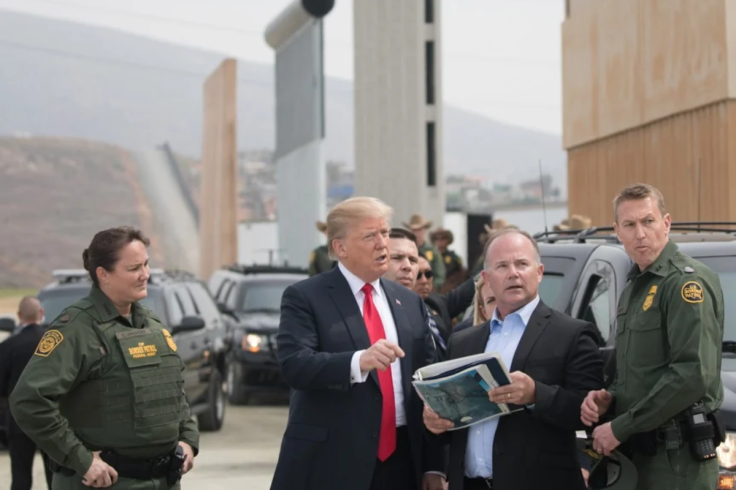
A group of 23 Democratic members of Congress is asking for an independent review of nearly $7.5 billion (£5.7 billion) in border infrastructure contracts awarded for the Big Bend region of Texas, arguing that political connections and limited procurement oversight warrant closer scrutiny.
The lawmakers point to two separate financial links. Barnard Construction chairman Tim Barnard and his wife donated about $1 million (£760,000) to a Trump campaign fundraising committee during the 2024 election cycle. Separately, Fisher Sand & Gravel reportedly paid as much as $186,000 (£141,000) to a consulting firm formerly associated with White House border czar Tom Homan.
In a 16 November letter led by Representative Veronica Escobar, the group asked the Department of Homeland Security's inspector general to examine whether political relationships influenced contractor selection and whether the projects' costs were justified. The allegations do not establish that any contract was improperly awarded.
Billions Awarded Under Exceptional Contracting Rules
The five contracts cover barriers and related infrastructure in the Big Bend Border Patrol Sector. They comprise $1 billion (£760 million) and $960.4 million (£730 million) for Barnard Construction; $1.2 billion (£912 million) and $2.6 billion (£1.98 billion) for Fisher Sand & Gravel; and $1.7 billion (£1.29 billion) for Southwest Valley Constructors.
The lawmakers say the Department of Homeland Security waived federal contracting requirements in October 2025 to accelerate construction, followed by waivers of environmental and historic preservation laws. They want the inspector general to assess whether expedited or non-competitive procurement was justified, whether the work assigned matched the original contracts, and whether officials communicated with companies about their selection.
The letter questions the need for extensive infrastructure in a remote region. It says the Big Bend Sector accounts for 26% of the southern border but recorded less than 1% of migrant apprehensions over the five-year period DHS used to justify the measures. The lawmakers argue that the disparity warrants scrutiny of the projects' operational value and cost-effectiveness.
Changing Plans Add to Transparency Concerns
The lawmakers also question what is being built. They say Customs and Border Protection's public maps and descriptions have changed repeatedly: a wall appeared, disappeared from maps, and later reappeared. In May, the agency said there would be no wall inside Big Bend National Park. About a week later, however, a $1.7 billion contract described work associated with a border wall in the park. CBP has since referred to roads, technology, and vehicle barriers.
The waivers also affect Big Bend Ranch State Park and hundreds of miles of privately owned land. The project's potential effects on public land and private property have made it contentious among local officials, residents, and conservation groups.
Supreme Court Decision Allows Work to Resume
Construction can now proceed while a separate legal challenge continues. On 9 November, the US Supreme Court lifted a lower court injunction that had temporarily halted work in the Big Bend area. The decision did not finally resolve whether the administration's legal waivers were lawful.
The administration has defended the project on border security grounds and has said Homan does not participate in the actual awarding of contracts. The Department of Homeland Security had not immediately responded to a request for comment on the Democrats' letter.
The lawmakers asked Inspector General Joseph Cuffari to provide a written response and an investigation timetable by 27 November, and want any findings made public. Their requested review would examine whether the procurement process protected taxpayers from waste or political influence, and whether the scale of construction is supported by evidence of need.
© Copyright IBTimes 2026. All rights reserved.