Trump's Aides Reveal Increasing Volatility and Erratic Behaviour as US Iran War Costs Soar to $37.5BN
Trump's aides say the President is growing more volatile over the Iran war as US casualties rise and costs hit $37.5 billion, with no clear exit in sight.

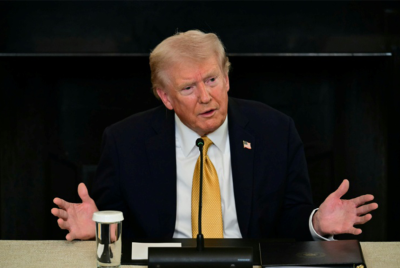
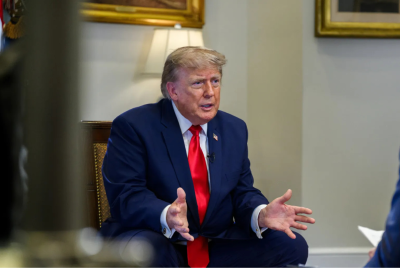
Donald Trump's closest aides have privately warned that the 80-year-old president is becoming more volatile and erratic over the Iran war, as US costs climb to $37.5 billion and public anger at the conflict deepens, according to the New York Times.
The concerns come as Trump struggles to find a way out of the war he launched with Israel on 28 February, amid rising casualties and no clear political 'win' in sight.
The pressure on the White House over a war that, domestically at least, is not going well. Prices at home are described as 'skyrocketing,' while polls cited by the same reporting suggest Americans are increasingly dissatisfied with the campaign against Iran.
Trump's promise to be a 'peace president' looks harder to sustain with each passing week of missile strikes and drone attacks, and his own staff are now briefing that the president's mood is darkening as he searches for what one aide called a 'face-saving' exit.
Aides Describe Donald Trump's Iran War Whiplash
Trump entered the conflict in late February in lockstep with Israel, selling it as a decisive strike that would neutralise Iran's capabilities. Instead, nearly five months on, he is trapped between his own maximalist rhetoric and the realities of an open‑ended regional war.
Trump is more 'erratic' than usual, cycling through options and then reversing himself, sometimes within hours. One day, he reportedly leans into the idea of pummelling Iran until it sues for peace. The next day, he veers back towards a deal, insisting Tehran is desperate to negotiate but 'not ready yet.'
The White House was asked to respond to these characterisations and did not immediately comment. That silence leaves the public reliant on anonymous aides' accounts, which may themselves be coloured by internal feuds and anxiety about being blamed for a conflict sliding off the rails. Nothing about Trump's private mood can be independently verified, so all such descriptions should be treated with a degree of caution.
The president's own words, however, are on the record. On Friday, asked about his strategy for ending the Iran war, Trump outlined what he called a 'military exit' that did not sound like an exit at all.
'There's a military exit where we just keep going just the way we are, and we can even make it a heavier dose, and it's knocking out everything they have,' he said.
Almost in the same breath, he pivoted to say the 'smarter strategy' would be to strike a deal, repeating his claim that Iran wants to negotiate. 'I just don't think they're ready yet,' Trump said. 'But they do want to make a deal.'
Casualties Mount as Donald Trump Talks of Deals
Pertinently, Trump has been insisting for months that the US is engaged in some form of talks with Iran even as the fighting continues. Last month, he announced a memorandum of understanding to keep negotiations going and, in a 14 June interview with the New York Times, declared: 'I believe they have had enough.' There is still no publicly disclosed framework for a ceasefire or settlement.
On the ground, the war looks anything but contained. Four American service members were killed last week alone. Army 1st Lt Tyler James Feehan, 25, of Hawaii, Sgt Angel S Rampersad, 28, of New York, and Pvt Isabella Gonzales, 19, of Texas, died in Jordan in Iranian ballistic missile and drone attacks. Sgt Michael Emmanuel Swinton, 30, of North Carolina, died in Iraq during the controlled detonation of an Iranian drone.
Those deaths pushed the US toll to 18, although a Pentagon website set up to track casualties still lists only 14. The discrepancy has not been publicly explained, and it is the kind of detail that fuels suspicion that the full scale of the war is being softened for domestic consumption.
Families of the dead have not yet become a visible political force in Washington, but that could change if the numbers creep higher while Trump continues to oscillate between escalation and deal‑making.
Soaring Iran War Costs Box In Donald Trump
The financial ledger is no prettier. Defence Secretary Pete Hegseth told Congress this week that the war has already cost $37.5 billion. In the same appearance, he requested a further $67 billion to sustain operations across the Middle East.
Those figures are not disputed in the available reporting, but they come with no long‑term estimate of where the final bill might land. Nor is it clear what, exactly, counts as 'Iran war' spending in a region where US military budgets are notoriously opaque. Lawmakers inclined to support Trump on foreign policy may still baulk at signing off another tens of billions for what increasingly looks like a war of choice.
Trump, the calculus is brutally simple. He can double down, as he suggested with his 'heavier dose' line, and risk deeper entanglement and more American lives lost. Or he can push harder for a negotiated outcome that he can sell as victory, while hoping Iran is, in fact, as eager to talk as he keeps insisting.
So far, neither path has produced the decisive moment Trump appears to crave, and his shifting tone has left allies, adversaries and his own staff guessing which version of the president will turn up on any given day.
© Copyright IBTimes 2026. All rights reserved.
- Recommended For You