

'He Started a War, and Now He Is Losing It': Strategist Predicts Massive November Punishment for Trump
Strategist warns of electoral consequences as Trump's Iran strategy falters.
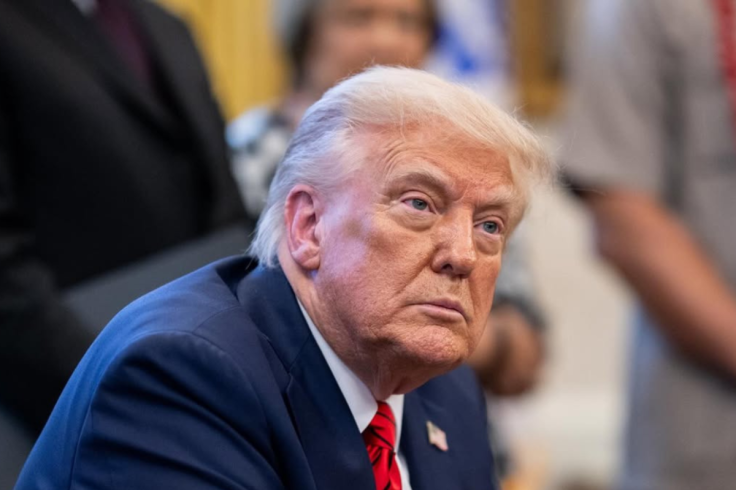
President Donald Trump is facing a growing political backlash over Iran, with strategist Chai Komanduri telling Ari Melber on Thursday that the president has 'started a war' and is now 'losing it.' The warning aired as Melber framed the fallout as a November problem for Trump, with Komanduri predicting voters will punish him at the ballot box.
Trump Iran Fallout Is Turning Political
The news came after a series of developments with Ari Melber, where the host said Trump had promised peace but instead left the Middle East in deeper turmoil. The programme's latest episode, uploaded on 9 July 2026, said the ceasefire in Iran was 'all but over' and that each side was attacking the other again.
Komanduri did not mince his words. Asked whether Trump had lost the war by his own standards, he replied, 'He started a war, and now he is losing it.' He went on to describe the president as 'absolutely showing an inability' to carry out the job of the presidency and to steer foreign policy in a smart or competent way.

That line, blunt as it was, landed because it touched the one thing Trump has always sold hardest, the idea that he alone can make chaos look tidy. Instead, according to the discussion on Melber's show, the Iran conflict has become a messier political liability, not a victory lap.
Komanduri called it 'a foreign policy disaster like I've never really seen in recent years,' and said it was 'an absolute disgrace.'
What Komanduri Said On Trump Iran
Melber introduced the exchange by pointing to the old idea that leaders can win a war and still lose the peace. He then asked whether Trump had now managed to lose both the peace and the ceasefire. The answer from Komanduri was instant, and pretty savage in its simplicity.
Komanduri argued that Trump had told supporters his approach would end overseas wars and bring 'so much winning,' but instead had dragged the country into 'foreign wars' and 'so much losing.'
He said voters would punish Trump in November, which is the kind of line political strategists toss out often, though this one carries more bite because it is tied to a live foreign policy dispute rather than a generic campaign gripe.

The episode also folded in broader criticism of Trump's record, including his handling of the ceasefire and the perception, at least among some of his own voters, that the war in Iran had become both costly and hard to explain.
Melber's programme said on its transcript that even some Trump supporters were criticising what they saw as an obviously failed war, with concerns that the conflict could affect inflation and broader economic stability.
Trump's political strength has long rested on a promise of control. When the argument shifts to uncertainty, spiralling conflict and mixed messaging, the whole pitch starts to look a bit s**. That is especially true when the criticism comes from a strategist speaking on national television rather than from a partisan rally or an online pile-on.
November Pressure Builds On Trump Iran
A broader coverage around the segment suggested the Iran issue is landing alongside other headaches for the White House, including legal setbacks, economic anxiety and renewed scrutiny of Trump's wider agenda. The episode description described the situation as part of a wider political squeeze on the president, with the war in Iran, the Epstein scandal and high prices all said to be engulfing the administration.
That is the political backdrop Komanduri was talking over. He did not present Trump as merely unlucky or caught in events beyond his control, but as someone who made a reckless bet and is now paying for it in public.
Melber's framing made the same point in more careful language, saying Trump had tried to create peace with his actions but instead brought the war roaring back.

There is also a sharper electoral angle here. With midterm politics already looming large, Komanduri's prediction was not just that Trump looks weakened in the moment, but that the damage could carry into November if voters decide the war reflects badly on his judgement.
Whether that proves true will depend on how the conflict develops, how the White House explains it, and whether Trump can convince sceptical voters that this was ever the plan. Right now, he is not exactly making that easy.
© Copyright IBTimes 2026. All rights reserved.