Trump DNI Nominee Jay Clayton Refuses to Say Biden Won 2020 Election in Heated Senate Hearing
Jay Clayton, Trump's DNI nominee, declines to affirm Biden's 2020 victory during a heated Senate hearing, raising concerns over election integrity and his qualifications.
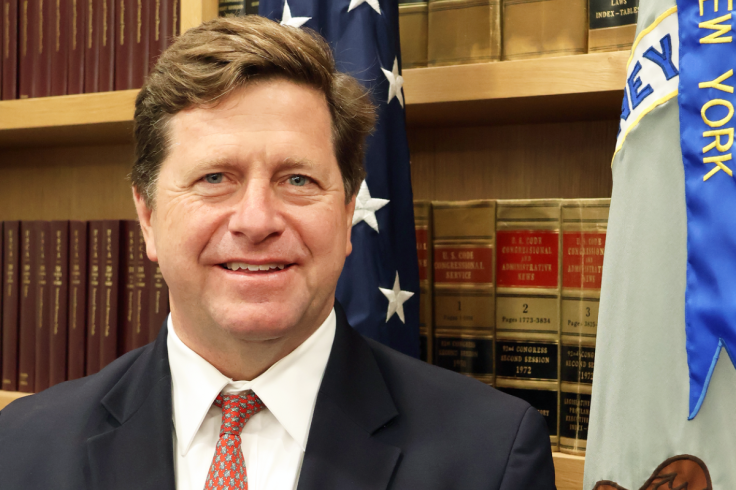
Jay Clayton, President Donald Trump's nominee to be director of national intelligence, refused on Wednesday to explicitly say that Joe Biden won the 2020 election during a contentious Senate Intelligence Committee confirmation hearing in Washington, D.C., where senators also pressed him about subpoenas of New York Times journalists and his awareness of a raid on a Georgia election office.
Clayton, a former Securities and Exchange Commission chair who now serves as U.S. attorney for the Southern District of New York was nominated more than a month after Mr. Trump announced his pick and weeks after the president abruptly postponed an earlier hearing; the confirmation process has been complicated by the interim appointment of Bill Pulte and by partisan disputes over surveillance law renewals and election integrity.
Hearing Focused On 2020 Election Claims
Democrats repeatedly asked Clayton to acknowledge who won in 2020, but he declined to say the word 'won,' instead telling senators, 'I am not an election denier. Joe Biden was certified,' a formulation that failed to satisfy critics and prompted sharp exchanges on the panel.
Senators, including Jon Ossoff of Georgia, pressed him on whether the office of national intelligence should have any role in domestic law enforcement actions at election facilities after Ossoff said he had learned Clayton only recently knew of Tulsi Gabbard's presence at a raid of a Fulton County election office.
Clayton said he learned of Gabbard's involvement from Ossoff during a private meeting this week.
Senator Ossoff told the nominee his answers 'lack credibility,' and independent Senator Angus King said that telling the committee Biden was 'certified' was not the same as answering who actually won.
Clayton was also grilled over subpoenas issued last week to reporters at The New York Times, which the newspaper said were served after its reporting on security concerns involving a Qatari-donated Air Force One. Senators asked when and why those subpoenas were authorised and whether White House officials played any role.
He also declined to discuss investigative specifics but said the subpoenas relate to an 'ongoing national security investigation' and that he had consulted career prosecutors before issuing them, adding that he was 'confident' procedures to protect the First Amendment were followed. Democrats including Kirsten Gillibrand expressed deep concern about how the process unfolded.
Scrutiny Of Clayton's Past Remarks And Experience
Lawmakers pushed back on Clayton's earlier comments about election integrity, where he said America had 'a deep problem' with voting and that the audit trail in some places was inadequate.
When asked whether voter fraud was a problem, Clayton said he did not believe the question could be answered definitively without better processes. Senators also noted Clayton's limited background in intelligence work his career is largely in corporate law and prosecutions a point that underlined concerns about his fitness to oversee 18 intelligence agencies and sensitive national secrets if confirmed.
The nomination has been entangled with wider White House manoeuvring. Mr. Trump initially named Bill Pulte as acting DNI after Tulsi Gabbard announced her resignation in May; Pulte's tenure and his dismissal of dozens of intelligence officials prompted bipartisan alarm and helped prompt Trump to tap Clayton, whose confirmation hearing was delayed after Mr.Trump directed him not to appear in June.
Republicans currently control the Senate, and despite Democratic criticism, Clayton is still widely expected to be confirmed after the committee votes, which is due next week; if advanced, the nomination will go to the full Senate.
What remains unresolved is whether Clayton's refusal to plainly acknowledge the outcome of the 2020 election will be treated as a disqualifying posture by moderate Republicans, or whether party control in the Senate will render those objections moot.
Senators on both sides repeatedly told Clayton they wanted clarity; he replied in part and skirted in part an outcome that left Democrats calling some answers 'disqualifying' and Republicans warning against reading the exchanges as decisive.
© Copyright IBTimes 2026. All rights reserved.
- Recommended For You