

'Cancer Inside The System': Anne Applebaum Warns Election Threat Will Outlast Trump
Election denialism poses a long-term challenge to American democratic institutions, warns historian Anne Applebaum.
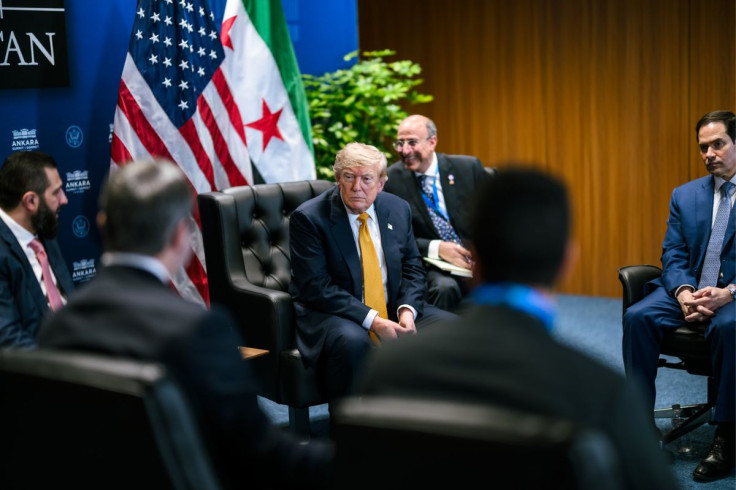
Historian and author Anne Applebaum has warned that the greatest threat to American democracy extends beyond Donald Trump, arguing that election denial has become embedded within political institutions and could continue shaping US elections long after the president leaves the political stage.
Speaking on MSNBC's 'The Moment with Katy Tur,' Applebaum said Trump's continued insistence that the 2020 election was stolen should not be viewed as an isolated grievance. Instead, she argued it reflects a broader movement involving elected officials, media figures and political activists who continue to challenge confidence in the electoral system.
Her warning comes as disputes over redistricting, election administration and voting rules intensify across several states ahead of the next election cycle, keeping concerns about democratic institutions at the centre of American politics.
A Warning Beyond Trump
When Tur asked whether Trump's continued focus on the 2020 election was more backward-looking than forward-looking, Applebaum said he remains determined to prove he won. But she argued that focusing only on Trump risks overlooking the wider movement that has grown around his claims.
'It's really important that Americans start paying attention to this now, because this is a kind of cancer that's inside the system. And unless we face up to it now and block it now, I think we're going to be dealing with it for a very long time,' she said.
Applebaum argued that the movement now extends beyond one political figure. In her view, it includes people across government, conservative media and online political networks who increasingly portray political opponents not simply as rivals but as existential threats.
Rather than describing a temporary political dispute, she said election denial has become embedded in institutions in ways that could outlast any individual presidency.
State Battles Intensify
Applebaum linked those concerns to political battles already unfolding in the states. Redistricting disputes are intensifying across the country, with Texas and California among the states expected to play central roles in efforts to redraw congressional maps ahead of the midterm elections.
She argued those fights illustrate how election disputes are increasingly playing out through legislatures, courts and state governments rather than solely through presidential campaigns. In Applebaum's view, the result is a slower but more enduring struggle over the rules governing future elections.
Election Deniers Gain Influence
Applebaum also pointed to the growing number of election deniers now serving in positions capable of influencing future elections. Research by States United has documented candidates and officeholders who rejected the legitimacy of the 2020 election later winning or seeking roles connected to election administration and state government.
Applebaum noted that development makes the issue more consequential than continued debate over the last presidential election. Instead, she said it raises broader questions about how future elections could be overseen by officials who continue to dispute past results.
For critics of election denial, that shift represents one of the movement's most enduring consequences, moving the issue from campaign rhetoric into the institutions responsible for administering elections.
A Broader Democratic Test
Applebaum's warning reflects themes that have defined much of her work on democratic decline and authoritarianism. Across her books and public appearances, she has argued that democratic institutions are more often weakened gradually than dismantled through a single dramatic event. In that framework, declining public trust, institutional capture and growing political polarisation become long-term pressures rather than isolated crises.
Her comments on MSNBC echoed that broader analysis, framing election denial as part of a wider institutional challenge rather than simply a reaction to one disputed election.
The Debate Is Far From Over
Applebaum's interview comes as disputes over election administration, voting laws and congressional maps continue to shape political debate across the United States. Supporters of Trump continue to argue that changes to election procedures are necessary, while critics maintain that repeated false claims about the 2020 election have undermined public confidence in democratic institutions.
For Applebaum, the central issue is no longer whether Trump continues to challenge the last presidential election. It is whether the movement built around those claims continues influencing the institutions responsible for administering the next one.
© Copyright IBTimes 2026. All rights reserved.