

Trump's Own ICE Officials Say the Arrest Quotas They Signed Up For Are Turning Operations Into Chaos
Senior ICE officials say Donald Trump's push for 2,000 immigration arrests a day is creating 'toxic' conditions and contributing to deadly shootings in Houston, Maine and Minnesota.
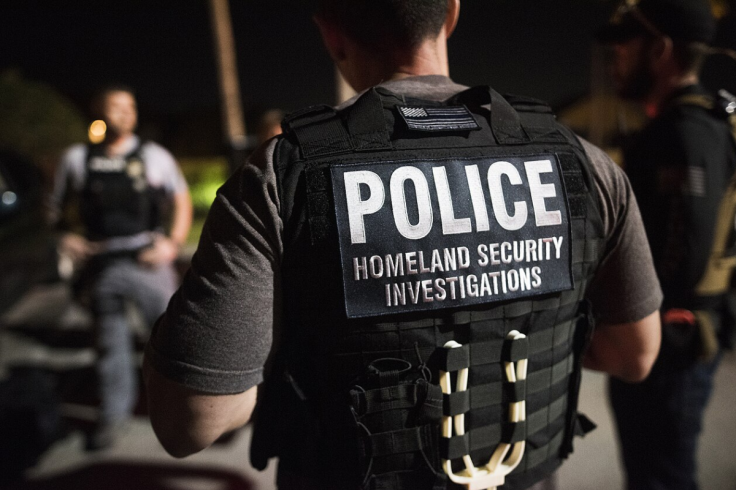
Donald Trump's drive for mass immigration arrests is fuelling chaos and deadly confrontations inside the United States, according to senior Immigration and Customs Enforcement officials who say agents are being ordered to hit punishing daily quotas on the streets. The internal warnings follow two fatal ICE shootings within a week this month, in Houston, Texas, and Biddeford, Maine.
While supporters of the President's second-term immigration agenda describe the surge as a long-overdue enforcement crackdown, those tasked with executing the policy claim the system is buckling under political pressure. As the death toll mounts, community advocates and federal staff are now questioning whether the relentless demand for high-volume detentions is distorting judgement in the field and turning routine operations into life-or-death scenarios.
The unease burst into public view after the killing of 52-year-old Mexican immigrant and father, Lorenzo Salgado Araujo, on 7 July. He was shot dead by ICE agents in Houston while driving to work. Within days, a 26-year-old Colombian man, identified by a neighbour as Joan Sebastian Guerrero, was killed during an ICE operation roughly 2,000 miles away in Biddeford. Both operations, officials now concede, were aimed at other individuals.
ICE Officials Blame Donald Trump's Arrest Targets For 'Toxic' Conditions

Speaking to PunchUp, the senior ICE official quoted the investigative unit as saying the agency had effectively returned to quotas, with a 'demand for 2,000 arrests a day.' According to this official, leaders are being sacked if their teams do not produce the numbers the Trump White House expects.
'They are being forced to have quotas again. They are being pushed for numbers and quotas,' the official said, describing agents being run 'to the breaking point'. Leave is being cancelled, workdays are stretching, and officers are being sent into the field even when managers sound the alarm about staffing and safety, he alleged.
'They are cancelling leave. Stretching the field thin. Pushing them to extremes. It's a very bad, toxic environment. Morale is horrible,' the official added. The same official said that for a recent operation, 'eighty per cent of the office has to be in the field', including on the 4 July holiday. 'It's not sustainable. And it's not safe.'
The Trump administration has not publicly addressed the internal criticism. Nothing in these accounts has been independently verified by official documents, and there has been no detailed rebuttal from the White House or the Department of Homeland Security, so the specific quota figure and internal threats to managers should be treated with caution pending further confirmation.
What is not in dispute is that Trump has demanded visible, large-scale enforcement, and that traffic stops have become a major tool. 'Traffic stops are the only way to get them,' the ICE official said bluntly. 'But every stop, folks are running. Or ramming.' In their view, the tactics are escalating the risk of something going badly wrong at speed, often in crowded public spaces.
The same official went as far as to say they would temporarily halt many of the current operations. 'I would shut down ops until we got a handle on [things],' they said. 'Not doing traffic stops. Not blocking the vehicles. If they run. They run. Find them later. Don't force a bad position.'

Deadly Encounters Deepen Scrutiny Of Donald Trump's Enforcement Agenda
The two July shootings have amplified long-standing concerns about how Trump's approach plays out on the ground. In Houston, the Department of Homeland Security initially claimed Salgado Araujo had 'weaponised his vehicle' during an encounter with agents. That language suggested an imminent threat. Yet ICE leadership later acknowledged he was not the original target of the operation, raising uncomfortable questions about how and why he ended up dead in the first place.
Compounding those doubts, none of the agents involved in the Houston shooting was wearing a body camera. In an era when police forces across the US are under pressure to record serious encounters, that omission has left investigators and the public reliant on conflicting narratives and sparse official statements.
Agents were reportedly looking for another person when they came across Guerrero. Witnesses said he was driving when officers moved in, and photographs from the scene showed multiple bullet holes clustered in his windscreen. DHS has released only the barest details, stating that an officer opened fire after 'fearing for public safety.' No body-camera footage has been cited there either.
These incidents do not stand alone. Earlier this year, ICE agents shot and killed two Minnesota residents, 37-year-old mother of three Renee Good and 37-year-old intensive care nurse Alex Pretti. In both Minnesota cases, the administration's early descriptions of what happened were challenged by witnesses and some local officials who questioned whether the government's versions matched the evidence.
Taken together, the four deaths have intensified demands for transparency and accountability as Trump's immigration machine keeps grinding forward. Civil liberties lawyers, community advocates and, increasingly, people inside ICE itself are asking whether the political imperative to deliver big arrest numbers is distorting judgement in the field.
For the senior officials now speaking out, the pattern looks less like a string of isolated tragedies and more like a system under political orders that reward risk-taking and punish restraint. As the investigation into these deaths continues, the political imperative to deliver record-breaking numbers remains the defining feature of the immigration crackdown. Whether the administration will adjust its strategy in the face of these fatal outcomes remains the central question for the Department of Homeland Security.
© Copyright IBTimes 2026. All rights reserved.