'A Real Warning Sign': Supreme Court Sends Trump a 'Troubling' 5-4 Signal on Birthright Citizenship
Even in defeat at the Supreme Court, Donald Trump is finding out just how many justices are still prepared to meet him halfway.
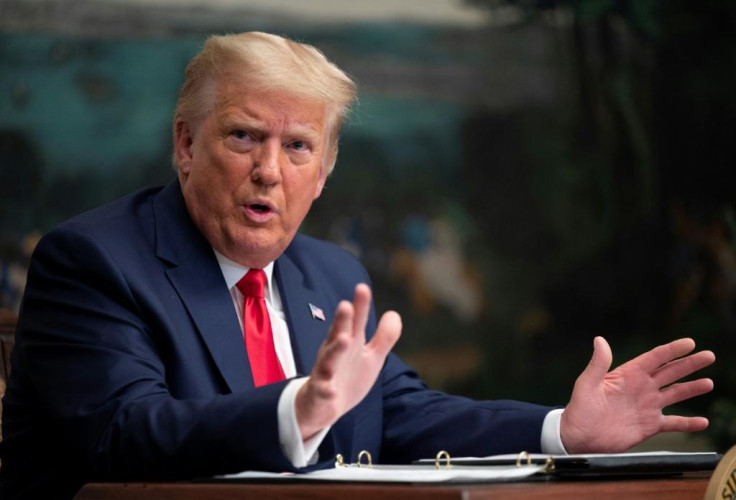
The US Supreme Court sent a 'troubling' signal to Donald Trump in Washington this week, according to a prominent legal analyst, after a closely divided ruling on birthright citizenship exposed how far nearly half the justices were prepared to entertain his immigration agenda even as they struck down his executive order.
The decision concerned Trump's effort to limit birthright citizenship, a principle rooted in the Fourteenth Amendment that automatically grants US citizenship to almost everyone born on American soil. Trump and his allies had invested significant political capital in challenging that long‑settled interpretation, arguing the Constitution allowed the government to narrow who counts as a citizen by birth. The court ultimately rejected his position but in a much narrower split than many legal observers had anticipated.
Quinta Jurecic, a staff writer at The Atlantic who specialises in constitutional law and the courts, said she was genuinely taken aback by how the justices lined up. Speaking to colleague Will Gotsegen in a recent interview, she argued that the latest opinions suggest the court remains remarkably open to Trump's view of executive power, even when his legal claims appear to collide head‑on with the text of the Constitution.

Supreme Court's Donald Trump Birthright Ruling Was Closer Than Expected
The Supreme Court issued a ruling that, on the surface, looked like a straightforward loss for Trump. The justices rejected his executive order targeting birthright citizenship, which had attempted to reinterpret the Fourteenth Amendment so that certain children born in the United States would no longer automatically be considered citizens.
Jurecic pointed out that the headline result masked a more unsettling underlying picture. 'What shocked me is that that ruling was, depending on how you count, 6–3 on the question of whether the executive order could stand, or 5–4 on the question of whether the Fourteenth Amendment requires a broad understanding of birthright citizenship,' she said. 'Very few people had thought that it would be anywhere near that close. I certainly did not.'
Those margins matter. On the narrow question of the executive order itself, a clear majority of the court was prepared to say Trump had overstepped. But on the deeper constitutional question whether the Fourteenth Amendment really does require the broad, historically accepted understanding of birthright citizenship the court split 5–4, according to Jurecic's reading.
That meant four justices were willing to treat what many scholars consider settled constitutional language as open to revision in line with Trump's policy goals. For a provision that has framed American citizenship since the Reconstruction era, that is no small thing.
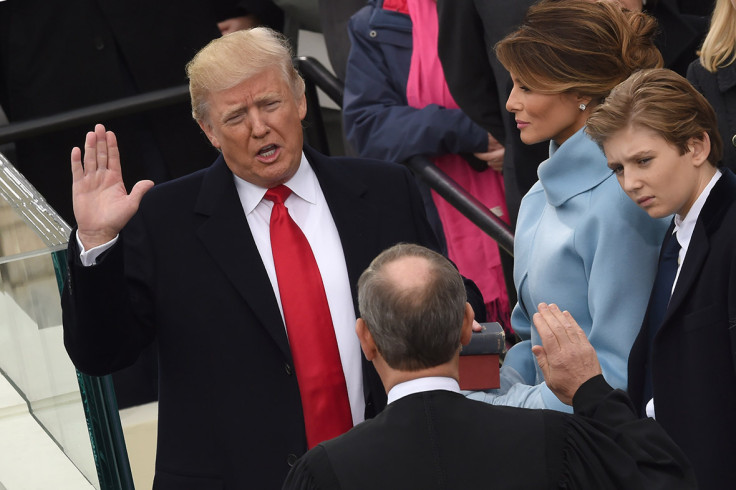
Gorsuch, Kavanaugh and the Court's Deference to Donald Trump
The most jarring part of the decision, in Jurecic's view, was who ended up on the more Trump‑friendly side of the argument. She noted that Justices Neil Gorsuch and Brett Kavanaugh had given little, if any, sign during oral arguments that they saw birthright citizenship as outside the plain text of the Fourteenth Amendment. Nothing in their questioning had suggested they were hunting for ambiguity in a clause that states that 'all persons born or naturalized in the United States' are citizens.
Yet when their written opinions landed, the tone was very different. Jurecic said their reasoning read less like a cautious, text‑bound interpretation and more like a willingness to stretch the law to accommodate Trump's agenda.
In her words, their positions looked like a sign that 'the Court is willing to give Trump a pass' on almost whatever he wants. That is a sharp charge, but it speaks to a broader unease that the Trump era has left a lasting imprint on how the Supreme Court handles questions of presidential power, especially when those questions intersect with hot‑button issues such as immigration.
The justices did not issue a collective public defence of their reasoning beyond the opinions themselves, as is standard. There was no formal comment from the court in response to Jurecic's criticism. As with most Supreme Court decisions, the opinions will have to stand as their own justification, and those outside the court are left to interpret the signals.
Jurecic did not mince words about what those signals implied. 'There is no ambiguity about what the Fourteenth Amendment says,' she argued, adding that the administration's ability to persuade four justices that 'there is some ambiguity there is troubling.' For her, this was not just an academic disagreement over interpretive style but 'a real warning sign for the influence of Trump and the far right on the Court.'
Whether that influence will shape future cases remains an open question. What is clear from this round, in Jurecic's telling, is that Trump's legal theories continue to find a surprisingly receptive audience among almost half of the justices, even when the final result goes against him. For critics of the President's approach to constitutional limits, that is hardly reassurance. It is a reminder that the next clash between Trump and the Supreme Court may come down to a single vote.
© Copyright IBTimes 2026. All rights reserved.
- Recommended For You