

'Outrageous': Senator Slams Elon Musk for Paying Same Social Security Tax as an 'Electrician'
Supporters and critics of Musk are now using his vast wealth, and the quirks of the payroll tax system, as a test case for broader wealth tax reforms.
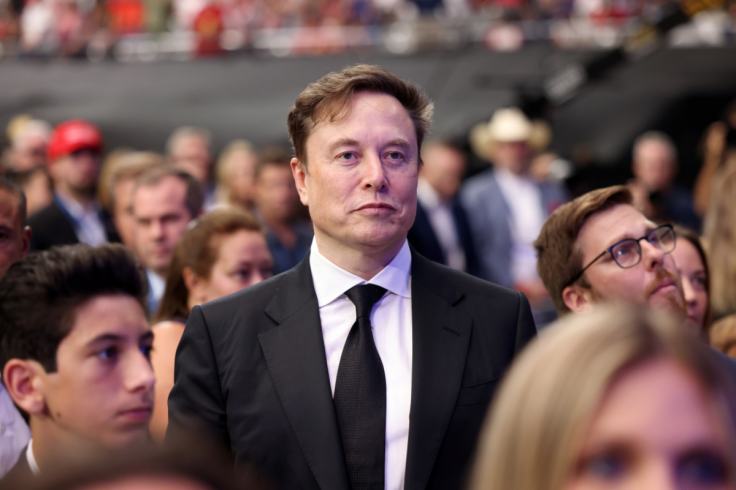
Senator Patty Murray has ignited a fresh political firestorm, accusing Elon Musk of contributing no more to the US Social Security system than a well-paid 'electrician'. The Washington Democrat's critique of the world's first trillionaire highlights the widening chasm in the American tax code, where payroll levies stop for high earners long before they reach the stratosphere of billionaire wealth.
Murray took to X on Sunday to label the situation 'outrageous', arguing that Musk's contribution to the federal programme in 2026 matches that of a worker earning approximately $185,000 a year. Her comments have reopened a long-standing debate in Washington regarding how America taxes extreme wealth and whether current laws adequately capture the fortunes of the super-rich.
Investor Ross Gerber rushed to the Tesla and SpaceX chief's defence, insisting Social Security is 'not a tax' in the way Murray suggests.
Senator Patty Murray Uses Elon Musk To Attack Social Security Tax Cap
In her weekend post, Senator Patty Murray said 'Elon Musk, the literal richest man on the planet, the world's first TRILLIONAIRE, is paying the SAME amount in Social Security taxes as an electrician who makes $185,000 a year.'
She called that outcome 'outrageous' and used the moment to push a familiar policy demand, writing that 'we need to scrap the cap so the richest people in the world pay their fair share.'
Her argument echoes one made earlier in June by Senator Bernie Sanders. After Musk's net worth jumped to an estimated $1.2 trillion on 12 June when SpaceX floated publicly at a valuation above $2 trillion, Sanders said on X that 'today, Elon Musk, a trillionaire, pays the same amount into Social Security as someone making $184,500.'
He called the situation 'absurd' and urged Congress to change the law.
Elon Musk, the literal richest man on the planet–the world’s first TRILLIONAIRE–is paying the SAME amount in Social Security taxes as an electrician who makes $185,000 a year.
— Senator Patty Murray (@PattyMurray) July 5, 2026
That's outrageous.
We need to scrap the cap so the richest people in the world pay their fair…
Sanders' office has linked that criticism directly to his Social Security Expansion Act.
According to his spokesperson, Jeremy Slevin, the bill would remove the cap for wages above $250,000 and extend the payroll tax to some forms of income that currently escape it, including capital gains.
Ross Gerber Pushes Back On Patty Murray Over Musk Social Security Claim
Ross Gerber, an outspoken Tesla investor and long‑time Musk supporter, was not having it. Responding on X, he argued that Musk's treatment under Social Security is symmetrical, not special.
'He also gets the same retirement amount' as the hypothetical electrician, Gerber wrote, insisting that Social Security is 'a savings plan administered by the government. NOT A TAX.'
To be precise, the US Internal Revenue Service sets the Social Security tax rate at 6.2% for employees and another 6.2% for employers.
Self‑employed people must shoulder both sides, so 12.4% in total.
But in 2026, that rate only applies to the first $184,500 of wages. After that threshold, contributions stop.
He also gets the same retirement amount as this well paid electrician. It's a savings plan administered by the government. NOT A TAX.
— Ross Gerber (@GerberKawasaki) July 5, 2026
That means the maximum Social Security liability for a regular employee in 2026 is $11,439, assuming they earn at least the cap.
For a self‑employed person, the maximum jumps to $22,878, because they pay the full 12.4%.
Someone earning $200,000 and someone earning $2 million pay exactly the same amount into Social Security if their income is treated as wages. Above the cap, the meter simply switches off.
Labour economist Teresa Ghilarducci, of the New School for Social Research, summed up the oddity in an email cited in public analysis of Sanders' claim: 'That maximum is identical for a worker earning $184,500 and for the richest person in the country.'
How Elon Musk's Income Sidesteps Social Security Tax
The catch, and it is an important one, is that Social Security only bites on wage income. Bonuses and stock‑based compensation, such as options or restricted stock units, are included, but only when they are treated as wages and once they vest or are exercised.
Non‑wage income, including capital gains from investments, is outside the net.
Jessica Riedl, a budget and tax fellow, notes that this distinction is crucial for ultra‑wealthy figures like Musk. His fortune is tied almost entirely to shares in Tesla and SpaceX, along with holdings in Starlink, xAI, Neuralink, and The Boring Company.
When the value of those stakes increases, as it did dramatically when SpaceX listed, his net worth soars. Yet those unrealised gains do not incur Social Security tax.
Today, Elon Musk, a trillionaire, pays the same amount into Social Security as someone making $184,500.
— Sen. Bernie Sanders (@SenSanders) June 12, 2026
If we end that absurdity and lift the cap on taxable income, we can make Social Security solvent for 75 years and expand benefits by $2,400. My Social Security bill does that.
If Musk sells stock, the proceeds are generally treated as capital gains rather than wages, so they still escape the payroll tax. When he borrows against his holdings, which ultra‑rich individuals often do to access cash without selling assets, that lending is not taxed as income either.
Public filings offer only flashes of clarity. Musk takes no salary from Tesla, so he owes no payroll taxes there.
A Securities and Exchange Commission document filed before the SpaceX listing showed he was paid $54,080 in salary by that company, which is linked to California's minimum wage for exempt employees.
His other firms are private and disclose no details on his pay.
One thing we do know is that Musk's largest interactions with the tax system have come through exercising stock options. In 2021, he exercised a vast block of options from a 2012 Tesla pay package, generating more than $20 billion of taxable income.
His overall tax bill for that year has been estimated at more than $11 billion.
Because of the Social Security cap, however, his payroll contribution would have been around $8,853, the same as anyone who simply earned that year's maximum taxable wage of $142,800.
Ghilarducci cautions that there is an even more uncomfortable wrinkle for critics: in some years, Musk may actually pay less into Social Security than a high earner on a traditional salary.
If most of his compensation comes in forms that do not count as wages for payroll purposes, 'his wage income can be near zero,' she said, adding that in such a year 'he pays less into Social Security than a salaried worker earning $184,500, possibly far less.'
Wealth Tax Fight Flares Around Musk Social Security Debate
The renewed focus on Elon Musk's Social Security contributions lands in the middle of a broader political fight over taxing the ultra‑rich.
Senator Elizabeth Warren has argued that 'wealth is funnelled to the wealthy', citing cases where, in her view, billionaires face lighter effective tax burdens than nurses or teachers.
State‑level plans have become part of the same argument. In California, Governor Gavin Newsom has backed a proposed wealth levy that would charge a one‑time 5% tax on individuals worth more than $1 billion
Musk, who left California for Texas, has repeatedly mocked that proposal online, posting a meme about the policy and telling Newsom's team to 'tax trillionaires even more' with evident sarcasm.
Musk's own line is that he is already paying more than anyone should reasonably expect. 'I have paid over 10B in taxes in a single year,' he said in an earlier social media exchange with critics calling for a billionaire wealth tax.
The argument rests on how US payroll taxes are structured. Social Security contributions are only charged on wages up to a fixed annual ceiling, often called the 'cap.'
Above that level, higher earnings are not subject to Social Security tax, and future benefits do not increase either. Lawmakers on the left, including Murray and Senator Bernie Sanders, have turned that quirk of the system into a symbol of what they see as a tilted tax code in the age of trillionaires.
© Copyright IBTimes 2026. All rights reserved.