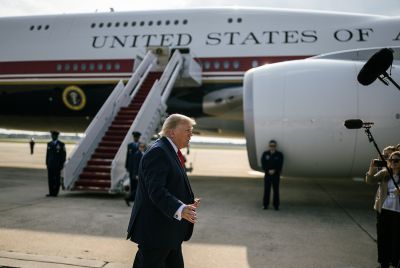
Cardiologists Sound Alarm on Donald Trump's 'Too Good to Be True' Medical Report
Experts question the absence of key cardiac metrics in Trump's latest health report.

Donald Trump's latest medical report, released after a three-hour examination at Walter Reed National Military Medical Center and authored by Navy Capt. Sean Barbabella, has drawn scrutiny from cardiologists who say its glowing conclusions are not matched by the level of clinical detail typically expected in such assessments.
The report states that the 79-year-old US president 'remains in excellent health,' citing strong cardiac, pulmonary and neurological function, alongside a perfect cognitive score and notably low cholesterol levels. It also includes an AI-based estimate suggesting Trump's heart is 14 years younger than his chronological age, a claim that quickly became a focal point of scepticism among specialists.
Presidential medical summaries have long walked a line between transparency and brevity, but physicians reviewing Trump's latest disclosure say this one leans unusually far towards reassurance without evidence. Several told US outlets that key diagnostic metrics commonly included in cardiac evaluations were absent, leaving little basis to independently assess the report's conclusions.
The White House declared Donald Trump in 'excellent health' after his latest physical, but cardiologists quickly questioned the report's AI-generated claim.#WhiteHouse #DonaldTrump #AIScam #healthreport
— IBTimes UK (@IBTimesUK) May 31, 2026
Read More: https://t.co/Lqqjgb9AQo pic.twitter.com/3ISJlSc1tl
Medical Report Raises Questions Over Missing Cardiac Data
At the centre of the criticism is what Trump's medical report does not show. While it references a coronary CT angiography, an echocardiogram and an AI-enhanced electrocardiogram, it omits figures that cardiologists say are standard.
There is no coronary calcium score, no breakdown of arterial plaque and no CAD-RADS classification, which is typically used to gauge the extent of coronary artery disease. Instead, the report offers a broad assurance of 'no arterial obstruction or structural abnormalities.' Doctors note that such wording can simply indicate the absence of complete blockage rather than the absence of disease.
Dr. Jonathan Reiner, a cardiologist who previously treated former US Vice President Dick Cheney, said colleagues reacted with disbelief to some of the claims. Speaking to CNN, he said the idea of a heart effectively decades younger than the patient prompted laughter among specialists.
The echocardiogram section does not include an ejection fraction, a standard measure of how effectively the heart pumps blood. Earlier disclosures, including Trump's 2018 physical, did include that figure.
Dr. William Shutze, a vascular surgeon in Texas, told The Wall Street Journal that additional detail would normally be expected, particularly in imaging studies. He pointed out that most patients show some degree of arterial plaque with age, and the absence of any quantified findings leaves an incomplete picture.
The WH released President Trump’s physical report from Dr. Barbabella who says he is in “excellent” health: “Preventive counseling was provided, including guidance on diet, recommendation to take a low-dose aspirin, increased physical
— Meridith McGraw (@meridithmcgraw) May 30, 2026
activity, and continued weight loss.” pic.twitter.com/jY7ESbRmq4
Medical Report and Other Health Omissions
Beyond cardiology, Trump's medical report is also silent on previously documented or publicly discussed conditions. A neck rash noted earlier this year, which Barbabella had said was being treated with a preventative cream, is not mentioned. Previous physicals had included descriptions of sun damage and benign skin lesions, making the omission notable.
The Daily Beast report does acknowledge bruising on Trump's hands, attributing it to frequent handshaking and aspirin use. Trump had earlier told The Wall Street Journal that he takes more aspirin than recommended, although the latest memo does not specify dosage.
There is also limited detail on his chronic venous insufficiency, diagnosed last year. The report notes 'slight lower leg swelling' and claims improvement, but does not explain what may have led to that change. Trump had previously indicated reluctance to use compression socks, a standard treatment, and doctors say spontaneous improvement without intervention would be unusual. The White House responded that the condition can fluctuate.
Cholesterol figures included in the report have also drawn attention. An HDL level of 70 mg/dL and LDL of 53 mg/dL are described by some physicians as exceptional. Dr. Daniel Torrent, a vascular surgeon in Georgia, told the Journal such results are uncommon even with medication. The White House said the numbers are consistent with expected therapeutic outcomes.
It also lists a prostate-specific antigen score of 1 ng/mL, higher than previous readings but still within a healthy range. The inclusion of that test stands in contrast to former President Joe Biden's medical disclosures, which did not include PSA screening during his time in office.
In response to the criticism, White House communications director Steven Cheung said Trump has released more detailed health information than any previous president and criticised outside doctors for commenting on a patient they have not examined. The White House also said the absence of detailed metrics should be interpreted as confirmation that no clinically significant abnormalities were found.
Still, some physicians remain unconvinced. Shutze described the report as presenting a picture that feels 'almost too good to be true' for a patient of Trump's age, adding that it reads as 'a filtered narrative.'
The scepticism is not without precedent. During the 2016 campaign, Trump's then physician claimed he would be 'the healthiest individual ever elected to the presidency,' a letter the doctor later said Trump himself had dictated.
© Copyright IBTimes 2026. All rights reserved.
- Recommended For You