

Donald Trump Warns Iran Will 'Pay the Price' as Peace Deal Hopes Fade
Escalating Middle East tensions highlight the unfulfilled promise of Trump's peace deal with Iran.
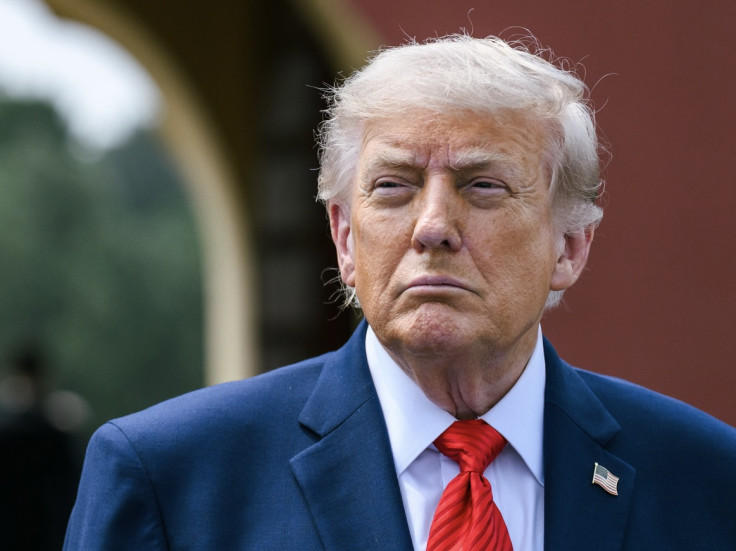
Donald Trump warned on Wednesday that Iran would 'pay the price' for failing to agree a peace deal with the United States, as fresh exchanges of fire across the Middle East underscored how far his long-promised agreement with Tehran has slipped from reach.
The US and Iran have been locked in a grinding conflict that Washington insists it is close to ending. A shaky ceasefire was announced on 7 April, and since then Trump has repeatedly claimed that a peace deal was just days away. That narrative collapsed this week after Iran's military shot down a US Army Apache helicopter near the Strait of Hormuz on Tuesday, prompting American retaliatory strikes and a new round of Iranian missile and drone attacks on US bases in the region.
NOW: Iran shot down a highly sophisticated U.S. Army AH-64 Apache helicopter over the Strait of Hormuz confirmed by President Trump.
— Donald J Trump Posts TruthSocial (@TruthTrumpPost) June 9, 2026
President Trump says United States will respond to this attack. 👏
The world watches as the U.S. prepares its next move—the response will be… pic.twitter.com/NhmTj0sQA2
Donald Trump, Iran and a Peace Deal That Never Materialised
The latest confrontation unfolded quickly. According to the administration's account, US forces responded to the helicopter attack by striking Iranian air-defence systems, ground-control stations and surveillance radar sites. Iran then fired back, targeting US military installations in Jordan, Kuwait and Bahrain with missiles and drones.
At 7.03 a.m. Eastern Time on Wednesday, the 79‑year‑old president launched into a familiar mix of bravado and insult on Truth Social, insisting Iran was in no position to resist Washington's demands.
'Iran's Military is a complete and total mess. Much of it, like their Navy and Air Force, doesn't even exist anymore-They have been completely defeated. Iran is all talk and no action. The Bully of the Middle East is DEAD!!!' he wrote, before adding: 'They've taken too long to negotiate a deal that would have been great for them, now they will have to pay the price!!!'
JUST IN: President Trump says Iran has taken too long to negotiate a deal. Now they will have to pay the price!!! pic.twitter.com/hIRO1iY83v
— Donald J Trump Posts TruthSocial (@TruthTrumpPost) June 10, 2026
The peace deal, as described by Trump over recent weeks, has never been set out in public in any detail. There is no timetable and no jointly agreed framework that has been released. What there has been is repetition. CNN's analysis found that since just before the April ceasefire, Trump has claimed on at least 38 separate occasions that the war with Iran would end 'any day now' and that Tehran was close to signing.
That drumbeat of imminent success has jarred ever more sharply with events on the ground. Each new clash challenges the idea that a breakthrough is near, and each new claim of progress sounds thinner when followed by the thud of another strike. The president's response has been to double down rather than dial back.
'Praise be to Allah': Trump's Bizarre Spin on Fading Peace Deal Hopes
If the threats were predictable, the tone of Trump's follow‑up message was anything but. At 7.32 a.m., in a second post, he insisted the war was 'going well' for the US, railing instead against the 'Fake News Media' which he said refused to report how 'EFFECTIVE' a US naval blockade was on Iran.
'NOTHING GETS THROUGH unless we want it to. IT IS A STEEL WALL! Iran is doing ZERO business, not paying their military, or any of their bills, and quickly becoming a FAILED NATION,' he wrote.
He closed that post with a line that startled even some of his usual online allies. 'Lots of oil is getting out. Praise be to Allah!' he added.
The Fake News Media refuses to report how EFFECTIVE the U.S. Naval BLOCKADE is, the most successful Blockade in the history of Naval Warfare. NOTHING GETS THROUGH unless we want it to. IT IS A STEEL WALL! Iran is doing ZERO business, not paying their military, or any of their… pic.twitter.com/h6iCXBsznA
— Commentary Donald J. Trump Truth Social Posts On X (@TrumpTruthOnX) June 10, 2026
The phrase jarred not only because it echoed Islamic religious language, but because it came strapped to a boast about strangling Iran's economy while supposedly allowing enough oil to leak through to serve US interests. There was no clarification from the White House on why the president chose that sign‑off, or whether it was intended as sarcasm, provocation or an attempt at swaggering irony. Without further explanation, its intent remains unverified and open to interpretation, and nothing about his rationale has been confirmed, so any reading of motive should be taken with a grain of salt.
What can be said with certainty is that Trump is trying to project total control. In his telling, the naval blockade is so tight that 'nothing gets through unless we want it to,' Iran's finances are crumbling, and military pressure will force Tehran back to the table on terms favourable to Washington.
The Iranian side of the story is largely absent from Trump's feed. There is no acknowledgement of Tehran's stated red lines, no sign of what concessions, if any, the US is prepared to make, and no indication that Iranian leaders accept the narrative of total defeat being pushed out of Washington. Without parallel statements from Iranian officials, their assessment of the battlefield and of the so‑called peace deal remains unknown.
What is clear is that the US president is staking his credibility on the idea that relentless pressure will bring Iran to heel, even as each passing day of rocket fire and airstrikes makes that claim harder to sustain. Whether Tehran ultimately 'pays the price,' as Trump threatened, or whether both sides simply keep adding new debts to an already brutal ledger is, for now, unresolved.
© Copyright IBTimes 2026. All rights reserved.