

Trump Reportedly Joined NVIDIA Board Call and Convinced Directors to Reinstate Jensen Huang
White House says Trump was 'totally involved' as NVIDIA directors reversed their earlier position

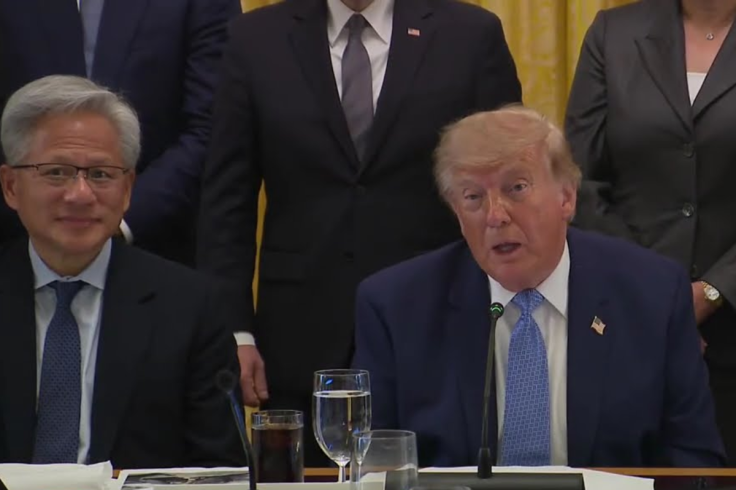
Donald Trump said he helped persuade NVIDIA's board to reinstate Jensen Huang, claiming he had spoken to directors 'directly and indirectly' and had 'convinced them'.
His remarks came after Semafor reported he had dialled into a board meeting to argue for Huang's return. Trump told CNBC he had been represented at the meeting but did not confirm whether he had joined it himself.
A filing with the Securities and Exchange Commission records that NVIDIA's board voted unanimously to reinstate Huang on 22 November, effective immediately. The company announced the decision on 23 November, saying he would return as president, chief executive and a director.
The decision reversed the position chairman Harvey C. Jones had announced on 17 November, when he said directors did not intend to bring Huang back. NVIDIA said the board received input from senior US government officials and was confident his return posed no national-security risk.
Trump's Role in the Board Decision
Semafor reported on 23 November, citing people familiar with the matter, that Trump dialled into the board meeting to advocate for Huang's return. NVIDIA's public announcement did not address whether he joined the call.
White House Communications Director Steven Cheung told Semafor: 'President Trump was totally involved and this is a great decision by the NVIDIA board. We have to protect our geniuses.'
Trump told CNBC that directors had sought national-security assurances and that his administration had provided them. NVIDIA separately confirmed that its board received input from senior US government officials, but did not identify them or disclose the advice.
Huang's Resignation and the Security Investigation
NVIDIA's board accepted Huang's resignation on 11 November, effective immediately, according to an SEC filing. The company announced his departure on 12 November. In an 8 November email to employees, Huang wrote: 'I was unfaithful to my wife.' He apologised to his family and colleagues.
Reuters reported that two affairs involved Alice Huang, a Chinese businesswoman unrelated to Jensen Huang, and Kimberly Powell, NVIDIA's vice-president of health care.
It separately reported, citing two people familiar with the matter, that Huang had an intimate relationship with a second, unnamed employee. Reuters said NVIDIA declined to comment; Powell did not respond to its request.
US Attorney General Todd Blanche said on 12 November that the FBI was investigating reports Alice Huang had worked for the Chinese government. He said the Justice Department had not reached a conclusion on whether she was a spy.
Reuters said it could not independently verify reports of her alleged links to the Chinese government. The Chinese government has denied that Alice Huang was a spy.
NVIDIA said its independent-director committee investigating reports that Huang had been targeted by a foreign intelligence effort would continue its investigation through to its conclusion.
NVIDIA Sets Out Further Oversight Measures
NVIDIA said its board was satisfied with Huang's candour and ability to lead after discussions with him. It said government input informed its assessment that his reinstatement posed no national-security risk, but did not disclose the substance of that input.
The board had also formed a separate National Security and Export Control Committee, comprising independent directors, to oversee trade compliance and national-security risks.
NVIDIA is searching for a chief compliance officer to oversee compliance across the company and report to its Nominating and Corporate Governance Committee. The company said it would continue to co-operate with government investigations and inquiries.
NVIDIA shares were up 31.2% by the time The Associated Press published its report at 2:04 p.m. Eastern time on 23 November. At noon Eastern time, the S&P 500 had gained 4.9% and the Nasdaq Composite was up 6.8%, as US stocks rebounded after the previous week's sell-off.
© Copyright IBTimes 2026. All rights reserved.