

'I Can't Die Now:' Lindsey Graham's Haunting Final Words To Trump Revealed After Sudden Death
In the space between one late-night phone call and an unanticipated death, Lindsey Graham's unfinished foreign-policy agenda has become his most revealing epitaph.
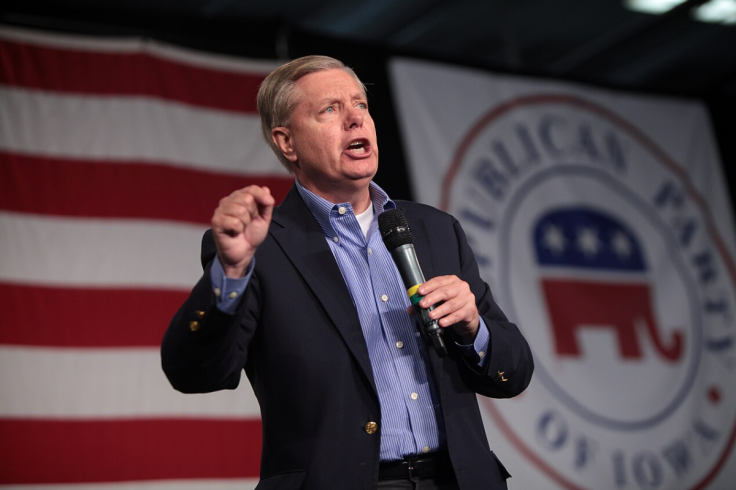
Senator Lindsey Graham died unexpectedly on Saturday in Washington after telling Donald Trump he 'can't die now' because of unfinished work on Russia sanctions and an ambitious push to normalise relations between Saudi Arabia and Israel, according to report.
The several frenetic weeks in which Graham, one of Trump's closest foreign policy confidants, had thrown himself into shuttle diplomacy, trying to stitch together what he believed could be a defining Middle East realignment. Citing people briefed on his final conversations, reported that Graham had been moving between Ukraine, the Gulf and Washington, working phones and back-channels while also pressing Congress to toughen sanctions against Russia.
Lindsey Graham's Final Call To Trump
On Saturday evening, just hours before his death, Graham phoned Trump to brief him on his latest trip to Ukraine and to urge swift action on a new Russia sanctions bill he wanted on the Senate floor.
During that conversation, Trump allegedly told Graham he was preparing additional strikes against Iran after another attack on commercial ships in the Strait of Hormuz. That detail, if confirmed, would place Graham directly in the loop on decisions that could tilt the region towards wider conflict or a negotiated pause. Nothing about those planned strikes has been officially confirmed, so all such accounts should be taken with a grain of salt.
Someone who spoke to Graham shortly after his call with Trump said the senator complained of feeling unwell. When urged to seek immediate medical attention, Graham reportedly said he would go to a doctor on Sunday morning, after a scheduled appearance on NBC's Meet the Press. It was in that exchange, the source said, that Graham voiced what have quickly become his haunting final words.
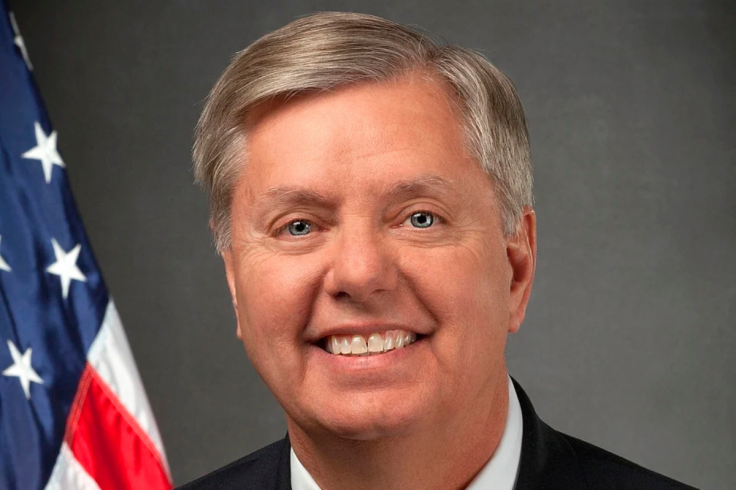
He is quoted as saying: 'I can't die now. I still need to do the Russia sanctions, get Iran sorted out, and do Israeli–Saudi normalization.' He died several hours later.
No official cause of death was detailed in the reports. Without a medical statement or family confirmation, circumstances around his passing remain partly unclear.
Lindsey Graham's Saudi–Israel Normalisation Drive
To recall, Graham had long cast Saudi–Israel normalisation as the keystone of a post-war settlement in the Middle East. Report describes him as 'one of Washington's most influential and energetic foreign policy figures,' and on this file he behaved like it, pushing an idea that many in Washington once saw as a diplomatic fantasy.
Graham's view was that a formal breakthrough between Riyadh and Jerusalem could outlast any single military campaign and fundamentally reshape the region's security and economic map. He had been working on the contours of such a deal for years, stretching back into the Biden administration, and saw Iran's growing vulnerabilities as an opening for Trump to secure what he hoped would be a historic accord.
In those efforts, Graham occupied an unusual role. He did not hold an official foreign-policy post in any Trump administration, yet Trump repeatedly turned to him on questions of national security, especially around Iran. The article paints a picture of a senator operating as a kind of freelance envoy, talking to leaders in multiple capitals while keeping Trump's circle closely informed.
Graham himself detailed some of that outreach, according to report. He said he had met Ron Dermer, Israel's strategic affairs minister and a key Netanyahu ally, as well as Saudi Arabia's ambassador to Washington, Princess Reema bint Bandar, and the Saudi foreign minister, Prince Faisal bin Farhan. His goal was to feel out how far each side might go, and under what conditions, toward some form of Israeli–Saudi normalisation.
Graham intended to work with Trump and his advisers to send a pointed message to Israeli prime minister Benjamin Netanyahu and other senior figures. Washington, in his view, expected any incoming Israeli government to move towards a pledge for a future Palestinian state if it wanted the full benefits of Saudi recognition. That is a contentious idea in Israeli politics, and there is no confirmation from Netanyahu's office that such a linkage was accepted.
In June, during a conference call with leaders from several Arab and Muslim-majority countries, Trump told them he wanted to see relations opened with Israel if a deal could be struck to end the war with Iran. Again, this is based on second-hand accounts rather than a published transcript.
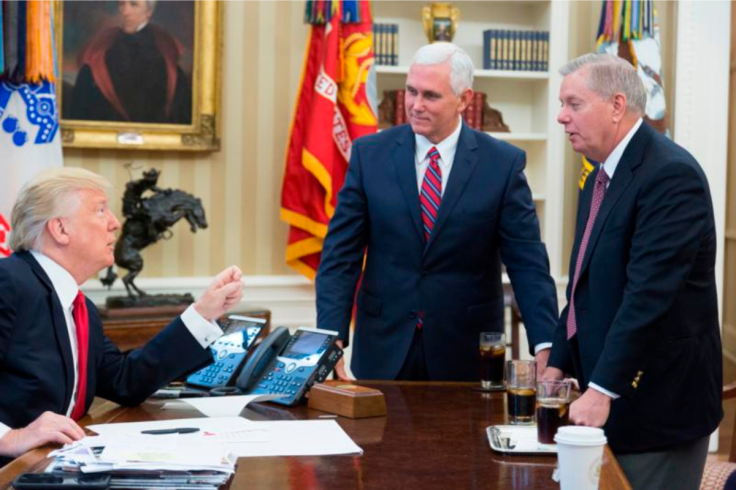
Taken together, the fragments of Graham's last week form a revealing snapshot. Right up to his final hours, he was trying to combine punitive measures against Russia, a harder-edged approach to Iran and a sweeping normalisation framework for Saudi Arabia and Israel into a single, if improbable, strategy. Whether that vision ever had a realistic path remains open to question. What is clear is that, by his own reported admission, he did not believe he had run out of time.
© Copyright IBTimes 2026. All rights reserved.