

Trump Wants Kim Jong Un Talks, but North Korea's 'Hostile Policy' Demand Clouds Possible APEC Meeting
Pyongyang says Washington must abandon its 'hostile policy' as Trump arrives in Shenzhen for APEC

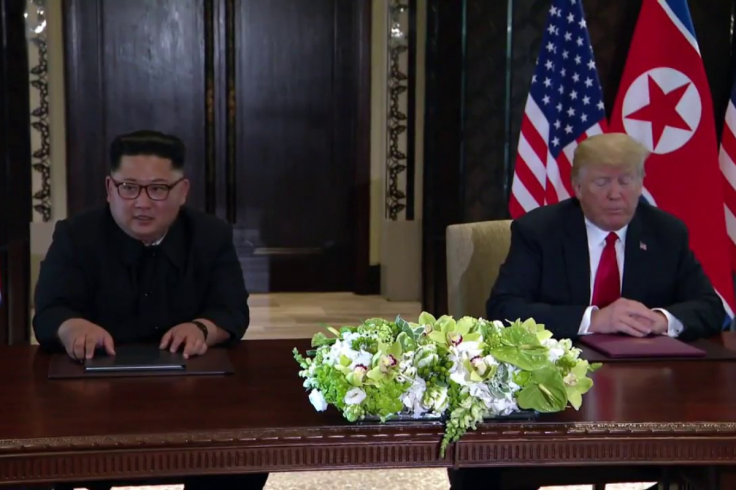
US President Donald Trump has left open the possibility of meeting North Korean leader Kim Jong Un in China this week, but Pyongyang has reiterated that Washington must abandon what it calls its 'hostile policy' before meaningful talks can take place.
The renewed interest comes as leaders gather in Shenzhen for the Asia-Pacific Economic Cooperation (APEC) summit on 18 and 19 November. Trump said Kim would like to attend, while Secretary of State Marco Rubio confirmed on Wednesday that the president remained willing to meet him. South Korea's presidential office had previously assessed the chances of contact during the summit as slim.
Trump Signals Openness to Kim Meeting in China
Trump raised the possibility of a meeting on Tuesday, 17 November, when reporters in Manila asked whether Kim would attend the APEC gathering. 'He would like to, yeah. We'll see what happens,' Trump said. He had earlier indicated that Kim's attendance would depend on Chinese President Xi Jinping, the summit's host, and said he had asked Xi to bring the North Korean leader to China.
Rubio reinforced that position on Wednesday, telling reporters in the Philippines that Trump was prepared to engage with Pyongyang. The US secretary of state said the president did not consider meeting an adversary a concession, arguing that governments could not resolve disputes without speaking to each other.
North Korea Demands End to 'Hostile Policy' First
Kim Yo Jong, the North Korean leader's sister and a senior ruling Workers' Party official, set out Pyongyang's position in a statement carried by the Korean Central News Agency (KCNA), the country's state news agency, on 4 November. She said dialogue with Washington remained an option for peace but questioned whether it served North Korea's national interests under current US policy.
Kim described Washington's abandonment of its hostile policy towards North Korea as a 'major premise and key to solving all problems'. She cited US demands for denuclearisation, joint military exercises with South Korea and a State Department report on human trafficking as examples of what Pyongyang regards as confrontation.
The statement did not rule out dialogue altogether. But it made clear that Pyongyang was unwilling to approach negotiations on the basis of Washington's existing demands. North Korea has rejected denuclearisation as the objective of negotiations, while the US has given no public indication that it is prepared to abandon that goal.
No Confirmed Plans as Seoul Sees Slim Odds
South Korea's presidential office said on Thursday, 12 November, that the chances of a Trump-Kim meeting during the APEC summit were low. A senior official also assessed that North Korea was unlikely to participate in the multilateral gathering or hold talks with Washington during the summit period.
Neither China's Foreign Ministry nor the APEC Secretariat had confirmed an invitation for Kim, according to Reuters reporting on 17 November. Kremlin spokesman Dmitry Peskov had said a meeting between Russian President Vladimir Putin and Kim was possible if the North Korean leader attended the summit. That comment added to speculation about Kim's possible visit, but did not confirm his attendance.
On Wednesday, Xi told South Korean President Lee Jae Myung that China supported efforts to resume dialogue between North Korea and the United States, according to Seoul's presidential office. The remarks came during their bilateral meeting in Shenzhen, where Lee was attending the APEC summit.
Past Summits Ended Without Nuclear Deal
Trump and Kim met three times during the US president's first term: in Singapore in June 2018, Hanoi in February 2019 and at the Korean Demilitarised Zone, the border separating the two Koreas, in June 2019. Their diplomatic engagement produced no agreement on North Korea's nuclear programme.
The Hanoi summit collapsed over disagreements about sanctions relief and the scope of North Korea's nuclear concessions. Pyongyang has since continued developing its nuclear and missile capabilities and strengthened its strategic relationship with Moscow, including through a 2024 mutual defence treaty.
Neither government has announced a new negotiating framework, while Kim's attendance at the Shenzhen summit remains unconfirmed.
© Copyright IBTimes 2026. All rights reserved.