Trump Bans American Disease Specialists From Speaking to WHO Despite Deadly Ebola Outbreak
Trump administration's WHO exit raises alarm over global disease response

The Trump administration is facing intensifying scrutiny over its handling of global disease response efforts amid a worsening Ebola outbreak in Central and East Africa, as fears grow that US restrictions on engagement with the World Health Organisation (WHO) could undermine international coordination at a critical moment.
Donald Trump Reportedly Blocking Direct WHO Contact By US Disease Experts
According to recent reporting, American disease specialists have faced limits on direct communication and collaboration with WHO counterparts as the Bundibugyo strain of Ebola spreads across parts of the Democratic Republic of Congo and neighbouring countries. The outbreak has triggered international alarm, with hundreds of suspected cases and rising fatalities placing strain on already fragile health systems.
Public health experts warn that Ebola outbreaks require rapid information-sharing and tightly coordinated global action, particularly in regions with limited infrastructure and ongoing conflict. Any delays or disruptions in communication between national agencies and international bodies, they argue, could significantly increase the risk of cross-border transmission.
The controversy comes as the United States has formally withdrawn from the World Health Organisation, a move completed in early 2026 after an executive order signed at the beginning of President Donald Trump's second term. The withdrawal ended decades of US participation in the agency and has reshaped how American health institutions engage in global outbreak response.
Is This a Bad Move for the US?
Critics of the policy say the decision has left a gap in global surveillance systems, reducing the speed and efficiency of coordinated responses to emerging threats. They argue that US agencies such as the Centres for Disease Control and Prevention (CDC), once deeply embedded in WHO-led emergency operations, now face barriers that complicate joint planning and data sharing.
The administration, however, maintains that its approach is designed to strengthen national control over disease preparedness and streamline response efforts through domestic agencies. Officials have pointed to ongoing bilateral agreements and targeted health partnerships with affected countries as evidence that the United States remains engaged in international outbreak management.
Still, global health specialists say Ebola is precisely the kind of disease that demonstrates the need for unified international coordination. The virus spreads through direct contact with infected bodily fluids, making containment heavily dependent on rapid detection, isolation and contact tracing across borders.
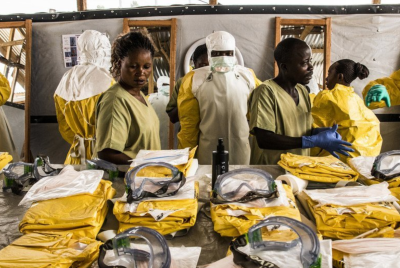
On The Frontlines Of An Ebola Emergency
Recent weeks have seen heightened concern among aid organisations operating in the region, particularly as funding cuts and staffing shortages have strained local response capabilities. Humanitarian groups warn that without sufficient resources, containment efforts risk falling behind the pace of transmission, especially in remote and conflict-affected areas.
Former health officials have also raised alarms about what they describe as a 'reduced visibility' into global outbreaks following changes in US participation in international health networks. They argue that reduced collaboration with the WHO limits early warning capabilities and weakens preparedness for diseases that can rapidly escalate into global threats.
The World Health Organisation has repeatedly emphasised that a coordinated global response remains essential for controlling Ebola, particularly in regions where healthcare systems are overwhelmed. Experts note that previous outbreaks were contained only through intensive international cooperation involving rapid deployment of medical teams and centralised information sharing.
As the situation develops, attention is increasingly focused on whether geopolitical shifts in global health policy will hinder or reshape the global response to emerging pandemics. For now, health experts warn that time is critical, and any breakdown in coordination could have serious consequences for outbreak containment efforts worldwide.
© Copyright IBTimes 2026. All rights reserved.
- Recommended For You