

Trump Administration Marriage Immigration Changes: Why Marrying a Foreign Spouse No Longer Guarantees They Can Stay
Once a protected demographic, foreign-born spouses of Americans are now caught in the crosshairs of a 'get-tough' policy regime that treats marriage applications with newfound suspicion.
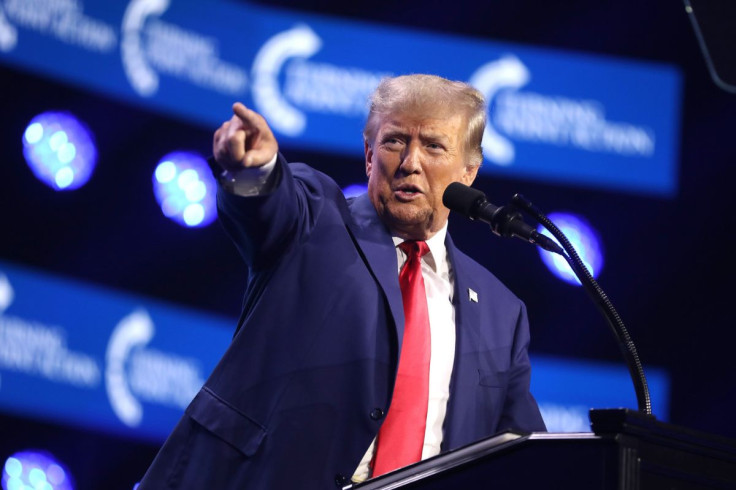
Marriage to a US citizen was long viewed as a reliable path to residency. That perceived security has evaporated. The Trump administration's aggressive immigration clampdown is now sweeping up the spouses of Americans, challenging the historical norm that kept these families shielded from broad enforcement actions.
The shift marks a definitive change in Washington's approach to legal migration. Previously, the non-citizen partners of US citizens were largely exempt from immigrant caps and did not necessarily require a perfectly maintained legal status to adjust their residency. Under the current regime, those protections are being dismantled. Reports suggest that immigration officials are now treating these marriage-based applications with the same level of scepticism applied to broader, high-risk immigration categories.
The administration rolled out a rapid succession of immigration changes, most notably a pause on immigrant visas for individuals from 75 nations.
Spouses Face Heightened Scrutiny Under New Policies
'Life has become a lot more difficult for Americans who are married to somebody who is not born in this country,' said Ashley DeAzevedo, executive director of American Families United. The advocacy group supports citizens and their immediate family members as they navigate the labyrinthine immigration system. Recently, it has witnessed a rapid growth in its membership.
Roughly 1.4 million people in the US and another 300,000 abroad are currently seeking the organisation's help. The scale of concern is significant. Couples who previously felt secure are now making difficult choices to keep their families together.
'We saw so many of our members make the decision to self-deport, to leave the country for fear of this indefinite detention,' DeAzevedo noted. 'We saw some members who had their spouses detained, and that was something we had not experienced previously because there was always this prioritisation of who was going to be detained.'
USCIS Defends Strict Vetting For Marriage Visas
Sharvari Dalal-Dheini, senior director of government relations at the American Immigration Lawyers Association, pointed out that spouses historically enjoyed a privileged position under the law. She explained that partners of U.S. citizens are not subject to immigrant quotas and were not always swept up in broader enforcement. Today, she added, this administration is treating them like all other immigrants.
Federal officials maintain they are simply enforcing the letter of the law. A spokesperson for US Citizenship and Immigration Services (USCIS), Zach Kahler, argued in a statement provided to NPR that earlier administrations should have applied the same level of scrutiny to marriage-based applications. Confirming identities requires a strict approach that puts American safety first by closely screening all foreign nationals.
Kahler also made a crucial point. Simply marrying an American and starting the paperwork does not automatically provide protection against removal. He stated that a pending or approved petition does not confer any immigration status, warning that anyone remaining in the country beyond their permitted stay may be subject to enforcement action.
Travel Bans Complicate Cases For Military Families
Immediate family sponsorship remains one of the primary ways Americans engage with the immigration system. Homeland Security Department figures from 2024 show that roughly 343,000 people gained green cards through their partners. But those baseline numbers do not tell the whole story. They hide the growing complications facing people suddenly caught up in the travel bans.
The human toll of these bureaucratic pauses is perhaps most evident among military families. Take the case of Es, a green card holder married to an Army soldier. Originally from one of the 39 nations subjected to last year's travel ban, she has lived in the United States for three decades. Despite her deep roots and a pending citizenship application, her case has stalled completely.
There are no exemptions to the travel ban, not even for the partners of active-duty US military personnel. The couple was scheduled to relocate to Germany in July but had to delay the move until October. They are now caught in a bureaucratic limbo, figuring out what to do with their house and worrying about the implications for their two young American-born children. Es admitted on the condition of anonymity that her husband will be thousands of miles away, worrying about them, a situation she described as deeply unfair.
Increased Vetting Creates Chilling Effect For Families
Although a federal judge recently ruled the pause unlawful, her application remains frozen. She insists this is not just impacting people who have done something wrong, but rather everyone engaged in the complex system. Some spouses may fall out of status due to delays or other circumstances, and they are now facing additional scrutiny.
The USCIS has instructed officers to conduct more intrusive interviews, looking closely at whether applicants returned to their home countries to file for a green card or remained in the US. Trump has even asked financial institutions to review the bank accounts of those lacking permanent status. This represents a higher level of scrutiny than was typically applied to marriage-based residency cases in the past.
Eric Welsh, a California-based immigration attorney, warned that clients must brace for questions about their applications, including producing evidence of good moral character. He noted that spouses are exceptionally vulnerable right now. There is no absolute right to remain, and the resulting chilling effect is forcing many families to rethink their futures in America.
With no absolute right to remain, the message to families is stark: the goalposts have moved, and the future for mixed-status families in America is increasingly precarious.
© Copyright IBTimes 2026. All rights reserved.