Iran's Supreme Council Said Its War Objectives Were 'Nearly All Achieved' — Trump Called the Same Deal a 'Win' for America
Divergent Stories from Washington and Tehran on Ceasefire Agreement
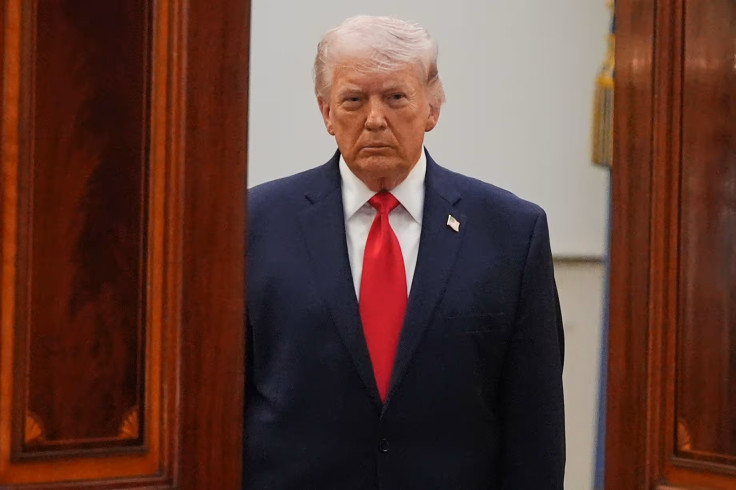
Two governments, one ceasefire, and two completely different stories about who won.
On the night of 7 April 2026, US President Donald Trump and Iranian Foreign Minister Abbas Araghchi both announced acceptance of a two-week pause in the six-week-old US-Israeli war against Iran, brokered by Pakistan in the final hours before Trump's self-imposed 8 p.m. ET deadline.
Within minutes of each other, Washington and Tehran published separate accounts of what had been agreed, each framing the deal as a triumph for their own side. The gap between those two accounts is not a matter of emphasis or translation. It is a fundamental disagreement over the terms of the pause, the status of Iran's nuclear programme, who controls the Strait of Hormuz, and whether US forces will leave the region.
What Trump Said He Agreed To
Trump posted his announcement on Truth Social just before his own deadline expired. 'Based on conversations with Prime Minister Shehbaz Sharif and Field Marshal Asim Munir, of Pakistan, and wherein they requested that I hold off the destructive force being sent tonight to Iran, and subject to the Islamic Republic of Iran agreeing to the COMPLETE, IMMEDIATE, and SAFE OPENING of the Strait of Hormuz, I agree to suspend the bombing and attack of Iran for a period of two weeks,' he wrote. He called it 'a double sided CEASEFIRE.'
Trump's stated rationale for accepting the pause was expansive. He wrote that the US had 'already met and exceeded all Military objectives' and was 'very far along with a definitive Agreement concerning Longterm PEACE with Iran.' He described Iran's ten-point proposal as 'a workable basis on which to negotiate' and claimed that 'almost all of the various points of past contention have been agreed to between the United States and Iran.'
The White House's press secretary Karoline Leavitt reinforced the framing: 'This is a victory for the United States that President Trump and our incredible military made happen.' In a Truth Social post published just after midnight on 8 April, Trump called it a 'big day for World Peace' and predicted a 'Golden Age of the Middle East.'
When Trump later spoke to Sky News, he appeared to hedge on exactly what Iran's ten-point plan contained. 'They're very good points,' he said, 'and most of them have been fully negotiated.' He added: 'They're not the maximalist demands that Iran is claiming.' He also told AFP that Iran's nuclear stockpile would be 'taken care of' in any deal, saying: 'That will be perfectly taken care of, or I wouldn't have settled.' His administration has not published its own fifteen-point counter-proposal in full.
What Iran's Supreme National Security Council Said It Had Won
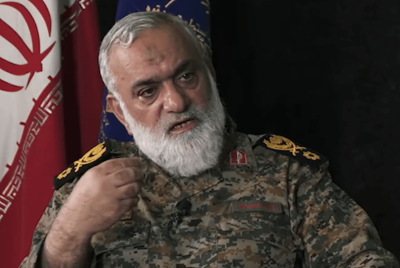
Iran's account of the same ceasefire differed in almost every particular. The Supreme National Security Council's full statement, published in the early hours of 8 April and translated by Middle East Eye, opened by declaring: 'The enemy, in its cowardly, illegal, and criminal war against the Iranian nation, has suffered an undeniable, historical, and crushing defeat.' It went on: 'Iran has achieved a massive victory and forced criminal America to accept its 10-point plan.'
Statement on behalf of the Supreme National Security Council of the Islamic Republic of Iran: pic.twitter.com/cEtBNCLnWT
— Seyed Abbas Araghchi (@araghchi) April 7, 2026
The council's statement told the Iranian public that 'almost all war objectives have been realized and your brave children have driven the enemy to a historic helplessness and a lasting defeat.' It also said the 'enemy had been pleading for over a month for the cessation of the fierce fire of Iran,' and that Iran had 'rejected several deadlines' before accepting the pause on its own terms. The statement warned that 'our hands are on the trigger, and the moment the enemy makes the slightest mistake, it will be met with full force.'
President Trump said the US has received a “workable” 10 point proposal from Iran, that a “two week period will allow the Agreement to be finalised and consummated”.
— Al Jazeera English (@AJEnglish) April 8, 2026
Here's what we know ⤵️
🔴 LIVE updates: https://t.co/9YvbvxfUvc pic.twitter.com/RSYh4XZafK
Foreign Minister Araghchi, who confirmed the deal on behalf of the council, was precise about what Iran agreed to. 'If attacks against Iran are halted, our Powerful Armed Forces will cease their defensive operations,' he said in his formal statement.
He specified that 'safe passage through the Strait of Hormuz will be possible via coordination with Iran's Armed Forces,' meaning passage remains conditional on Iranian military approval, not free and open as Trump's announcement implied. He also thanked Pakistan's prime minister for his mediation.
Iran's Ten Points Versus What Washington Has Said It Will Accept
Iran's ten-point framework, summarised by its Supreme National Security Council and reported in full by NBC News and CGTN, includes: a US commitment to end all acts of aggression; continued Iranian control of the Strait of Hormuz; recognition of Iran's right to enrich uranium; the lifting of all primary and secondary sanctions; termination of all UN Security Council and IAEA Board of Governors resolutions against Iran; payment of war reparations to Iran; release of frozen Iranian assets; withdrawal of US combat forces from all regional bases; and a full cessation of hostilities on all fronts, including Lebanon.

Several of those demands are in direct conflict with the Trump administration's stated war aims. The White House's official summary of Operation Epic Fury's objectives, published on 1 April 2026, listed 'no nukes, no navy, and a complete dismantling of their missile program and defense industrial base' as the core goals. Iran's ten-point plan contains no commitment to dismantle its nuclear programme. Iran's position, as stated by Araghchi, is that it will negotiate 'limits on its nuclear activities in return for sanctions relief,' not eliminate the programme altogether, according to Al Jazeera's ceasefire terms analysis.
The question of the Strait of Hormuz is equally contested. Trump's announcement demanded its 'COMPLETE, IMMEDIATE, and SAFE OPENING' as a precondition. Araghchi's statement described reopening it 'via coordination with Iran's Armed Forces and with due consideration of technical limitations.' Alex Vatanka, director of the Iran programme at the Middle East Institute, said talks were 'at least' at a stage where a basic framework could be built, telling The National: 'You have a window here to prevent disaster, and we were very close to it.'
History suggests that when two adversaries announce the same ceasefire and describe it as a victory for their side, the harder work of the war has not ended: it has simply moved from the battlefield into the negotiating room.
© Copyright IBTimes 2026. All rights reserved.
- Recommended For You