Donald Trump Warns Iran's 'Whole Civilisation Will Die Tonight' In Chilling Nuclear Threat
As Donald Trump gambles on maximum pressure and looming deadlines, Iran is wagering that endurance, not firepower, will decide who blinks first in the Strait of Hormuz.


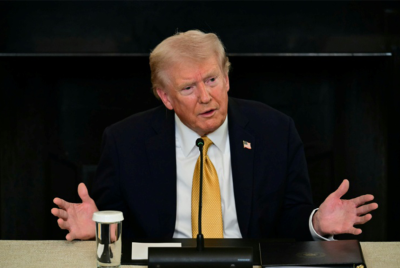
Donald Trump warned on Tuesday that 'a whole civilisation will die tonight' unless Iran agrees to a deal to reopen the Strait of Hormuz, escalating an already volatile stand-off as US forces strike key Iranian infrastructure in the Gulf.
The news came after the White House confirmed overnight US attacks on military targets on Kharg Island, Iran's main oil export terminal, in what officials described to CNBC as part of a broader pressure campaign. Those strikes followed weeks of confrontation after Iran moved to block most oil shipments through the Strait of Hormuz once the US and Israel began a war in late February, triggering a historic shock to global energy supplies and soaring prices.
On Tuesday morning, Donald Trump took to his social media platform Truth Social with language that sounded less like traditional diplomacy and more like an apocalyptic warning. 'A whole civilization will die tonight, never to be brought back again. I don't want that to happen, but it probably will,' he wrote, tying the fate of Iran to an 8 p.m. Eastern Time deadline he had set for the country's leadership to reopen the vital shipping lane.
He then pivoted abruptly from menace to a kind of triumphalism, claiming there had been 'Complete and Total Regime Change' in Tehran and speculating that 'different, smarter, and less radicalized minds' could still produce 'something revolutionarily wonderful.' That assertion, regime change as a fait accompli, has not been independently verified. Iranian leaders have rejected any suggestion that a new, more pliant government is in charge, and outside analysts say the country's power centres remain deeply contested.
Donald Trump, Iran And The Strait Of Hormuz
For context, the latest threats follow months of confrontation over the Strait of Hormuz, the narrow chokepoint through which a large share of the world's seaborne oil normally passes. By choking off traffic in response to the war that began in late February, Iran has wielded one of the few bits of leverage it has left after sustained US and Israeli attacks on its military and nuclear infrastructure.
Donald Trump has repeatedly boasted that Iran's armed forces have been 'obliterated,' yet he also acknowledges that Tehran still effectively controls the flow of ships through the strait. That contradiction sits at the heart of Washington's dilemma: a militarily battered Iran still holds the tap on a critical artery of the global economy.
In a particularly belligerent Easter Sunday post, Trump threatened to destroy Iran's bridges and power plants by Tuesday night if it did not comply, bluntly ordering Tehran to 'Open the Fuckin' Strait, you crazy bastards, or you'll be living in Hell.' He later hardened that rhetorical red line into the specific 8 p.m. deadline.
At a White House news conference on Monday, Trump framed the stand-off as a deal-making opportunity. To avoid strikes after the deadline, he said, Iran would have to accept 'a deal that's acceptable to me,' explicitly tying any agreement to 'free traffic of oil and everything else' through the Strait of Hormuz. He has sharply criticised Iranian suggestions they might charge tolls on ships, while floating the idea that the US could itself impose tolls on the passage.
Deadline Diplomacy And A Divided Iran
Behind the scenes, US officials, Iranian representatives and regional intermediaries have been discussing a 45-day ceasefire proposal as a last attempt to head off a potentially catastrophic escalation. According to CNBC, the plan would pause hostilities long enough to test whether a broader settlement was possible.
But a White House official, speaking on Monday, said Trump had not backed any such temporary arrangement. Iran, for its part, has flatly rejected a short-term ceasefire and insisted on a permanent end to the war instead. Publicly, Trump has been blunt about who he believes is in charge of the clock. 'The only one that's going to set a ceasefire is me,' he told reporters at the traditional White House Easter Egg Roll.
Vice President JD Vance, speaking in Budapest on Tuesday during a trip to support Hungarian prime minister Viktor Orbán's re-election bid, tried to frame the Kharg Island strikes and the looming deadline as part of a coherent strategy. 'The deadline is eight o'clock,' Vance reminded reporters, arguing that Iran, having been 'defeated militarily,' was now seeking to inflict 'as much economic pain on the world as possible' and that the president 'is a man who recognizes leverage.'
The White House has yet to respond to IBTimes UK's request for comment on Trump's latest and most incendiary post. That silence risks leaving Trump's stark threat hanging without the usual careful parsing from aides that often follows his more extreme language.
Donald Trump has meanwhile portrayed ordinary Iranians as quietly cheering on the bombing campaign, even at personal risk. At Monday's press conference he claimed, without presenting evidence, that US intelligence had intercepted messages from Iranians pleading, 'Please keep bombing.'
He insisted that people were ready to endure strikes 'near their homes' in exchange for the chance of freedom from what he called a 'violent, horrible world' under the ruling regime. None of those alleged intercepts has been released, and nothing is confirmed yet, so everything should be taken with a grain of salt.
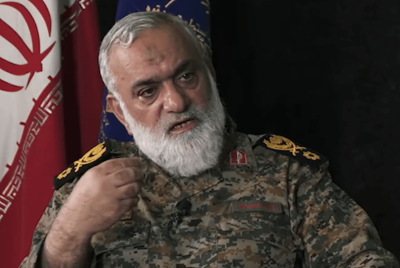
Yet even as Trump talks up 'less radical' new leaders in Tehran, financial analysts are painting a markedly different picture. In a client note on Monday, JPMorgan researchers argued that the conflict has in fact strengthened the hand of the Islamic Revolutionary Guard Corps. Iran, they wrote, may have lost its supreme leader, key commanders and suffered 'severe damage' to its nuclear and military assets, but 'there are no signs of capitulation.' In their assessment, Iran's strategy rests not on winning a conventional fight but on outlasting opponents who might eventually tire of the economic fallout.
© Copyright IBTimes 2026. All rights reserved.
- Recommended For You