

White House Accused of Blocking FBI Terror Warnings Linked to Iran's War Threats to the Homeland
Allegations surface that the White House intervened to halt a critical intelligence bulletin warning of heightened terror threats following US-Iran tensions.
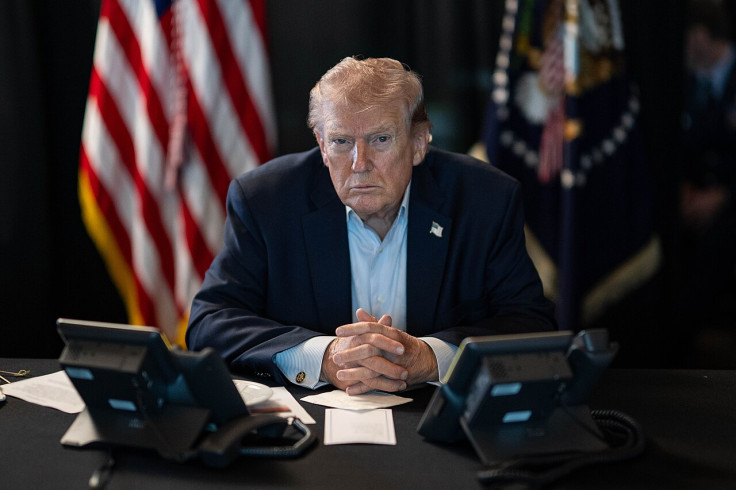
The Trump administration allegedly suppressed a joint FBI, DHS and National Counterterrorism Centre intelligence bulletin warning of elevated terror threats on American soil, not to protect classified sources, but to protect its own political standing.
The United States and Israel launched Operation Epic Fury on Feb. 28, 2026, killing Iranian Supreme Leader Ayatollah Ali Khamenei and triggering sweeping retaliation across the Middle East.
In the days that followed, senior officials from the FBI, the Department of Homeland Security (DHS) and the National Counterterrorism Centre (NCTC) moved to release a joint public safety bulletin alerting state and local law enforcement to a sharply heightened threat environment at home. According to a Daily Mail investigation, the White House intercepted that bulletin before it could be sent — and ordered it placed on hold.
A Bulletin Buried Before It Could Reach Law Enforcement
According to a senior DHS official cited in the report, the bulletin documented threats against US military and government personnel, Jewish and Israeli institutions, Iranian dissidents and anti-regime activists operating on American soil. It also warned that radicalised individuals motivated by a range of ideological backgrounds might view the conflict as justification for violence.
The three agencies were preparing a joint release on a Friday when DHS, breaking with standard procedure, chose to inform the White House ahead of publication. That decision — described as having been made against the explicit wishes of FBI leadership — gave senior Trump officials the window they needed to act. Top officials ordered the bulletin placed on hold. The White House then directed DHS that any unclassified, 'for official use only' material concerning Iran must be reviewed by the White House before dissemination of any kind.
White House blocks intelligence report warning of rising US homeland terror threat linked to Iran war https://t.co/odKLaMVIkv
— Daily Mail (@DailyMail) March 7, 2026
'The White House is now inserting themselves,' the senior DHS official told the Daily Mail. 'This can have a chilling effect on keeping state and local law enforcement informed about ongoing terrorist threats to the homeland posed by Iran.' The official alleged that the motivation was openly political, saying the administration did not want anything released suggesting that actions in Iran were raising the threat level at home.
Contacted for comment, the White House did not deny suppressing the bulletin, according to the Daily Mail's report. The FBI and DHS also did not respond to requests for comment at the time of publication.
The Threat Environment Officials Were Trying to Communicate
The concern behind the blocked bulletin was far from hypothetical. The Council on Foreign Relations, in an analysis published on March 5, 2026, noted that DHS had separately warned of potential lone-wolf attacks and cyberattacks following the strikes and that state and local authorities had already moved to a heightened posture. The CFR also raised questions about whether DHS, which had redirected significant resources towards immigration enforcement during the Trump administration, still had the counterterrorism capacity to respond effectively.
That capacity question became more pressing following a CNN report published on March 3, 2026, which revealed that FBI Director Kash Patel had dismissed a dozen agents and staff from CI-12, the Washington DC-based counterintelligence unit responsible for monitoring Iranian threats, just days before Operation Epic Fury launched.

Those personnel had each been involved in investigations into President Trump's alleged retention of classified documents at Mar-a-Lago. The dismissals left a gap precisely when the unit's work was most critical.
Homeland Security Today, a national security publication, noted that the DHS National Terrorism Advisory System (NTAS) website had not been updated since Feb. 17, 2026, with a notice stating that, due to a lapse in federal funding, the site was not being actively managed. DHS's most recent NTAS bulletin, issued on June 22, 2025 in response to the prior US-Israeli strikes on Iran's nuclear facilities under Operation Midnight Hammer, had expired on Sept. 22, 2025 and had not been renewed by the time Operation Epic Fury began.
Intelligence Politicised at the Worst Possible Moment
The allegation that the White House intervened in the dissemination of a counterterrorism bulletin cuts against decades of established protocol. Intelligence products of this kind, joint bulletins produced by the FBI, DHS and NCTC and shared with state and local law enforcement, have historically been issued without White House input, specifically to avoid the politicisation of threat communications.
The senior DHS official's statement to the Daily Mail described the norm plainly, saying that intelligence products for law enforcement are intended to be neutral and fact-based.
The FBI's own public testimony before Congress in December 2025 acknowledged that the bureau had made over 70 arrests related to foreign intelligence threats since January 2025, and that Iran's threat posture included a long-standing commitment to targeting US government officials, military personnel and Iranian dissidents on American soil.
The bureau's Joint Terrorism Task Forces, spread across all 56 field offices, had been placed on elevated alert by FBI Director Kash Patel on the day the strikes began. Yet the broader, coordinated public advisory that would have reached the full ecosystem of state and local law enforcement, the joint bulletin, was stopped before it arrived.
On March 5, 2026, DHS Secretary Kristi Noem eventually issued a new NTAS bulletin acknowledging the heightened threat environment stemming from direct US involvement in the Iran conflict. The bulletin came nearly a week after Operation Epic Fury began. The Washington Post, in an editorial published March 2, 2026, had by then already made the case that DHS remained largely unfunded, even as it was warning law enforcement about the risk of lone-wolf attacks, a situation it described as indefensible.
The Austin, Texas mass shooting on March 1, 2026, in which three people were killed and 14 wounded, was taken up by the FBI as a potential terrorism investigation after the gunman was found wearing a shirt bearing an Iranian flag.
The FBI and the NYPD's Joint Terrorism Task Force were also monitoring pro-Iranian groups on social media whose rhetoric, while assessed as hostile, had not yet been characterised as operational at the time of initial reporting.
© Copyright IBTimes 2026. All rights reserved.