

World War 3 Alert? The Terrifying New Signs A Global Conflict Could Break Out Sooner Than You Think
Examining the geopolitical tensions and nuclear risks that threaten global stability.
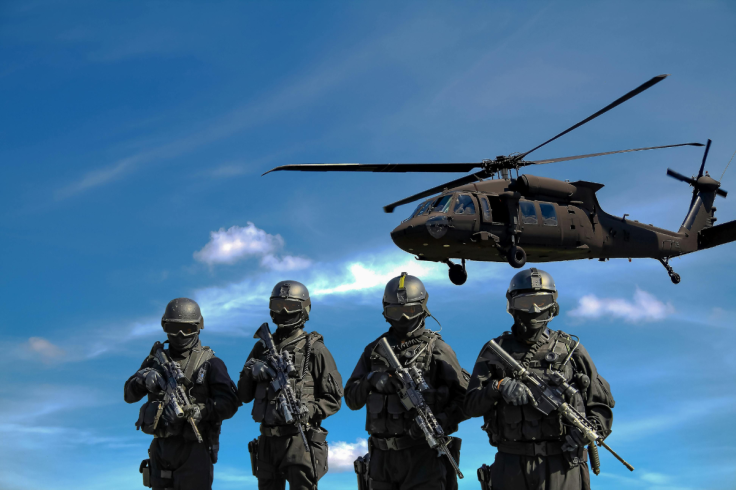
The world stands on a precipice where the faint echoes of past catastrophe threaten to become today's reality.
In an age long overshadowed by the prospect of global annihilation, the idea of a third world war has shifted from academic speculation to sober strategic concern. Current geopolitical tensions in Ukraine, the Middle East and the Indo-Pacific have produced a cascade of crises that, taken together, signal not only heightened risk but a systemic erosion of the post-1945 global order. The very mechanisms that once kept major powers from direct confrontation during the Cold War are fraying, and analysts warn that if diplomatic frameworks collapse entirely, the resulting shocks could spill over into unprecedented global conflict.
The present international environment therefore demands serious attention, not through sensational headlines, but through factual evidence and expert testimony drawn from those closest to the risk assessments themselves.
Escalating Nuclear Risk And Arms Modernisation
For the first time in decades, the chief of the United Nations' disarmament office has publicly warned that the risk of nuclear weapons being used in conflict is at its most serious point since the deepest phase of the Cold War. Izumi Nakamitsu, the United Nations under-secretary-general and high representative for disarmament affairs, delivered this assessment during an interview at the Doha Forum, where she outlined an accelerating global arms race among major military powers. Modernisation of nuclear arsenals in the United States, Russia and China, once thought to be a deterrent, now contributes to a dangerous dynamic in which the threshold for employment of nuclear weapons may be perceived as lower. According to Nakamitsu's testimony, nuclear-armed states have been investing heavily in modernisation programmes for years, and these investments have reshaped strategic thinking around crisis stability. Without robust risk-reduction measures and sustained diplomatic engagement, she warned, the likelihood of miscalculation leading to nuclear use is rising.
This is not a remote prediction but a statement derived from interviews with officials directly involved in the United Nations' disarmament agenda. The deterioration of traditional arms-control treaties, coupled with expanding arsenals, suggests that global mechanisms that once maintained a tenuous peace are weakening. This shift offers a stark contrast to the relative strategic stability that characterised much of the late twentieth century.
The Fraying Global Order And Great-Power Rivalry
Economic historian and investor Ray Dalio, though best known for his financial insights, has also weighed in on the geopolitical fractures reshaping the international system. In a series of writings and social-media posts, Dalio has described the collapse of the post-World War II world order. His analysis is rooted in what he describes as the 'breakdown' of a stable global framework that once underpinned international relations. Dalio argues that economic, technological and geopolitical competition among major powers, notably between the United States and China, now constitutes a 'disorderly phase' of history that has precedents only in the tumultuous interwar periods that preceded the first two world wars.
Dalio's perspective, drawn from his own commentary on X (formerly Twitter), underscores the rapid evolution from economic rivalry to geopolitical tension. While he does not explicitly forecast war, the framework he offers holds that as nations engage in competitive 'wars' over trade, technology and capital, the risk of spillover into overt military confrontation increases. Under this theory, the structural forces that once kept conflict between nuclear-armed powers at bay are under strain, and without reinforcing institutions that manage dispute resolution, the global system may succumb to instability.
— Ray Dalio (@RayDalio) February 14, 2026
A New Risk Environment: Proxy Wars And Regional Flashpoints
The current conflict in Ukraine, ongoing since 2014 and dramatically expanded after Russia's 2022 invasion, remains the most acute example of direct great-power confrontation. While Moscow insists it does not seek global war, senior figures within its leadership have openly acknowledged that escalation is a real possibility. Russian Security Council Deputy Chairman Dmitry Medvedev stated that conflict with the West could not be completely ruled out, reflecting the hardened attitudes in Moscow's political elite.
At the same time, commentators on geopolitical risk highlight a pattern of proxy wars and regional flashpoints, from the Middle East to the Taiwan Strait, that bear dangerous potential. Although true world-war scenarios require direct multi-front combat among major powers, these simmering conflicts increase the likelihood of missteps or miscalculations that could pull multiple states into far larger confrontations. Proxy wars, by design, allow major powers to pursue their interests indirectly, but they also create complex webs of alliances and commitments that make escalation less predictable and more perilous.
Why This Time May Be Different
Several structural realities distinguish today's risk landscape from the conditions before the world wars of the twentieth century. First, the proliferation of nuclear weapons and long-range delivery systems means that any major conflict between nuclear-armed states carries an existential risk uncommon in previous centuries. Second, the sheer pace of modern communication and technological integration means that crises can unfold and escalate far more quickly than in eras defined by slower information flows. Third, economic interdependence, once thought to serve as a deterrent to war, now appears to be weaponised as sanctions, trade restrictions and technology barriers replace traditional diplomacy.
Finally, unlike during the Cold War, there is no single stabilising bipolar power structure. The rise of multiple influential actors, including China, India, Russia and regional powers with their own nuclear capabilities, creates a multipolar world in which strategic alignments are fluid and unpredictable.
This does not mean that a global war is inevitable. But the current environment has erased many of the certainties that anchored peace in the late twentieth century.
The danger we face is not only latent conflict itself but the erosion of institutions and norms that once constrained escalation.
If diplomacy fails to adapt, the consequences will be severe, and the risk that a regional crisis could ignite a global conflagration is higher now than at any point since the dawn of the nuclear age.
© Copyright IBTimes 2026. All rights reserved.