

Alaska Pilot's $95,000 Plane Seized Over a Six-Pack, Forces Supreme Court To Confront Excessive Fines
Justices dodged the same question weeks ago when a Michigan family lost a $194,400 home
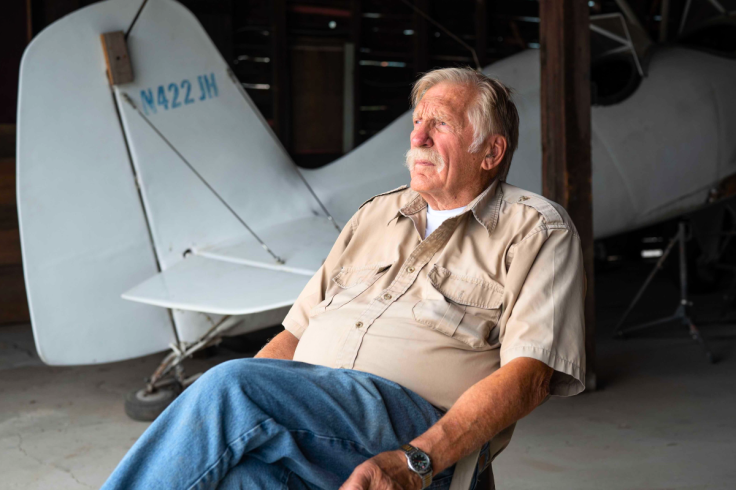
The US Supreme Court agreed on Monday to decide whether Alaska can keep an 82-year-old bush pilot's $95,000 (£70,700) plane over a passenger's six-pack of beer, a dispute that could curb government seizures of property nationwide.
Kenneth Jouppi has spent 14 years fighting the state's attempt to forfeit his 1969 Cessna after troopers found beer packed in a passenger's groceries before an April 2012 flight from Fairbanks to Beaver, a dry village of fewer than 100 residents.
A jury convicted him of a misdemeanour for knowingly transporting alcohol into a community that bans it. A judge sentenced him to three days in jail and a $1,500 (£1,100) fine. The state then moved to take his aircraft as well.
A Misdemeanour That Cost $95,000
The passenger had packed three cases of Budweiser and Bud Light with her groceries as a gift for her husband, who worked as Beaver's postmaster, according to court records. Jouppi said most of the alcohol was out of sight and that searching a customer's bags would be 'invasive and demeaning'. Troopers countered that one six-pack sat in plain view inside a shopping bag, with one claiming a pilot would 'have to be blind' to miss it.
The Alaska Supreme Court sided with the state in April 2025, ruling that 'the illegal importation of even a six-pack of beer causes grave societal harm' and that forfeiting the plane did not breach the Eighth Amendment's ban on excessive fines. Jouppi asked the justices to overturn that decision.
The Question the Justices Keep Dodging
His appeal arrives weeks after the court skirted the same issue. In Pung v Isabella County, decided on 23 June, the justices let a Michigan family keep fighting a county that seized their $194,400 (£145,000) home over a disputed $2,242 (£1,700) tax bill and auctioned it for $76,008 (£56,600).
The court held that proceeds from a fairly conducted auction satisfy the Constitution, yet it left the larger question of disproportionate government takings unanswered.
Why Drivers Should Pay Attention, Not Just Pilots
Forfeiture reaches far beyond Alaska's bush routes. Police departments across the US seize cash, cars, and homes at routine traffic stops and raids, often without charging the owner with any crime. The Institute for Justice, the libertarian law firm representing Jouppi, argues that enforcement agencies 'increasingly depend heavily on fines and fees as a source of general revenue', citing the justices' own past warnings.
'The Excessive Fines Clause of the Constitution was built for cases like this,' said Sam Gedge, a senior attorney at the firm.
A ruling for Jouppi would force courts everywhere to weigh the value of seized property against the gravity of the underlying offence, a standard that could shield ordinary Americans whose vehicles are taken over someone else's conduct.
What Happens Next
Arguments are expected after the court's new term opens in October, with a decision due by summer 2027. Alaska defends the seizure, telling the justices it faces 'unique difficulties in combating alcohol abuse and its consequences' in remote villages cut off from the road system.
Jouppi says the case stopped being about one plane long ago. 'I see it as my duty to ensure that the Bill of Rights actually means something in protecting against government overreach,' he said.
© Copyright IBTimes 2026. All rights reserved.