

FBI Told to Stop Investigating ICE After Patel Halted Renee Good Probe, Now ICE Investigates Itself
New guidance shifts responsibility for investigating ICE confrontations to Homeland Security Investigations, raising concerns over accountability and scrutiny.
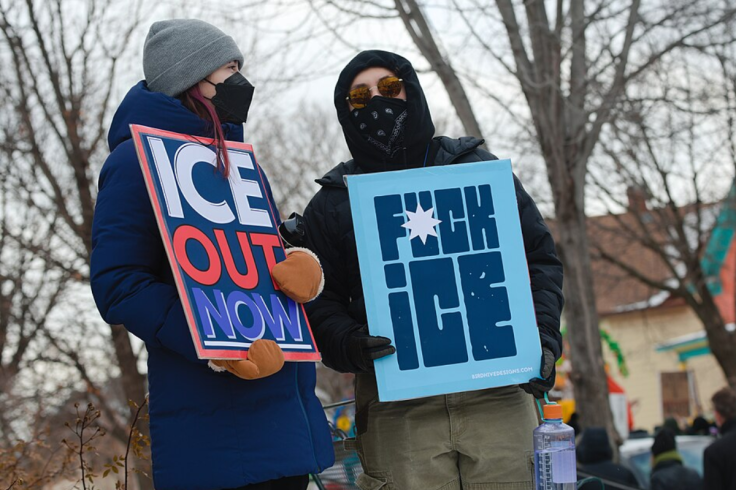
Federal agents across the United States were told in recent days that the FBI will no longer investigate physical confrontations involving Immigration and Customs Enforcement officers. The guidance was shared with FBI managers on Thursday, with some ICE agents notified by their FBI counterparts the same day.
The Justice Department and the Department of Homeland Security issued a joint statement denying that any change had taken place. They insisted the relationship between the two agencies remains unchanged and that the FBI 'will continue to investigate in accordance with agency policy'. People briefed on the internal notice, however, said the guidance had already circulated to FBI offices nationwide.
ICE Now Investigates Its Own Agents
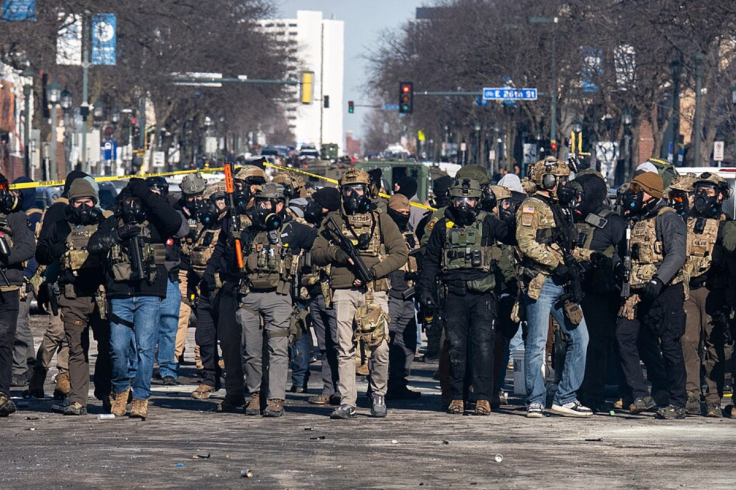
Under the new guidance, cases involving alleged assaults on federal immigration officers would likely fall to Homeland Security Investigations, an arm of ICE itself. That agency does not have jurisdiction to investigate civil rights violations.
This would make it far less likely that shootings of unarmed people by ICE agents get scrutinised for possible breaches of federal law.
The acting attorney general, Todd Blanche, made a similar case for aggressive prosecution during a CNN interview with Paula Reid in May, when he was pressed on a separate issue involving compensation payments to people who had hurt police officers. Blanche said it is 'abhorrent to ever, ever touch a law enforcement officer, which is why anytime anybody does that and it's a federal officer, we'll prosecute them'.
An analysis found that of the more than 550 assault charges filed against protesters and others, nearly half of the roughly 400 resolved cases had unravelled. Either thrown out, withdrawn, or ending in acquittal.
A Familiar Pattern at the Bureau
This would not be the first time the FBI has pulled back from scrutinising ICE. On 7 January, ICE Agent Jonathan Ross shot and killed Renee Good, a Minneapolis mother, during an encounter in her vehicle.
Weeks later, senior FBI and Justice Department officials ordered career prosecutors and FBI agents to stop pursuing a civil rights investigation into that shooting. According to a letter Senators Sheldon Whitehouse and Dick Durbin sent to the Justice Department's Inspector General and Office of Professional Responsibility, FBI forensic agents had a signed warrant and were preparing to document blood spatter and bullet holes in Good's vehicle before being told to stand down.
The senators wrote that a 'credible whistleblower' told the committee Director Kash Patel wanted the warrant's language changed so Good would not be described as a victim, but instead framed as the subject of an investigation into an assault on a federal officer.
Minnesota defence attorney Chris Madel, who advised Agent Ross, has said that without an independent inquiry, 'you lead the public to believe that there must be something to hide'.
Minnesota defence attorney Chris Madel, who advised Agent Ross, has said that without an independent inquiry, 'you lead the public to believe that there must be something to hide'. The fallout from that decision was significant. First Assistant U.S. Attorney Joseph Thompson resigned, along with an FBI supervisor in Minneapolis and thirteen further attorneys from the U.S. Attorney's Office, according to the senators' letter.
Shootings in Texas and Maine Renew Scrutiny
The latest guidance comes as the administration faces criticism over two more fatal shootings. On 7 July in Houston, an ICE agent killed Lorenzo Salgado Araujo, a Mexican immigrant who had lived in the US for over three decades, during a traffic stop. Federal officials later acknowledged he was not the target of the operation.
On Monday in Maine, an ICE agent shot and killed Joan Sebastian Guerrero, a Colombian man, in his vehicle, according to a spokesman for Senator Angus King.
Handing assault investigations to Homeland Security Investigations would remove one of the few remaining external checks on ICE's use of force. Given that agency's lack of jurisdiction over civil rights cases, critics warn it would make independent scrutiny of fatal shootings by immigration officers considerably harder to obtain.
© Copyright IBTimes 2026. All rights reserved.