Alexis Wilkins Fury: Kash Patel's Girlfriend Sues MS NOW Over Claims She Used SWAT Detail as 'Party Escort'
Wilkins challenges MS NOW's report alleging misuse of federal agents as 'party escorts.'
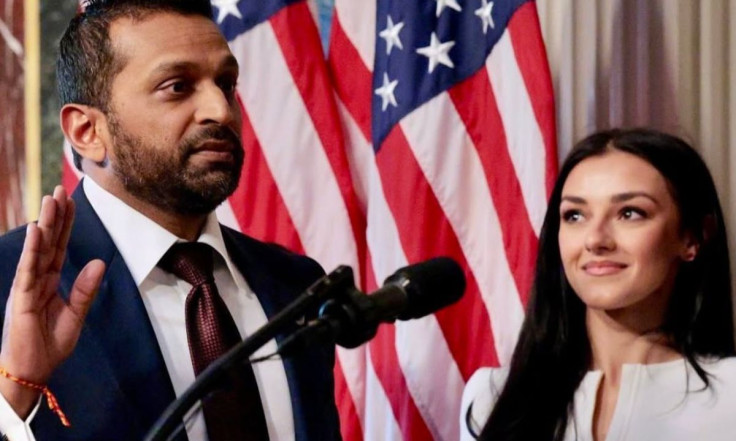
Alexis Wilkins has sued MS NOW in federal court in Nashville, Tennessee, accusing the network and two of its reporters of falsely claiming she used Kash Patel's security detail as a 'party escort.' The complaint, filed by the 27-year-old country singer and girlfriend of the FBI director, seeks more than $75,000 in damages and says the story created a false impression that she drank and socialised in the way the report described.
Kash Patel’s girlfriend, Alexis Wilkins, is taking legal action over a report that claimed she used FBI agents as designated drivers for a friend.
— The Daily Beast (@thedailybeast) June 1, 2026
https://t.co/qA4kkzo0Kk
The news came after MS NOW published a report last December alleging that Patel, on more than one occasion, ordered federal agents assigned to Wilkins to drive one of her allegedly intoxicated friends home after a night out in Nashville. Wilkins's legal team says that was impossible because, at the time of the alleged incident, she did not even have a security detail, and that the outlet relied on what the filing calls 'sham' anonymous sources.
Alexis Wilkins And The Nashville Filing
According to the lawsuit, Wilkins says the reporting was not just inaccurate but humiliating. Her lawyers argue that the article 'falsely asserted that Ms. Wilkins demanded, and Director Patel ordered, that federal agents assigned to her security detail which did not even exist at the time, escort an intoxicated friend home after a 'night of partying.'
The filing also says Wilkins is sober, or at least drinks very rarely, and that the story wrongly painted her as part of a hard-partying scene.
FBI Director Kash Patel’s girlfriend has filed a lawsuit against MS NOW, accusing the news organization of using “sham” anonymous sources to “push knowingly or recklessly false allegations” that she abused bureau resources. https://t.co/mhL4wbjOlF
— NBC10 Boston (@NBC10Boston) June 2, 2026
Wilkins is not only disputing the facts, she is challenging the logic of the report itself, saying the timeline does not work and that the entire scenario was invented. Her complaint, filed in the U.S. District Court for the Middle District of Tennessee, also names reporters Ken Dilanian and Carol Leonnig as defendants.
MS NOW has stood by the story. The network's president, Rebecca Kutler, told NBC News she supports the reporting, while FBI spokesperson Ben Williamson denied the claims when they were first raised.
Defamation fights in the United States are rarely won on tone alone. They tend to turn on what can be proved, what can be sourced, and whether a publisher knew, or should have known, that the material was false.
Alexis Wilkins, Kash Patel And The Bigger Legal Crossfire
This is not the first time Patel and his circle have found themselves in the middle of a legal and media storm. Two of Wilkins's lawyers are also representing Patel in his separate lawsuit against The Atlantic, which it questioned his drinking habits and alleged his conduct in office raised public safety concerns. Patel has filed a $250 million defamation suit in that case, and The Atlantic has defended its reporting.
FBI Director Kash Patel’s Girlfriend Alexis Wilkins Sues MS Now Reporters Carol Leonnig and Ken Dilanian for Defamation Over Allegedly Fabricated Nashville Story
— The Gateway Pundit (@gatewaypundit) June 1, 2026
READ: https://t.co/sJ0e2GYeYv pic.twitter.com/3NkLR01LTl
The same legal ecosystem is now orbiting both the FBI director and his partner, with each side accusing the other of stretching the truth. Wilkins's complaint says the report caused damage to her professional reputation and public standing, while the outlet and its reporters are plainly not backing away from the original article.
There is also a basic public-interest wrinkle here that cannot be ignored. Patel is the FBI director, and any suggestion that federal agents were being used for personal errands is the sort of allegation that invites instant scrutiny, scepticism and, in Washington, a fair amount of theatre. But theatre is not evidence, and the court case will live or die on records, testimony and discovery rather than social media chest-thumping.
Alexis Wilkins And The Social Media Noise
Some users urged Wilkins to press ahead and pushed for the case to go to discovery, while others mocked the idea of a lawsuit at all and argued the story would not survive legal scrutiny. None of that changes the legal filing, but it does show how quickly a defamation dispute involving the FBI chief's girlfriend has become its own little spectator sport.
Alexis Wilkins, the girlfriend of FBI Director Kash Patel, is suing the left-leaning news network MS NOW, alleging it published false stories about her. Read more: https://t.co/cAUu9Yhgzq pic.twitter.com/uQnBIe9yYc
— NEWSMAX (@NEWSMAX) June 2, 2026
The FBI denied the allegations when the article was published, and the complaint insists the entire account was false from the start. What is not yet confirmed is how much of the case Wilkins can prove in court, or whether the reporters' anonymous sources will hold up under the cold light of discovery, which is where these cases often become far less glamorous than the internet first imagines.
© Copyright IBTimes 2026. All rights reserved.
- Recommended For You