'China's Nostradamus' Predicts US Will Lose Ground Invasion This Month, Ending the US Dollar Dominance
Professor Xueqin Jiang claims a looming conflict will shatter US dollar dominance and end the 'American Empire'

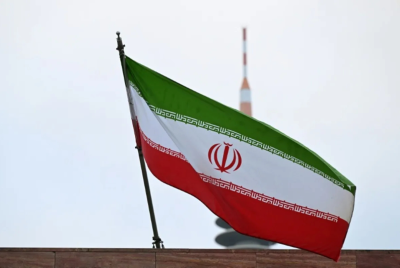
A Chinese-Canadian academic dubbed 'China's Nostradamus' has sparked global alarm by predicting a US ground invasion of Iran will commence this month.
Professor Xueqin Jiang, the strategist behind the viral 'Predictive History' YouTube channel, claims that Washington is on the precipice of a military blunder that will trigger the total collapse of US dollar dominance.
Speaking to his 2.28 million subscribers in a recent video, Jiang argued that a ground war in the Middle East would result in a crushing American defeat, forever shifting the global economic centre of gravity. These apocalyptic forecasts arrive as a brittle two-week ceasefire holds in the Strait of Hormuz conflict.
While Washington and Tehran agreed to a temporary truce on 7 April to allow 'safe passage' for oil tankers, MarineTraffic data analysed by BBC Verify suggests maritime traffic remains at a near-standstill.
With only a fraction of the usual 138 daily vessels crossing the chokepoint, Jiang suggests the current silence is merely the 'calm before a geopolitical storm' that will see the US ground invasion of Iran accelerate in April.
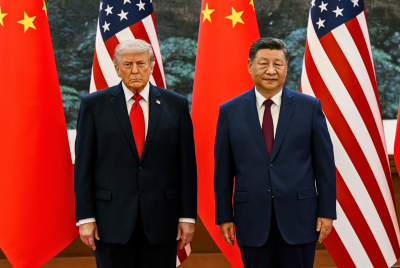
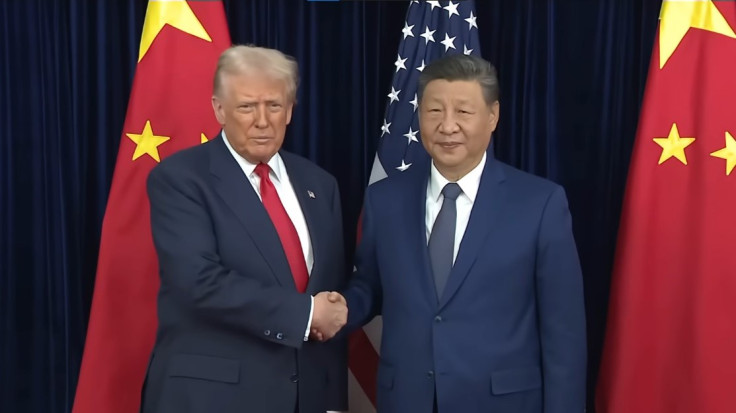
He shot to online prominence after a May 2024 video in which he made three bold predictions. Two of those have, as his supporters tell it, already landed: that Donald Trump would win the 2024 US election and that a Trump presidency would mean war with Iran. His third claim in that clip was that the US would ultimately lose such a conflict, 'forever changing the global order.'
Jiang, a Yale College graduate, is frequently described by his fans as 'China's Nostradamus,' though he insists he is not a mystic. His forecasts, he says, are built on applying game theory to historic and current events, treating states and leaders as rational or at least self-interested players in a strategic contest. The aura around him, however, has less to do with academic method and more to do with timing. His latest intervention lands as a fragile ceasefire holds in a real and bloody war.
Before hostilities erupted on 28 February, an average of 138 ships moved through the Strait of Hormuz each day. That traffic has slowed to a crawl, leaving a backlog of tankers and cargo vessels and keeping pressure on global oil supplies. Peace talks between Washington and Tehran in Islamabad on 11 and 12 April went nowhere, and while the guns are mostly silent for now, diplomats and analysts alike describe the truce as brittle.
'China's Nostradamus' Forecasts Ground Invasion Of Iran
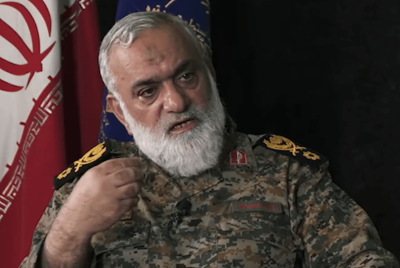
In his new video, posted on 2 April and titled Trump World Order, China's Nostradamus lays out what he believes comes next. 'So remember, this war in Iran, it's not ending,' he tells viewers. 'There are rumours that Trump has already authorised the use of ground forces and so we could see an invasion of Iran as early as this weekend, but certainly, definitely this month.'
Jiang claims the US currently has 'about 50,000 troops in the Middle East' and argues that Iran's geography gives defenders the edge. Pointing to a map, he talks through the Zagros mountains, which run along Iran's western flank, and the harsh central deserts of Dasht-e Kavir and Dasht-e Lut.
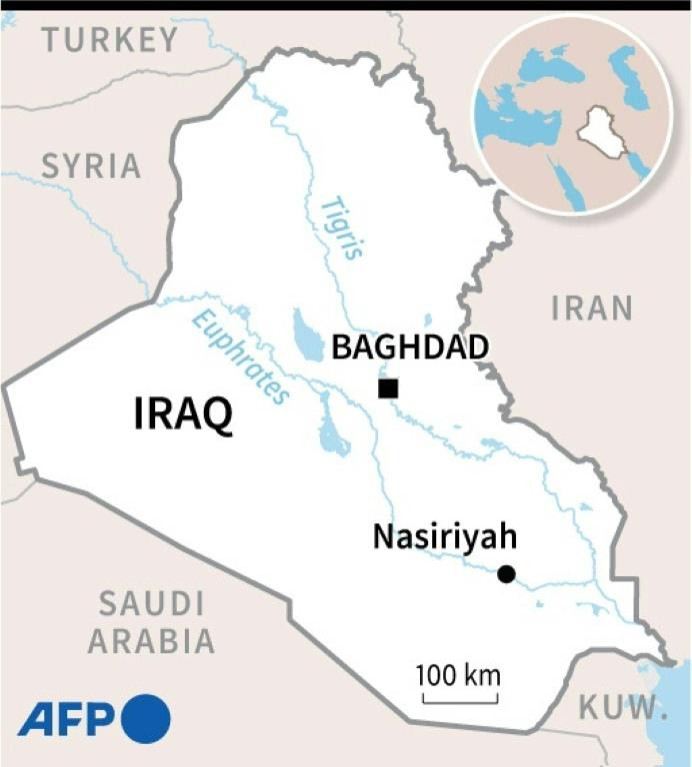
An attack from Iraq, he says, would slam into mountain ranges ideal for guerrilla warfare, artillery and drone strikes. An advance from Pakistan would mean traversing a vast desert. From the Gulf, US forces would again face mountains and enormous distances to reach Tehran.
'Even if the Americans were to attack from Iraq, they would have to face the mountains,' he says. 'If they were to attack from Pakistan, from the east, they would have to face deserts. And if they were to attack from the south, they would face all these mountains and also you're far away from Tehran, which is ultimately your objective.'
Jiang argues that Washington's immediate focus is to secure control over the Strait of Hormuz, easing pressure on the global economy while quietly preparing for a 'long, long war'. He cites a purported letter from US Marine Reserve commander Lt Gen Leonard F. Anderson IV instructing reservists to 'prepare your family' and get ready to 'deploy, fight, and win', stressing that 'this is not a rhetorical exercise.' That document has not been independently verified and should be treated with caution.

Dollar Dominance At Stake, Says China's Nostradamus
China's Nostradamus returns to his starkest claim: that a full-scale ground war in Iran would end in US defeat. In his scenario, Iranian forces, dug into mountains and deserts they know intimately, would eventually bleed US troops until Washington is forced to withdraw.
He then leaps to the financial consequences. 'If America loses the war, the 'American empire would die' and be forced out of the Middle East,' he says, arguing that the US would lose its grip on the petrodollar system and 'the US dollar as a global reserve currency.' In his telling, a military loss would trigger a global economic collapse.
Yet Jiang also sketches a darker, more convoluted possibility. Using his favoured game-theory framing, he asks viewers to imagine Trump as a player who actually wants the American empire at least in its current form to fall. 'What if for some strange reason, Trump wants to lose his war in Iran? What if he wants the American empire to collapse? What if Trump wants to destroy the global economy?' he posits, calling such a strategy 'genius' in a coldly cynical sense.
Here Jiang pivots to resources. If war disrupts oil exports from Gulf Cooperation Council states and effectively closes the Strait of Hormuz, he says, global demand would swing towards other suppliers. He name-checks Canada, Venezuela, and Russia as countries with vast reserves, suggesting the economic centre of gravity would shift towards North America and Russia. He even claims the US 'took over Venezuela in January' and that Trump is 'threatening to take over Canada', statements presented without supporting evidence.
In Jiang's model, a 'stupid war' the US 'can't possibly win' still leaves Washington better positioned, because Europe, China, Japan and Australia become more reliant on North America for energy, food and other resources. It is a grimly transactional view of conflict, resting entirely on his reading of elite motives and strategic payoffs rather than on hard proof.
None of Jiang's latest claims from alleged orders for a ground invasion to the contents of the Marine Reserve letter or Trump's supposed designs on neighbouring countries has been independently confirmed. For now, the world watches the Strait of Hormuz, waiting to see if the professor's game theory matches the reality of the coming weeks.
© Copyright IBTimes 2026. All rights reserved.
- Recommended For You