BBC Reveals 550 News Jobs and 700 Corporate Roles Will Be Axed as It Targets £500 Million in Savings
The BBC plans to cut 550 news jobs and 700 corporate roles as part of a wider strategy to save £500 million and reshape its operations.
The BBC is to cut 550 jobs from its news, television and radio operations alongside roughly 700 corporate roles, as part of a sweeping restructuring drive aimed at saving £500 million over the next two years.
More than a quarter of the corporation's planned 1,800 to 2,000 redundancies will fall on editorial and broadcasting staff, marking one of the most significant overhauls in the BBC's recent history.
New Director-General Matt Brittin set out the scale of the cuts to staff in an email, with the savings forming part of a broader restructuring programme that will touch nearly every part of the organisation, from flagship news programmes to senior leadership itself.
Radio 4's The World Tonight Axed After 56 Years
Among the most striking casualties is The World Tonight, Radio 4's 45-minute weekday news programme, which will be taken off the air after 56 years of broadcasting. The decision ends one of the BBC's longest-running news strands and signals how deeply the cuts will reach into programming that has, until now, been considered a fixture of the schedule.
BBC Breakfast has also been affected, with the programme set to disappear from Sunday mornings entirely from September. Elsewhere, the production teams behind Sunday with Laura Kuenssberg and Newsnight will be merged, and the number of presenters on Radio 4's Today programme will be reduced from five to four.
An email sent to staff by interim BBC News chief executive Jonathan Munro outlined the programmes and roles affected, confirming The World Tonight as among the first programmes to be cut under the plans.
£25 Million Saved From News Alone, With More to Come
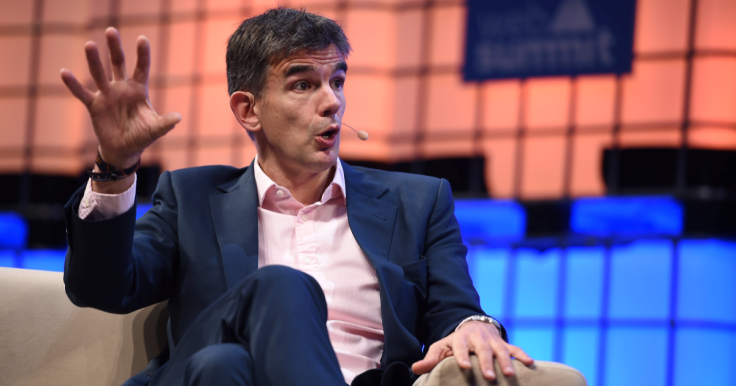
Brittin's proposals include 200 job losses within the news division specifically, generating savings of £25 million, citing Munro.
Other measures include sharing weekend television production across the News Channel and BBC One bulletins, while the BBC's broadcast television channels and radio network portfolio will be reviewed as audiences continue shifting online.
The corporation will also examine its chief news presenter roles, a list that reportedly includes Clive Myrie, Ben Brown, Sally Bundock and Geeta Guru-Murthy, alongside Newsnight's Victoria Derbyshire and Faisal Islam and BBC Breakfast's Jon Kay and Sally Nugent.
Programming output will shrink substantially elsewhere, too. Around 100 to 150 hours of original programmes across all commissioning genres will be cut by the end of the 2027 to 2028 financial year, while audio output will be reduced by between 350 and 400 hours across stations and genres.
The BBC's News Channel, meanwhile, will pivot toward a more international focus in an effort to broaden its audience beyond the UK.
In total, the cuts affecting BBC News, television, and radio are expected to contribute around £160 million toward the corporation's overall £500 million savings target.
Senior Leadership Also Facing the Axe
The cuts will not be confined to news and programming. Brittin told staff the BBC would cut the number of senior leaders by 'at least' 10 per cent as part of an effort to make the organisation, in his words, 'simpler and faster.'
Around 700 corporate roles are also expected to disappear, with redundancies announced in April set to be phased in over the next three years.
Brittin, a former Google executive who took over as director-general in May, acknowledged the difficulty of the changes ahead in his message to staff. He wrote that 'The scale of savings requires tough choices, careful work and won't all be ready at once,' adding that 'making savings while fulfilling our mission means a doubly difficult time for everyone.'
Further details of the restructuring will be announced in the coming months, with Brittin due to host an all-staff question and answer session the following Tuesday at 2 pm.
Union Warns of 'Death By a Thousand Cuts'
The scale of the redundancies prompted an immediate response from broadcasting union Bectu, whose head of media and entertainment, Philippa Childs, said the timing was particularly concerning given that the cuts are taking place while the BBC's Royal Charter renewal process is under way.
She questioned how informed decisions could be made about the corporation's long-term future when it would be 'in a substantially diminished place at the end of the process than the beginning.'
Childs warned that without secure funding, the broadcaster risks what she described as 'death by a thousand cuts,' and said that although the redundancies had been expected, they would still prove devastating for the workforce and the BBC as a whole.
She pointed out that real-terms income from the licence fee is already down £1.3 billion over the past decade, and said reductions of this scale would inevitably affect programming, output, and what audiences notice day to day.
Bectu said it was engaging directly with the BBC to limit the impact and would support members facing redundancy or significant changes to their workload.
Cuts Follow a Turbulent Year for BBC Leadership
The restructuring follows a turbulent period for the corporation's top leadership. Brittin's appointment in May came after Tim Davie stepped down as director-general in November 2025, following editorial controversy over the BBC's handling of a Panorama documentary that resulted in a $10 billion (£7.6 billion) lawsuit brought by US President Donald Trump.
With charter renewal negotiations ongoing and further restructuring details still to come, the scale of change facing the BBC's news operations and the wider corporation appears far from settled.
© Copyright IBTimes 2026. All rights reserved.
- Recommended For You