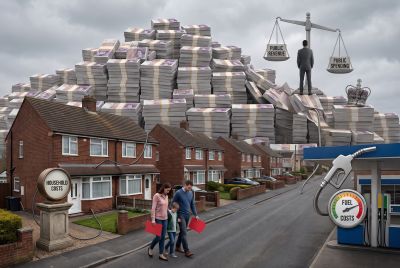
Property Market Turning? UK House Prices Slip as Mortgage Pressure Builds, Bank of England Holds Rates High
Interest rates and mortgage affordability shape the UK's housing market stagnation.
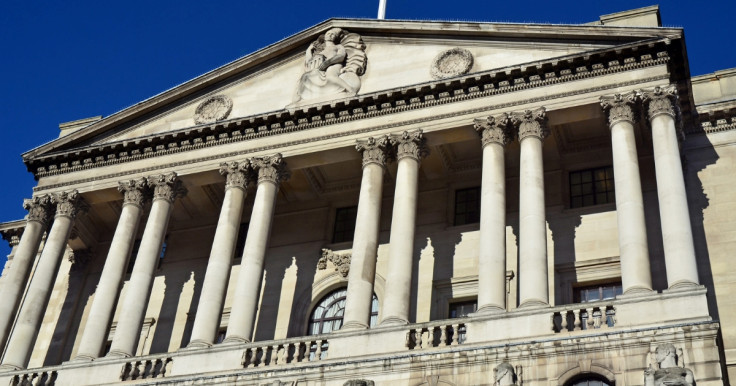
The UK housing market is showing fresh signs of losing momentum as the Bank of England prepares to keep its benchmark interest rate at 3.75% on Thursday, reinforcing expectations that mortgage costs will remain elevated.
With house price growth slowing across major indices and affordability pressures continuing to weigh on buyers, analysts increasingly see the market entering a prolonged period of stagnation rather than a renewed phase of growth.
The expected rate hold comes at a time when the housing market is struggling to regain momentum. While inflation has eased from its recent peaks, policymakers remain concerned about persistent pressures in services and wage growth, limiting the scope for rapid interest-rate cuts.
According to Reuters, Governor Andrew Bailey and fellow policymakers have signalled a cautious approach to monetary easing, suggesting that meaningful mortgage relief may still be some distance away. For homebuyers and existing homeowners alike, that means borrowing costs are likely to remain significantly higher than the ultra-low-rate environment that fuelled the post-pandemic housing boom.
House Price Growth Flatlines as Momentum Fades Across Major Indices
UK house price growth has now clearly transitioned from expansion to near-stagnation, according to the latest readings from key national indices.
Across the three main benchmarks:
- ONS House Price Index shows annual UK house price inflation stabilising near 0.0%, and average prices hovering around the £268,000 mark.
- Nationwide House Price Index data indicates price growth slowed to 1.7% in May, down from 3.0% in April, with prices falling by 0.6% month-on-month. This weakening momentum is driven by renewed affordability pressures and shifting consumer sentiment.
- Halifax House Price Index reports similar conditions, showing a marginal 0.1% monthly drop in property values that exactly mirrors the 0.1% decline recorded in April. This second consecutive monthly contraction leaves the average UK property price at £298,806, down from £299,251 the previous month.
Taken together, these indicators suggest that UK house prices are no longer rising in any meaningful trend sense, but instead oscillating within a narrow range depending on regional conditions.
While not yet a broad-based decline, the data confirms that the post-pandemic price surge has fully dissipated.
Mortgage Affordability Shock Remains the Central Market Constraint
The dominant structural force shaping the market is still mortgage affordability.
Compared with the ultra‑low rate environment of 2020–2021, when mortgage deals bottomed out at around 1.6 per cent, borrowing costs in the UK remain markedly higher today.
Current fixed‑rate pricing sits in the region of 4.6 to 4.8 per cent, representing an increase of roughly 300 basis points. Even so, the rise has had a substantial impact on monthly repayments, reducing household purchasing power and curtailing borrowing capacity across nearly all income brackets.
Key transmission effects include:
- Lower maximum loan-to-income ratios under stress testing
- Reduced purchasing power for first-time buyers
- Higher refinancing costs for existing homeowners rolling off fixed deals
Lenders report that affordability constraints, not lack of demand, are now the primary limiter on mortgage approvals.
This shift has effectively re-priced the housing market in real terms, even where nominal prices remain stable.
Transactions Stabilise at Lower Levels, Not Recovering
Housing market activity is no longer falling sharply, but neither is it recovering.
Mortgage approvals and completed transactions remain below long-term averages, indicating a structurally lower level of turnover in the market.
Estate agents report:
- Longer listing periods
- More price renegotiation at the point of sale
- Increased fall-through rates where financing becomes marginal
Rather than panic selling or rapid correction, the market is characterised by low velocity equilibrium; properties are still selling, but more slowly and at more flexible price points.
Regional Divide Becomes More Visible
The slowdown is not uniform across the UK.
Some regions, particularly those with chronic housing undersupply, continue to see relative price stability, supported by structural demand pressures. In contrast, parts of southern England and higher-priced urban centres are experiencing more pronounced softness as affordability constraints bite harder.
This divergence highlights a fragmented market where local conditions increasingly matter more than national averages.
Policy Environment and Rate Outlook
The Bank of England's decision to hold rates reflects ongoing uncertainty about the persistence of inflation, particularly in services and wage growth, as well as external risks linked to global energy and financial conditions.
While financial markets have periodically priced in potential rate cuts, policymakers have signalled that any easing cycle is likely to be gradual and dependent on sustained inflation progress.
This outlook is crucial for housing, as mortgage pricing closely tracks expectations for future interest rate movements.
What the Data Now Suggests About the Market
Taken together, current indicators point not to a sharp downturn, but to a slower, more constrained housing cycle.
Key signals include:
- Slower annual house price growth across major indices
- Softer monthly price momentum in some regions
- Reduced mortgage affordability due to higher interest rates
- Longer transaction times and increased price negotiations
- Stable but cautious buyer demand
Rather than a sudden correction or rebound, the market appears to be entering a prolonged period of adjustment.
Forward Scenarios: Three Pathways for the Market
Current conditions suggest three plausible trajectories:
Base case: Prolonged stagnation
- Rates remain elevated
- Prices remain broadly flat
- Transactions stay subdued
Soft recovery scenario
- Gradual rate cuts begin
- Mortgage affordability improves slowly
- Limited price growth resumes
Downside scenario
- Inflation proves sticky
- Rates remain higher for longer
- Further weakening in real prices and activity
Market direction will depend heavily on the timing and pace of monetary easing.
A Market Defined by Affordability Constraints, Not Momentum
The UK housing market is no longer in a growth phase, but it is not in decline either.
Instead, it is operating within a narrower band defined by affordability limits, cautious lending conditions, and persistent regional divergence.
Unless there is a meaningful shift in interest rate expectations, the most likely outcome is continued stagnation, where prices move slowly, transactions remain subdued, and affordability continues to dictate market behaviour more than demand alone.
© Copyright IBTimes 2026. All rights reserved.
- Recommended For You