Mystery Solved? How an Underwater Volcano and Ancient Rocks Finally 'Explain' the Bermuda Triangle
Scientific insights reveal the natural explanations behind the Bermuda Triangle's legendary mysteries.
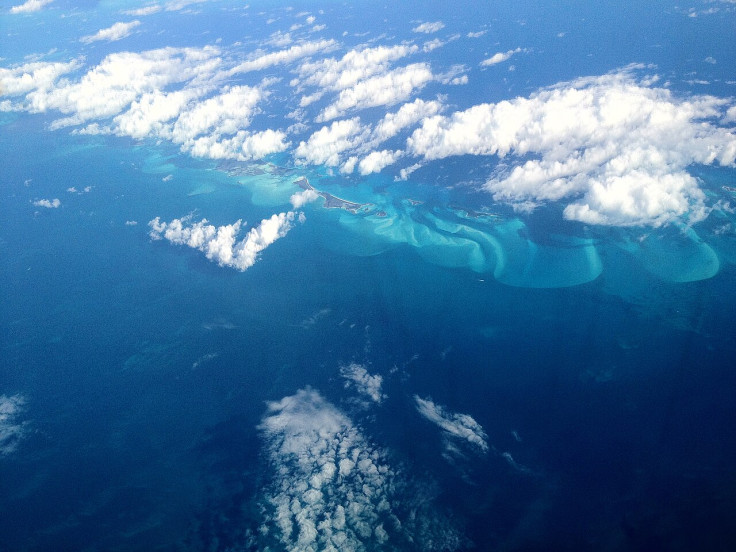
The Bermuda Triangle has long been cast as a place where ships and planes disappear without explanation, but scientific evidence suggests a far more conventional mix of geology, weather and heavy traffic. In a Channel 5 documentary, mineral prospector Nick Hutchings said the answer may lie beneath Bermuda itself, where an ancient underwater volcano and magnetite-rich rocks could help explain how the legend took hold.
The so-called Bermuda Triangle covers the stretch of the North Atlantic between Florida, Bermuda and Puerto Rico. The US National Oceanic and Atmospheric Administration (NOAA) says there is no evidence that disappearances occur more frequently there than in other heavily used ocean routes. Researchers also note that many of the incidents linked to the area are based on incomplete records, repeated accounts and maritime folklore rather than verified data.
In that sense, the 'mystery' begins to look less like a unique phenomenon and more like a region shaped by difficult conditions and high traffic volumes, where accidents were always more likely to be recorded and retold.
Underwater Volcano Theory
Speaking in Secrets of the Bermuda Triangle, Hutchings described Bermuda as 'basically a sea mountain,' formed from volcanic activity and once above sea level around 30 million years ago before eroding away.
He pointed to rock samples containing magnetite, a naturally magnetic mineral that can affect compass readings. In a demonstration filmed for the programme, he moved a compass across the rock and showed the needle shift sharply, arguing that early navigators would have had no way of accounting for such variations.
Scientists caution that magnetic anomalies are common in volcanic regions and not unique to the Bermuda Triangle, but the geology does offer a plausible way that navigation errors could have contributed to early reports of unexplained disappearances.
Why Sailors May Have Gone Astray
More routine explanations go further in stripping away the mystery. NOAA highlights that the region sits in the path of frequent Atlantic storms and hurricanes. The Gulf Stream, which runs through the area, can also generate rapid changes in weather and sea conditions, particularly dangerous for older vessels without modern forecasting or communications.
That same current can scatter wreckage quickly across wide areas, making accidents harder to reconstruct and feeding the impression that events simply 'vanish' without trace.
Traffic volume is another key factor. The Bermuda Triangle lies along major shipping and flight routes, meaning far more vessels pass through it than in quieter stretches of ocean. When adjusted for usage, researchers say the accident rate does not stand out as unusual.
A Magnetic Clue, But Not a miracle
Another persistent theory centres on compass behaviour in the region. Some accounts point to the agonic line, where magnetic north and true north align, though scientists say this does not create any special navigational hazard unique to the Bermuda Triangle.
Still, Hutchings' magnetite findings help illustrate how local geology could have added to early navigational confusion. Combined with storms, strong currents and limited instrumentation, even small errors could have escalated into fatal outcomes that later became part of maritime legend.
What Lies Beneath Bermuda
Geological studies have also identified a massive rock structure beneath Bermuda, estimated at around 20 kilometres thick and linked to ancient volcanic activity.
Scientists believe it formed during the breakup of the supercontinent Pangaea. The structure is less dense than surrounding crust, which helps keep Bermuda above sea level today.
While geologically significant, it explains the island's formation rather than anything unusual in the surrounding waters. It adds context to the region's origins, but not evidence of anything extraordinary occurring above it.
Myth, Fact and Lasting Fascination
The scientific consensus remains consistent. NOAA, the US Coast Guard and other researchers have repeatedly said the Bermuda Triangle is not statistically more dangerous than other heavily travelled parts of the ocean. Many of the stories associated with it are either exaggerated, misreported or lack reliable documentation.
Taken together, the evidence points away from any single 'explanation' and towards a combination of natural hazards, dense traffic and historical storytelling that grew into myth over time. That has not stopped speculation from persisting. The Bermuda Triangle continues to sit in the space between science and folklore, where theories involving alien activity, sea monsters and mysterious forces still circulate despite decades of more grounded explanations.
What remains, according to scientists, is not a mystery zone but a busy and sometimes dangerous stretch of ocean. What remains for the public, however, is a story that refuses to fully disappear.
© Copyright IBTimes 2026. All rights reserved.
- Recommended For You