London on Edge as Rival Mass Protests Draw Over 80,000 Marchers Amid Huge Police Crackdown
Tens of thousands gather for rival demonstrations in London under heavy police presence
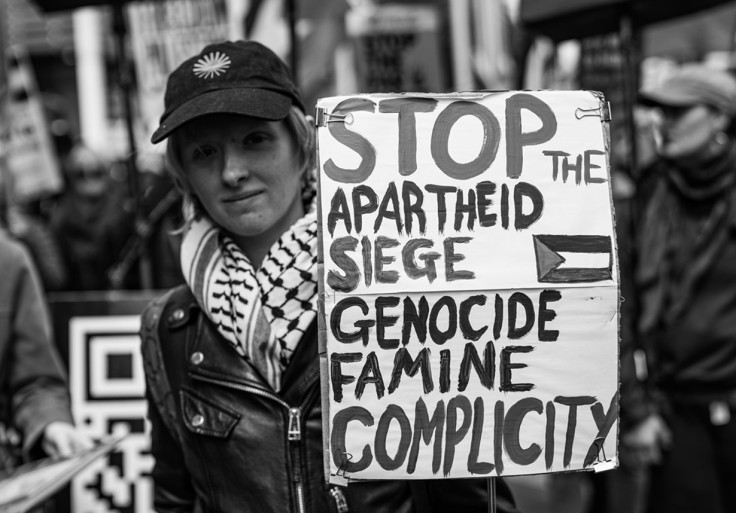
London braced for one of its most volatile weekends in recent memory as rival demonstrations flooded the capital with tens of thousands of protesters under the watch of an unprecedented police operation.
The Metropolitan Police deployed more than 4,000 officers across central London, supported by drones, mounted units, helicopters and armoured vehicles, as fears mounted over possible clashes between demonstrators attending a pro-Palestinian Nakba Day march and the far-right-linked Unite the Kingdom rally.
Deputy Assistant Commissioner James Harman warned that officers would take 'the most assertive possible use of our powers' while enforcing strict protest conditions amid what police described as a severe terror threat environment.
Massive Security Operation Locks Down Central London
Authorities estimated that as many as 80,000 people could descend on the capital throughout Saturday, creating one of the largest policing challenges London has faced in years.
The demonstrations also coincided with the FA Cup final at Wembley, forcing police to stretch resources across multiple high-profile events. Officers established a 'sterile zone' between the rival marches in an effort to prevent direct confrontation between opposing groups.
Live facial recognition technology was reportedly used for the first time during a major protest operation in Britain, while stop-and-search powers were expanded across parts of the city.
Prime Minister Keir Starmer also backed measures to bar several overseas right-wing commentators from entering Britain ahead of the demonstrations, citing public safety concerns.
Nakba Day March Draws Thousands Through the Capital
The annual Nakba Day march, organised in solidarity with Palestinians, saw thousands gather at Exhibition Road before moving through Waterloo Road towards Piccadilly and Pall Mall. Protesters waved Palestinian flags and carried banners condemning the war in Gaza and opposing far-right movements in Britain.
Nakba Day commemorates the displacement of hundreds of thousands of Palestinians during the creation of Israel in 1948. Organisers said the demonstration was intended as both a memorial event and a political statement against ongoing violence in the Middle East.
Senior police officers imposed strict conditions on the route and timings of the procession, warning that any breach could lead to arrests. By late afternoon, police confirmed a number of arrests across both demonstrations, although officials said the events had remained largely peaceful.
Unite the Kingdom Rally Dominates Whitehall
Meanwhile, the Unite the Kingdom rally drew huge crowds into the Whitehall and Parliament Square area under tighter restrictions imposed by the Metropolitan Police. The event, linked to far-right activist Tommy Robinson, attracted demonstrators carrying Union flags and chanting nationalist slogans.
Officials had voiced concerns in the days leading up to the rally over possible anti-Muslim rhetoric and the involvement of extremist groups. The government's decision to ban several overseas activists from travelling to Britain further heightened tensions surrounding the event.
The rally was notably smaller than a similar London gathering in 2025, which reportedly attracted around 150,000 people. Nevertheless, police maintained a heavy presence throughout the afternoon amid fears that splinter groups or football supporters could trigger disorder.
The 'Unite the Kingdom' march was organized by Tommy Robinson, whose real name is Stephen Yaxley-Lennon, a British far-right and anti-Islam activist.
The London March was Moderately Peaceful
No deaths were reported following two massive demonstrations held in central London. The Metropolitan Police said both marches passed 'largely without significant incident' thanks to a major £4.5 million security operation involving more than 4,000 officers deployed to keep rival groups apart.
According to the latest figures, four police officers were assaulted during the protests. However, The Mirror reported that none of the injuries were serious, and no major injuries among civilian protesters have been recorded.
The Met Police confirmed that at least 43 arrests were made in connection with the demonstrations. Offences included hate crimes, possession of offensive weapons, assault on emergency workers and criminal damage. A further 22 people were arrested separately at the FA Cup Final at Wembley Stadium.
Despite the atmosphere of tension and the vast security operation, police said the separation strategy between the two marches largely prevented major violence from erupting across central London.
© Copyright IBTimes 2026. All rights reserved.
- Recommended For You