Why Is Bonnie Blue Claiming Her Viral S** Stunts Do Not Harm Women? Adult Film Star Rejects Criticisms
The controversial adult star Tia Billinger claims her extreme public acts only affect her, even as she admits major brands are 'scared' to work with her.

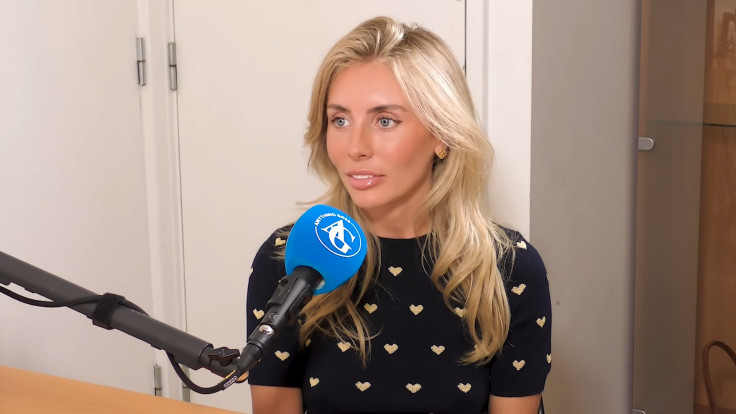
Bonnie Blue has defended her viral s** stunts, insisting in a new TikTok video posted this week that her work 'does not harm women' and only affects her personally, despite mounting criticism from councils, commentators and viewers across the UK and beyond.
The adult film performer, whose real name is Tia Billinger, has built a following around increasingly extreme content, including claims of sleeping with more than 1,000 men in 24 hours and filming sexual encounters on or near university campuses. Those stunts have drawn accusations that her work risks normalising exploitation, particularly among younger male audiences who consume and participate in the content.
Rejection On Criticism Of Viral S** Stunts
Speaking directly to followers on a behind-the-scenes TikTok account, Bonnie Blue rejected the idea that her content has wider social consequences. 'A lot of comments I used to get is I'm setting women back in general. I'm not, and I've never believed that,' she said. 'The only person that has been affected by what I do is me.'
@bonnie_btsx Ngl even for me, my next event is abit out there! #bonnieblue #bonnieblueevent #grwm #makeup #skincare
♬ original sound - bonnie_btsx
That position cuts sharply against the concerns raised by critics, including local authorities in areas where she films, who have questioned both the legality and the social impact of her productions. Some argue that the dynamic between performer and participants, often drawn from the public, raises ethical questions about consent, pressure and visibility in a social media economy that rewards shock value.
Blue's argument rests on personal agency. She frames her work as a choice that carries consequences she alone must absorb, particularly regarding reputation and income. According to her, securing commercial partnerships has been difficult. Brands may express interest privately, she said, but withdraw over fears of backlash.
'So many people are scared to touch me,' she told viewers. 'The amount of people that approach me, and brands that are like, 'I'd love to work with you, but we're just scared of the backlash.'
A Softer Image Sits Alongside Unchanged Content Plans
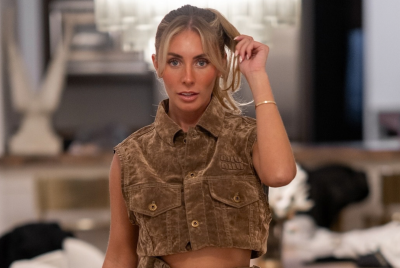
In parallel with her explicit material, Bonnie Blue has begun posting more subdued, everyday content, apparently to reshape public perception. The new account features routine moments rather than explicit scenes, from coffee runs to salon visits and time spent with her dog.
@bonnie_btsx Lol I just posted the unedited version (a lot of me having to do big breaths) #bonnieblue #outfit #grwm #babybump #pregnant
♬ original sound - bonnie_btsx
She suggested that the shift is already affecting how she is viewed. 'The BTS account is definitely helping with showing that I'm not this soulless, 18-year-old eater,' she said, referencing a caricature she believes has taken hold online.
There is, however, no indication that the underlying content strategy will change. Blue has made clear that her more extreme stunts will continue, even as she cultivates a second persona, more accessible to the public. In a recent video, she teased what she described as a 'disgusting' upcoming stunt involving members of the public, while acknowledging it could alienate some of her newer audience.
'I'm actually scared it's going to put some of my BTS followers off,' she admitted.
That tension between brand rehabilitation and escalation is likely to keep scrutiny high. Critics argue that the softer content risks masking rather than addressing the concerns tied to her main output, while supporters frame it as evidence that she is more than the persona presented in viral clips.
What remains unclear is whether Blue's central claim will hold up under continued attention. Her assertion that only she is affected sits uneasily alongside the scale and visibility of her content, particularly when it involves members of the public and is distributed widely online.
At the same time, there is no formal ruling or unified regulatory stance addressing her activities directly, leaving much of the debate in the realm of public opinion rather than established fact.
As her audience grows across multiple platforms, that gap between personal defence and public concern shows no sign of narrowing.
© Copyright IBTimes 2026. All rights reserved.
- Recommended For You