

'His Plan Is Insane': US Senator Claims Donald Trump Plans a 'Devastating Escalation' Against Iran
Chris Murphy warns of 'devastating escalation' as CNN reports possible broader US military operations against Iran
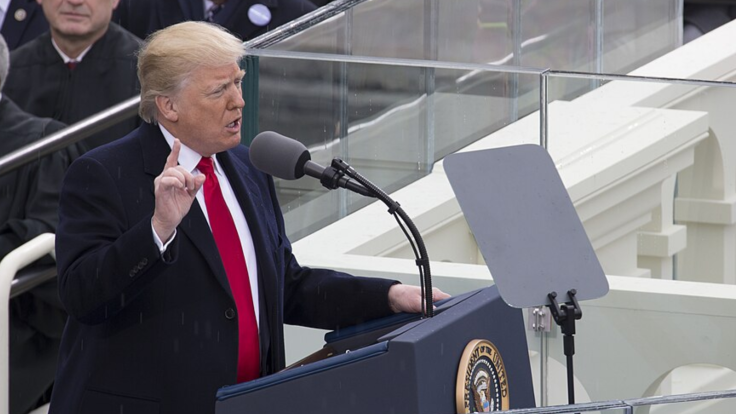
US Senator Chris Murphy has warned that President Donald Trump's reported post‑election plan to intensify military action against Iran could trigger a 'devastating escalation', describing the strategy as 'insane' in a speech in Washington.
Speaking at the Middle East Institute on Wednesday, 28 October 2026, Murphy said he had received a 'fairly detailed' briefing on the reported proposal, which would build on US operations already under way in the region after the 3 November midterm elections.
Chris Murphy Questions Donald Trump's Iran Strategy
Murphy said he had held a 'fairly detailed conversation' about Trump's reported military plans. Although he did not identify potential targets, his account suggested that the administration had considered an approach presented as limited in duration.
He questioned whether the proposed operation could achieve its objectives without provoking a wider conflict. At the Middle East Institute, Murphy told the audience: 'You've heard a preview that it would be a short-duration plan. I will just say this: their plan is insane.'
The senator warned that the strategy would produce 'devastating escalation' with Tehran. He also raised concerns about the United States' commitment to the rule of law, arguing that further military action could threaten that commitment.
Murphy warned that 'it will not achieve objectives and will set off a new cycle of escalation.' His remarks were a prediction about what could follow if the strategy were pursued, rather than confirmation that an operation had been ordered or that its consequences were known.
Trump, Iran and the Midterms: What Is at Stake?
Earlier reporting described military preparations that could support a broader campaign against Iran. Officials indicated that sufficient US forces were deployed in the region to carry out potential attacks, but the operations would still require the president's authorisation.
The possible strikes were described as extending beyond the limited operations undertaken since Trump halted full combat operations earlier in 2026. Those previous strikes targeted Iranian radars, launchers and other equipment that could be restored relatively quickly.
The recurring tactic was described as 'mow the lawn,' referring to efforts to damage military assets without pursuing a more extensive campaign. A larger operation, if approved, would represent a change in scope rather than another round of strikes against replaceable equipment.
Timing has also become part of the discussion. The earlier reports suggested that additional operations were more likely after the midterm elections on 3 November, but did not establish that electoral considerations determined the timetable. Nor did they confirm that Trump had made a final decision.
In September, former newspaper columnist and podcaster Greg Sargent questioned the conventional assumption that foreign policy rarely influences US elections. He argued that the administration's handling of Iran, Russia and Ukraine could become a larger political issue than strategists generally expect. His argument was commentary, not evidence of a measurable change in voter behaviour.
John Mearsheimer's Warning on US Options
An earlier assessment from University of Chicago political scientist John Mearsheimer offers a different criticism of further military action. Speaking to Australian journalist Tom Switzer in August, Mearsheimer argued that the United States had already suffered a strategic defeat in the conflict and lacked a convincing way to restore leverage over Iran.
'He lost the war. This is a devastating defeat for the United States. Can you tell me what the United States should do to regain leverage over Iran? I actually think you can't tell me because we have no solution.'
Mearsheimer also claimed that US munitions were depleted and that Gulf allies opposed renewed escalation. He warned that Iran could retaliate against oil facilities and desalination plants if the conflict intensified. Those claims remain his assessment and are not independently established by the supplied material.
© Copyright IBTimes 2026. All rights reserved.