

DOJ Watchdog Probes Federal Agents Caught Letting Thousands of Fentanyl Pills Flood Streets
DEA whistleblowers say agents watched massive fentanyl shipments move through New Mexico, raising explosive questions about public safety, federal policy and the price of bigger drug cases
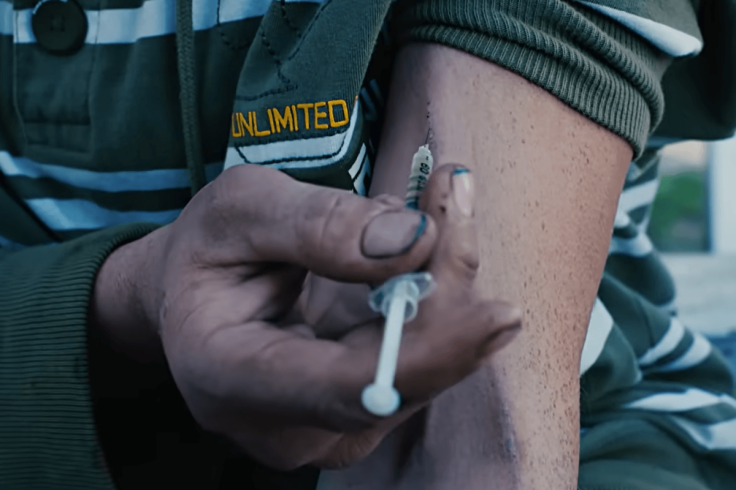
A DEA fentanyl investigation is intensifying after federal agents were accused of allowing large shipments of the deadly opioid to go unseized in New Mexico while pursuing larger trafficking cases.
The Justice Department''s inspector general has launched a review of the controversial tactic sometimes described as letting drugs 'walk'. At the centre of the controversy is one staggering figure: 74,000 fentanyl pills.
74,000 Pills Left Unseized
In June 2023, DEA agents monitored a suspected fentanyl transaction at an Albuquerque mobile home park. According to an internal report reviewed by the Associated Press, traffickers delivered 74,000 pills.
Agents were tracking phones, decoding communications and conducting real-time surveillance. Yet the drugs were not seized.
Days earlier, investigators also watched another suspected shipment from the same trafficking ring, hidden inside a spare tyre, go unseized. For DEA Special Agent David Howell, the decision crossed a dangerous line.
Justice Dept. Watchdog To Review DEA Tactic That Allowed Fentanyl To Hit Streets #HuffingtonPost https://t.co/zQPaUuWA9L
— #TuckFrump (@realTuckFrumper) August 18, 2026
'We Poisoned Our Community'
Howell, who filed a whistleblower complaint in 2023, told AP, 'We poisoned our community to make cases.'
He has argued that federal authorities exposed residents to a lethal drug in order to preserve investigations and pursue higher-level traffickers. He also said authorities still cannot account for some of the shipments that went unseized.
The DEA disputes that characterisation. A spokesperson told AP that allegations the agency knowingly allowed fentanyl to flood communities 'fundamentally mischaracterise the facts'. Now, an independent watchdog will examine the allegations and the policies governing such operations.
The U.S. Justice Department's internal watchdog on Monday announced a review of a controversial tactic in which federal law enforcement allowed fentanyl to hit the streets to build bigger cases against drug traffickers. https://t.co/84eHWPr5nn
— PBS News (@NewsHour) August 18, 2026
The Numbers Keep Growing
The 74,000 pills were not the only alleged shipment. Howell reported that agents permitted at least 1.8 million fentanyl pills to go unseized during a separate multistate investigation.
A former DEA supervisor also alleged that 'millions' of pills went unseized during the operation. The investigation eventually led to a record-breaking DEA operation in 2025.
Authorities seized 2.7 million fentanyl pills in Albuquerque alone, while the broader five-state operation resulted in more than 3 million pills being seized. But the growing allegations raise a difficult question: how much fentanyl was allowed to circulate before agents finally intervened?
Two additional DEA whistleblowers have also come forward. One alleged that colleagues failed to seize 350,000 pills after learning about the shipment during a 2024 wiretap.
Another raised concerns about a courier who allegedly made repeated deliveries between Phoenix and Albuquerque in 2022 and 2023, with shipments estimated at between 50,000 and 100,000 pills each.
That potentially turns one controversial operation into a much wider question about federal drug-enforcement practices.
The 'One Pill Can Kill' Contradiction
The controversy becomes even sharper when compared with the DEA's 'One Pill Can Kill' campaign.
The campaign warns Americans that counterfeit pills containing fentanyl can be deadly. Yet whistleblowers and former agents are questioning how that message squares with allegations that enormous shipments were allowed to go unseized during investigations.
That contradiction is now one of the most contentious elements of the controversy surrounding the DEA's handling of fentanyl investigations.
Rules Changed in 2024
A crucial detail sits in the policy timeline. Justice Department guidance adopted in 2017 instructed agents to seize fentanyl or otherwise prevent its distribution 'as soon as practicable,' according to records reviewed by AP.
In 2024, however, the department quietly revised its fentanyl protocols, giving agents greater discretion to leave drugs unseized when doing so could preserve an investigation and help authorities pursue a broader trafficking organisation.
The issue is therefore not simply whether the DEA's alleged drug-walking tactic was used. It is whether that discretion was properly exercised when agents were tracking huge quantities of an exceptionally lethal opioid.
Rules Changed in 2024
The controversy has also moved beyond federal agencies. New Mexico Attorney General Raúl Torrez is investigating whether DEA agents violated state law by allowing large quantities of fentanyl to go unseized in Albuquerque. He has also sought federal records and threatened legal action amid a dispute over access to information.
DEA Administrator Terry Cole requested an outside review of the allegations, saying the move should not be interpreted as a lack of confidence in DEA personnel. The Justice Department inspector general subsequently launched a broader examination of the department's handling of fentanyl investigations.
That distinction is important. The inspector general's review is examining allegations, investigative practices and departmental policies; it has not concluded that DEA agents committed wrongdoing.
What the Watchdog Must Determine
The inspector general's review will examine Justice Department actions over the past two years and whether similar practices were used in other cities.
Investigators will have to determine whether agents followed federal rules, whether supervisors authorised the decisions and how the department's 2024 policy change affected the handling of fentanyl shipments.
For critics, the question is painfully simple: if agents knew fentanyl was moving, watched it move and chose not to intervene, how many pills ultimately reached communities before the larger cases were built?
That is what makes this DEA fentanyl investigation potentially far bigger than one 74,000-pill shipment. The watchdog's findings could determine whether investigators appropriately balanced the pursuit of major trafficking organisations against the immediate public-safety risks posed by allowing fentanyl shipments to remain in circulation.
© Copyright IBTimes 2026. All rights reserved.