

'We 100% Got People Killed': DEA Allowed Thousands of Fentanyl Pills on the Streets to Catch Bigger Fish
Whistleblower claims DEA's strategy risks public safety amid overdose epidemic
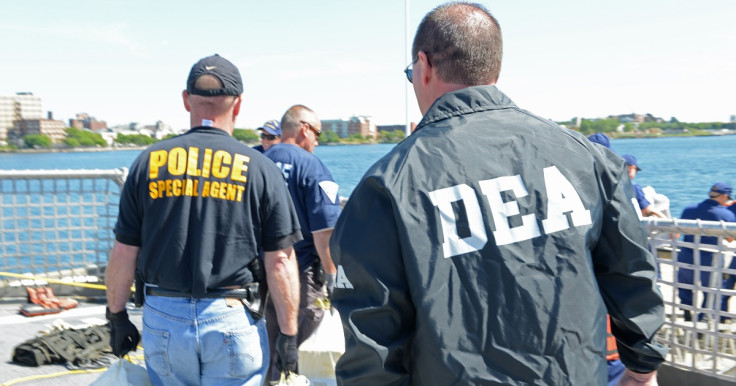
At the height of America's fentanyl crisis, federal agents allegedly watched hundreds of thousands of deadly pills move through New Mexico without intervening. What makes the accusation so explosive is that it comes from inside the Drug Enforcement Administration (DEA) itself.
A veteran DEA agent has accused the agency of allowing enormous quantities of fentanyl to reach communities as part of an aggressive strategy designed to build larger cases against major trafficking networks. The allegations, supported by government records reviewed by the Associated Press, have reignited questions about how far law enforcement should go when pursuing organised drug operations amid an overdose epidemic that continues to claim tens of thousands of lives.
'We poisoned our community to make cases,' DEA Special Agent David Howell told the news agency. 'Through our own willful blindness, we get to say, "We don't really know what happened to the drugs." But we 100% got people killed.'
The DEA strongly disputes that characterisation, insisting its actions were lawful and consistent with federal guidance.
A High-Stakes Strategy Under Scrutiny
For years, investigators have used a tactic known as 'walking' contraband, allowing illegal goods to move through criminal networks in the hope of identifying higher-level operators and dismantling entire organisations.
The approach has long been used in drug investigations involving cocaine, heroin and methamphetamine. Fentanyl, however, presents a different challenge.
Just a few milligrams can prove fatal. The synthetic opioid has become the leading driver of overdose deaths in the United States, prompting the DEA to launch its widely publicised 'One Pill Can Kill' campaign warning of the drug's extraordinary potency.
According to current and former agents, New Mexico became a testing ground for an especially aggressive version of that strategy. Authorities allegedly monitored shipments, intercepted communications and tracked transactions involving large quantities of fentanyl pills while choosing not to seize them immediately.
What cannot be ignored is the scale described in the records. In one June 2023 operation in Albuquerque, agents reportedly observed a delivery involving 74,000 pills. According to investigative reports reviewed by AP, authorities tracked the transaction in real time but allowed it to proceed.
Days earlier, investigators allegedly watched another suspected fentanyl shipment concealed inside a spare tyre.
'We did nothing but sit back and watch,' Howell said.
The Argument for Catching 'Bigger Fish'
Federal prosecutors and former officials defend the broader rationale behind the tactic.
Alex Uballez, who served as US Attorney for New Mexico between 2022 and 2024, said law enforcement agencies sometimes had to balance immediate seizures against the possibility of dismantling larger trafficking organisations.
'The bigger fish are worth catching,' Uballez said. 'And that will save more lives.'
That philosophy ultimately contributed to what authorities described as the largest fentanyl seizure in DEA history.
In May 2025, then Attorney General Pam Bondi announced a major takedown that resulted in the seizure of more than three million fentanyl pills. Investigators said the operation targeted a large-scale trafficking organisation operating across multiple states.
Supporters of the strategy argue that prematurely disrupting shipments can compromise long-term investigations and allow criminal leaders to remain untouched.
The DEA echoed that position in a statement, saying suggestions that agents knowingly permitted fentanyl to flood communities were 'false' and fundamentally misrepresented the facts.
Agency spokesperson Amanda Wozniak said investigators relied on court-authorised wiretaps, surveillance operations and intelligence gathering to target broader criminal networks.
Questions Over Public Safety
Several current and former DEA officials said they were shocked by the quantities allegedly allowed to circulate. One former supervisor claimed agents permitted 'millions' of pills to go unseized during a major investigation.
Howell's whistleblower disclosures alleged authorities allowed at least 1.8 million fentanyl pills to be distributed before eventually moving against traffickers.
'It's outrageous to put that many lives at risk in hopes of making a big case,' said Tristan Leavitt, president of whistleblower advocacy organisation Empower Oversight, which has called for further investigation.
The debate has also drawn attention to internal Justice Department guidance.
Protocols introduced in 2017 reportedly instructed agents to seize fentanyl or prevent its distribution 'as soon as practicable', emphasising that public safety should take priority. Those guidelines were revised in 2024, granting investigators greater discretion to weigh immediate risks against the potential benefits of preserving an investigation.
A Whistleblower's Warning
Howell's concerns eventually led him to file formal complaints with federal oversight bodies. The Office of Special Counsel initially found a 'substantial likelihood of wrongdoing' and requested further review. Ultimately, the Justice Department concluded that prosecutors and DEA officials had acted reasonably and that their decisions did not create a specific threat to public health.
Howell argues authorities can never know how many overdoses may have been linked to shipments they chose not to stop. He pointed to cases such as the death of a 15-month-old child in New Mexico who ingested fentanyl residue, highlighting what he sees as the human cost of investigative calculations.
His decision to come forward carried consequences. According to records, Howell was assigned to desk duty, received lower performance evaluations, and was prevented from testifying in federal court.
© Copyright IBTimes 2026. All rights reserved.