

Ex-ICE Director Warns Agency Has 'a Problem' After 17 ICE Shootings, Blames Traffic Stops and Training
Former acting ICE director John Sandweg says the agency has 'a problem' after 17 officer-involved shootings, pointing to expanded traffic stops and concerns over training.
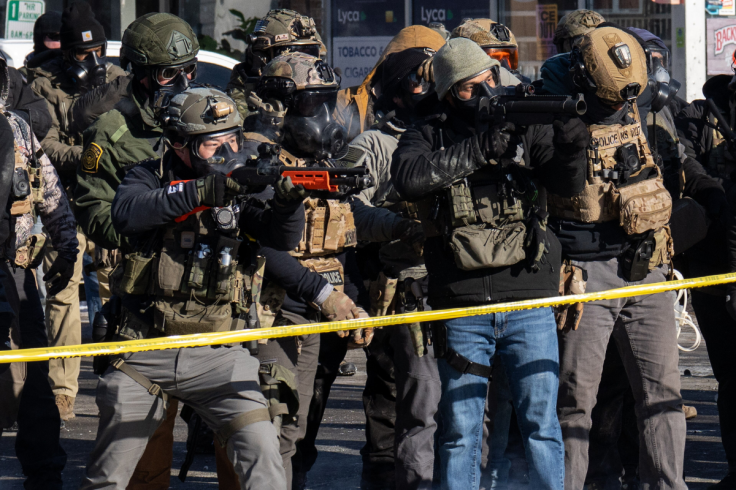
A former acting director of US Immigration and Customs Enforcement has warned that the agency has 'a problem' after at least 17 shootings involving ICE officers this year, arguing that the growing reliance on traffic stops has exposed shortcomings in how agents are deployed and trained.
On Sunday, John Sandweg said the recent incidents have raised massive concerns, regardless of whether individual uses of deadly force are ultimately found to have been justified.
The remarks came after two fatal ICE shootings this month reignited scrutiny of the agency's tactics.
Both incidents occurred during traffic stops in Maine and Texas, where Department of Homeland Security officials said the men involved attempted to flee and used their vehicles as weapons. Neither victim was reportedly the intended target of the operations, and no officers involved were wearing body cameras.
Ex-Director Says ICE Shootings Show Operational Problem
Sandweg, who served as acting ICE director under former President Barack Obama between 2013 and 2014, cautioned against focusing solely on whether individual officers acted lawfully.
'It's really difficult to tell based on the limited information we have available to us thus far,' he said when asked whether deadly force appeared justified in the two recent cases.
Instead, he pointed to what he described as a troubling pattern.
'If you take a step back and you look at this trend, where we have at least 17 shootings involving ICE agents, not including other DHS officers, five of which have been fatal, it's clear to me we have a problem,' Sandweg said.
He attributed much of that concern to changes in enforcement strategy, arguing that ICE has increasingly relied on vehicle stops to carry out immigration arrests despite such operations historically playing only a limited role within the agency.
According to Sandweg, traffic stops were never a significant part of ICE's traditional enforcement work because agents could often arrest individuals before they entered a vehicle or after they left it. As a result, he said, they have not historically received the same level of specialised training for vehicle encounters as officers in many other law enforcement agencies.
He added that a temporary pause in those operations, previously suggested by the DHS secretary, 'made a lot of sense' while the agency assessed the growing number of shootings. President Donald Trump later intervened to ensure the vehicle stop strategy continued.
Body Cameras and Recruitment Questioned
The interview also turned to the absence of body cameras during both recent fatal encounters.
Although ICE has received substantial funding, including money specifically allocated for body cameras, Sandweg said the issue did not appear to stem from financial constraints.
'It's not a financial issue,' he said. 'The only thing I could say is, it's a prioritisation issue.'
He acknowledged that the lack of body cameras predates the current administration but argued that the agency's expanding role in conducting arrests within communities makes their use increasingly important.
Sandweg also voiced concern about ICE's recruitment drive as the agency seeks to rapidly increase its workforce.
The discussion referenced reporting by the Associated Press regarding one officer involved in the Maine shooting, whose former wife and relatives alleged he had a history of violence. Those claims have not been independently verified during the interview, and Sandweg stressed he did not know the full details of that officer's background.
Nevertheless, he said the allegations highlighted questions about vetting standards during a period of accelerated hiring.
'It absolutely raises concerns for me,' Sandweg said, adding that ICE has historically hired only a few hundred agents annually but is now attempting to recruit thousands in a much shorter period.
He warned that expanding the workforce so quickly could overwhelm the systems responsible for background checks and suitability assessments before new recruits are deployed.
Sandweg also questioned the Justice Department's aggressive approach to prosecuting protesters during immigration enforcement operations. Citing reporting that many assault cases had either collapsed or resulted in acquittals, he suggested authorities should avoid pursuing charges where evidence is weak, arguing that doing so ultimately does little to support ICE officers carrying out an already difficult job.
© Copyright IBTimes 2026. All rights reserved.