

Trump's Iran War, Israel Aid and Russia-Ukraine Strategy Face New Threat After Democrats' Midterm Victory
Control of both chambers of Congress could bring tougher scrutiny of the Iran war, aid to Israel and policy towards Ukraine and Russia
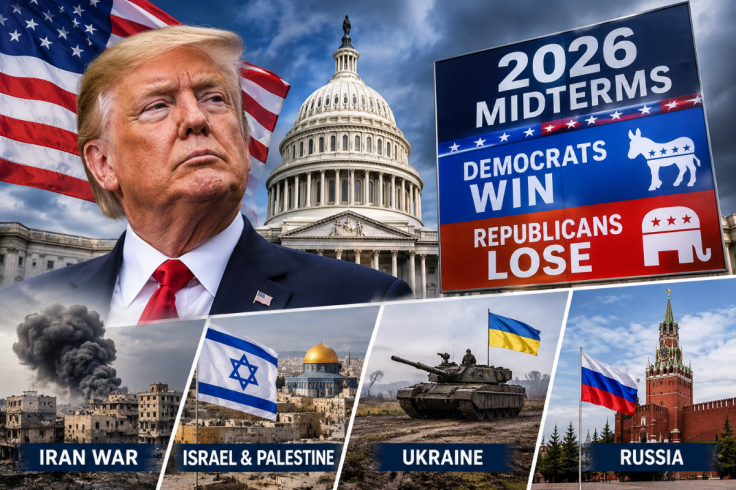
The US Republican Party's sweeping defeat in the 2026 midterm elections could have far-reaching consequences for American foreign policy, particularly as Washington remains deeply involved in conflicts in the Middle East and Europe.
Democrats secured control of both the House of Representatives and the Senate in the 3 November 2026 midterm elections, delivering a significant rebuke to Trump and weakening his party's grip on Congress. The results came amid mounting public dissatisfaction over inflation, rising energy prices and the administration's handling of the war with Iran.
Although Trump remains president and retains considerable authority over military operations and diplomatic decisions, the Democratic victories could make it considerably harder for his administration to pursue its international agenda without congressional scrutiny.
The incoming Congress, which takes office in 3 January 2027, could use its control over government spending, legislative committees and Senate confirmations to challenge the White House on several major foreign policy issues.
Iran War Faces Greater Congressional Scrutiny
The most immediate consequences could be felt in the conflict with Iran, which has become a significant political liability for Trump.
The US and Israel launched military operations against Iran on 28 February, with the conflict contributing to regional instability and disruptions to energy markets. Rising fuel prices and concerns about the economic consequences of prolonged military involvement also became important issues during the midterm campaign.
Democrats have repeatedly challenged the administration's authority to continue military operations without congressional approval. With control of both chambers, they will have greater opportunities to investigate the decision to enter the war, scrutinise military expenditure and pursue legislation restricting further operations.
According to the Council on Foreign Relations, Democratic lawmakers are expected to use oversight hearings and funding negotiations to demand accountability for the administration's Iran strategy.
The outcome could also strengthen pressure on Trump to pursue a diplomatic settlement. However, the president retains his constitutional authority as commander-in-chief, meaning Democrats cannot automatically bring the conflict to an end.
Israel and Palestine Could See a Shift in US Pressure
Israel could face increased scrutiny over American military assistance and its conduct in the region as Democratic lawmakers gain greater influence over foreign policy debates.
Some Democrats have called for stricter conditions on military aid to Israel and stronger enforcement of existing US laws governing arms transfers. A Democratic-controlled Congress could therefore examine whether American weapons and financial assistance are being used consistently with US legal requirements.
The implications could extend to Palestine, particularly Gaza and the occupied West Bank, where humanitarian concerns and the consequences of Israeli military operations remain central to international debate.
Lawmakers could push for greater humanitarian assistance, stronger diplomatic engagement and measures addressing civilian protection. They may also seek to make future military assistance contingent on compliance with US law.
However, Democratic control does not necessarily mean a unified approach to Israel. The party contains sharply differing positions, and any substantial change in policy would face resistance from Republicans and potentially from the White House.
Russia Could Face Tougher Sanctions as Ukraine Gains Leverage
Ukraine could also benefit from the Democrats' return to congressional power, particularly if lawmakers seek to restore military and financial assistance that Trump has reduced or suspended.
Trump has largely halted direct US military and financial aid to Kyiv while pursuing a diplomatic approach to Russian President Vladimir Putin. His administration has also drawn criticism from lawmakers over decisions to ease certain sanctions on Russian energy exports.
A Democratic-controlled Congress could revive legislation providing assistance to Ukraine and increase pressure on Moscow through additional economic restrictions. Lawmakers could also challenge attempts by the administration to offer sanctions relief to Russia as part of negotiations to end the war.
Reuters reported that Democratic lawmakers could use their control of the congressional agenda to advance Ukraine aid legislation, potentially with support from Republicans who have historically backed Kyiv. A sufficiently large bipartisan majority could even override a presidential veto.
However, the election does not guarantee a dramatic improvement in US-Ukraine relations. Trump retains control over American diplomacy, and his administration could continue pursuing a settlement that prioritises negotiations with Moscow over Kyiv's demands.
The Council on Foreign Relations has also warned that European allies remain concerned that Trump could seek to secure a legacy-defining agreement with Putin, potentially involving concessions that would be unfavourable to Ukraine.
Trump Retains Power but Faces a Tougher Congress
Despite the Democrats' sweeping victory, the election does not automatically transfer control of American foreign policy to Congress.
Trump remains commander-in-chief and retains considerable authority over military deployments, diplomatic negotiations and national security decisions. He can also veto legislation passed by lawmakers, forcing Democrats to secure substantial Republican support to override him.
Nevertheless, Democratic control of both chambers will give the opposition greater influence over government funding, investigations, defence spending and appointments to senior diplomatic positions.
The incoming lawmakers could also investigate the administration's decisions on Iran, Israel, Ukraine and Russia through congressional hearings and demands for official documents.
The political consequences could extend beyond Washington. Foreign governments will be watching whether the election signals a more restrained American approach to military intervention and a renewed commitment to traditional alliances.
For Iran, Israel, Palestine, Russia and Ukraine, the results offer opportunities as well as uncertainty. Trump's ability to shape international events remains substantial, but his administration will face a more assertive Congress during the final two years of his presidency.
© Copyright IBTimes 2026. All rights reserved.