The Entrepreneur Rewriting How Europe Accesses Medical Care
How Dr. jur. Can Ansay turned €5,000, zero investors, and a lawyer's instinct for what regulated systems will permit into Germany's largest digital health platform.
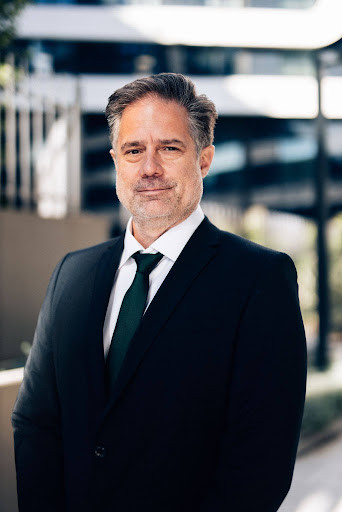
Dr. jur. Can Ansay does not question systems in order to destroy them. He questions them because he believes they can be better. That conviction, part legal instinct, part technological vision, part sheer stubbornness, has turned a lawyer from a family of jurists and doctors into one of Europe's most consequential health-tech entrepreneurs. His father is a law professor. His mother and sister are physicians. Ansay grew up inside the institutions he would later set out to redesign.
Today, his platform DrAnsay.com has facilitated over three million online medical treatments and reached more than one million patients. It is Germany's fastest-growing digital health platform. It was built with €5,000 and zero outside investment. And it exists because one man looked at the most regulated healthcare market in Europe and saw not an immovable system, but a design problem waiting for better technology.
The Vision Came First
As early as 2013, while still practising law, Ansay built an AI-powered medical diagnosis app. It was not a headline-grabbing launch. It was a signal of what would come: a career spent at the intersection of artificial intelligence, telemedicine, and regulated markets. For Ansay, technology has never been the point. Access is the point. Technology is the fastest lever to get there.
"Digitalisation, AI, and above all telemedicine could make healthcare significantly better, faster, and more efficient; if we had the courage to truly think big and implement it," Ansay said at a POLITICO Pro event. "It is not knowledge we lack. It is determination."
That determination took concrete form in 2018. A change in German law had just permitted remote medical consultations. Within two months, Ansay launched a digital sick-note service that let patients with a common cold obtain a legitimate medical certificate in minutes, via a smart AI-supported questionnaire and a telemedical consultation, rather than losing half a day in a waiting room. With no venture capital, no investors, and €5,000 in startup costs, the platform had eighty patients on day one.
"I didn't need any investors," Ansay recalls. "Within two months after we decided to do this startup, we launched and had eighty patients per day from day one, because we found a great solution that nobody had offered before."
Challenging the System from Within
What happened next is the part of the story that defines Ansay's approach. Doctors' associations condemned the service. The media oscillated between fascination and suspicion. Regulators scrutinised every detail. Ansay did not retreat and he did not escalate. He was engaged. His legal training, the thing that sets him apart from most tech founders – meant he knew precisely where the regulatory boundaries were. He did not cross them. He stood on them, publicly, and made the case that the boundaries themselves were due for an update.
Then something remarkable happened: the establishment followed. After initial resistance, Germany's statutory health insurers introduced telemedical sick notes themselves. What had been controversial became standard practice. Ansay's digital sick-note service, once dismissed as reckless, had become a milestone in the history of German telemedicine; not because it broke the rules, but because it proved they could be better.
It is the same pattern that has defined every Ansay venture since: identify where friction between patients and care is greatest, build the technology to remove it, defend what you have built with legal precision, and wait for the system to catch up.
Five Ingredients, No Investors
Ask Ansay for his recipe for building a company and the answer has nothing to do with funding rounds. He talks about five ingredients: courage, creativity, heart, intellect, and persistence. Each one maps to a real decision.
Courage meant launching a digital health service in Europe's most regulated market with no external capital. Creativity meant seeing that a WhatsApp-based consultation could accomplish what a waiting-room visit could not; years before the pandemic made telemedicine mainstream. Heart meant running a non-profit COVID-19 self-test certificate programme, used millions of times, without charging a single cent or accepting government compensation. Intellect meant structuring every product so it worked within the law while revealing where the law was outdated. And persistence meant fighting court battles across multiple countries without flinching.
"It motivates me to come up with better solutions if I have less money, because then you have to get creative," Ansay says. "My business is all about finding spaces with the best effort-benefit ratio." "To make as many people as happy as possible; that's my guiding light in my life, in my business life."
When Mothers Called in Tears
During the pandemic, Ansay's platform offered free self-test certificates through a non-profit doctors' programme, a service he funded himself, out of conviction. It was used millions of times. Mothers called the company in tears to thank the team for a service that had given their families a way through the bureaucratic maze of pandemic-era testing requirements. For Ansay, those calls were not a footnote. They were the point.
"We are social entrepreneurs," Ansay says. "I really put humanity and our users at number one. We didn't charge any money. We didn't get any compensation from the government, even though there were programmes to do so."
From the Black Market to the Pharmacy Counter
In 2019, while running the sick-note platform at scale, Ansay recognised that the same telemedical technology could solve a much larger problem. Medical cannabis existed in Germany on paper. In practice, stigma, bureaucratic friction, and an unwillingness among most doctors to prescribe it left hundreds of thousands of patients stranded between the black market and an inaccessible system.
By 2022, Ansay had built Europe's first licensed online marketplace connecting patients with pharmacies for medical cannabis, not a pharmacy itself, but a platform that brought transparency, product selection, and price competition to a sector that previously had none. Over 700,000 patients have since accessed cannabis prescriptions through the service. The top-performing pharmacy on the marketplace remits over €500,000 in VAT to the German state every single month.
"We brought cannabis from the black market into the white market of pharmacies," Ansay says. When Germany removed cannabis from its narcotics list in April 2024, the partial legalisation validated what Ansay's platform had already made possible. A YouGov survey commissioned by DrAnsay confirmed the shift: a majority of Germans now support controlled dispensing through pharmacies.
AI as the Next Lever
For Ansay, telemedicine was always only the beginning. His platforms have used AI-supported diagnostic questionnaires from the start, smart screening tools that filter complex cases and support physicians in making faster, more consistent decisions. The company's latest innovation, DrAnsAI, is a health chatbot designed to provide patients with reliable, AI-powered guidance rather than forcing them to navigate the noise of advertising, misinformation, and opaque algorithms that dominate online health search today.
"Modern digital medicine is no longer a future promise; it is reality," Ansay says. "Our growth is a clear expression of a trend: digital medicine works when it is built consistently from the perspective of patients."
The ambition is not incremental. Ansay sees AI as the tool that will restructure how healthcare operates at every level: diagnosis, prescription, patient education, follow-up care. He has made the company's research data available to scientists, offering its patient base for studies and surveys, a move that reflects his conviction that digital platforms should accelerate medical knowledge, not just distribute prescriptions.
Radical in the Idea, Responsible in the Execution
Ansay's ventures have drawn sustained opposition from pharmacy associations, medical councils, and regulatory bodies across multiple countries. French courts shut down his platform there. German press coverage has been by turns admiring and hostile. His response, consistently, has been to engage rather than evade: address the criticism, fix what needs fixing, fight what needs fighting in court, and keep building.
He is not the archetype of the reckless Silicon Valley disruptor who ignores regulation and asks forgiveness later. His legal background makes such an approach structurally impossible for him: he sees regulatory frameworks from the inside, understands what they protect, and challenges only the parts that have calcified into barriers rather than safeguards. The result is not chaos but infrastructure: scalable, regulated platforms that did not exist before he built them.
When he keynoted the International Cannabis Business Conference in Berlin in April 2025, the audience was full of industry leaders who had watched Germany's regulatory landscape shift toward precisely the kind of patient access Ansay had spent years constructing. He had not waited for the change. He had built the infrastructure that made the change feel inevitable.
Beyond the Platform
Ansay now lives on the Côte d'Azur, a long way from the grey administrative corridors of Berlin where his earliest regulatory battles were fought. He is a sought-after speaker, equally at home on a podcast, a conference stage, or a television studio.
He cites inventors like Carl Benz as his role models, people who reshaped the world against all resistance. "This moment inspires me," he says, "when people decided to do something even though everyone else was against it. This is such a magic thought that inspires me to tears, actually."
The Measure of Impact
What ties Ansay's ventures together is a conviction that the future of healthcare will not be decided by any single technology, but by the willingness to build systems designed for patients rather than institutions. He measures success not in valuations or exit multiples, but in a simpler metric: how many people received care today who would not have received it yesterday.
DrAnsay.com did all of this without a single euro of outside investment, from a standing start of €5,000. Whether the medical establishment agrees with every one of his methods is, at this point, beside the question. What Ansay has demonstrated, through years of building, court battles, and relentless iteration, is that sometimes you have to have the courage to push past the boundaries so that everyone can see there is something better on the other side.
"The startups who have the courage, the brain, the heart, the creativity, and the persistence to push new technology into the best use cases for users," Ansay says; "those are the ones who will shape the future."
He might well be describing himself.
© Copyright IBTimes 2025. All rights reserved.
- Recommended For You