'They Hate You': Elon Musk Has Bizarre 'Crash Out' After Reporter Says People 'Loathe' Him
Musk's Interview with Zanny Minton Beddoes Turns into a Public Dispute

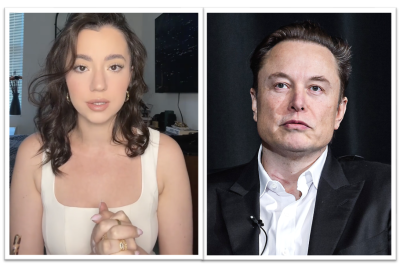
Elon Musk has launched a series of personal attacks against The Economist editor-in-chief Zanny Minton Beddoes after she challenged him during a wide-ranging interview by suggesting that many people 'loathe' him, turning a tense exchange into a days-long public dispute.
The interview ranged from immigration and free speech to Musk's political influence and his commentary on Europe. But one question appeared to resonate more than any other. Rather than simply dismissing the criticism, Musk returned to the exchange repeatedly on X, accusing Beddoes of betraying Western values and portraying the interview as further evidence that mainstream media has lost public trust.
The fallout has become one of Musk's most widely discussed media appearances in recent months, highlighting both his increasingly adversarial relationship with traditional journalism and his willingness to extend disagreements well beyond the interview itself.
A Question That Struck A Nerve
During the interview, Beddoes asked Musk whether he understood why many people viewed him negatively.
'I mean some people do loathe you,' she said, before asking whether his growing political interventions and use of X were helping or harming Western democracy.
𝐄𝐋𝐎𝐍 𝐌𝐔𝐒𝐊 𝐓𝐎 𝐓𝐇𝐄 𝐄𝐂𝐎𝐍𝐎𝐌𝐈𝐒𝐓'𝐒 𝐄𝐃𝐈𝐓𝐎𝐑: “𝐌𝐎𝐑𝐄 𝐏𝐄𝐎𝐏𝐋𝐄 𝐇𝐀𝐓𝐄 𝐘𝐎𝐔 𝐀𝐍𝐃 𝐓𝐇𝐄 𝐌𝐄𝐃𝐈𝐀 𝐓𝐇𝐀𝐍 𝐘𝐎𝐔 𝐑𝐄𝐀𝐋𝐈𝐙𝐄”
— M.A. Rothman (@MichaelARothman) July 25, 2026
𝐄𝐥𝐨𝐧 𝐌𝐮𝐬𝐤 (@elonmusk) sat down with 𝘛𝘩𝘦 𝘌𝘤𝘰𝘯𝘰𝘮𝘪𝘴𝘵 editor-in-chief Zanny Minton Beddoes at Tesla's… pic.twitter.com/8yMlujpWnz
Musk acknowledged the criticism but quickly shifted the discussion.
'Maybe some people do loathe me and that's probably true. I don't care,' he replied, arguing instead that his audience on X demonstrated broad public support. Pointing to his hundreds of millions of followers, Musk suggested that far more people liked him than disliked him.
Rather than expanding on Beddoes' concerns about his influence, Musk framed the discussion around popularity, presenting the size of his online audience as the more meaningful measure.
Interview Gives Way To Public Feud
The disagreement did not end when the cameras stopped rolling.
Over the following days, Musk repeatedly criticised Beddoes on X, reportedly describing her as a 'traitor to the West, plain and simple', a 'woke NPC with zero self-awareness' and 'an unthinking NPC'.
She’s an unthinking NPC
— Elon Musk (@elonmusk) July 27, 2026
Those remarks shifted attention away from the interview itself and towards Musk's increasingly personal criticism of the journalist.
During the interview, Beddoes had challenged him on several contentious issues, including his warnings about immigration in Europe, his claims that Britain risked civil unrest and his growing influence over political debate through X. Yet much of Musk's public response focused less on those issues than on Beddoes herself.
Familiar Criticism Of The Media
Musk also returned to a recurring theme in his public comments: declining trust in traditional media.
Instead of dwelling on why some people might dislike him, he argued that journalists are viewed even more negatively, claiming the 'shoe is on the other foot' because mainstream news organisations have lost public confidence.
He reinforced that message by reposting supporters who dismissed the interview as 'fake news' or criticised Beddoes personally.
The response reflects a pattern that has emerged repeatedly in Musk's interactions with the press. Interviews that begin with questions about his politics, business decisions or use of X often evolve into broader arguments over the credibility of the journalists asking those questions.
Why The Exchange Resonated
Part of the interview's appeal online lay in its simplicity.
Rather than centring on technical issues or policy debates, it showed one of the world's most influential business leaders being asked directly about his public reputation.
The clip spread rapidly across social media because viewers saw a contrast between Musk's insistence that he was unconcerned by criticism and his decision to continue responding long after the interview had ended.
That contrast helped sustain interest in the exchange well beyond its initial broadcast.
A Broader Pattern
The dispute also reflects Musk's increasingly confrontational relationship with established media organisations.
As his involvement in political debates has expanded, so too have his clashes with journalists questioning his influence, his use of X and his commentary on immigration, free speech and European politics.
Supporters argue those confrontations show Musk challenging an establishment media unwilling to tolerate dissenting views. Critics counter that his responses often rely on attacking the interviewer rather than fully addressing the underlying questions.
The interview with Beddoes has become another example of that divide. What began as a discussion about democracy, influence and public trust ultimately evolved into a public argument over the journalist herself.
Whether critics describe Musk's reaction as a 'crash out' or simply another high-profile clash with the media, the exchange ensured the interview remained in the spotlight for days afterwards. In doing so, it illustrated how quickly a single pointed question can evolve into a much larger debate about power, politics and the role of the press.
© Copyright IBTimes 2025. All rights reserved.
- Recommended For You