The 45-Day Countdown: Elon Musk's X Ordered to Pay Hundreds of Thousands for Ghosting Child Safety Watchdog
Elon Musk's X has been hit with a near-maximum A$650,000 fine after Australia's online safety watchdog said the platform failed to properly respond to questions on child abuse content.
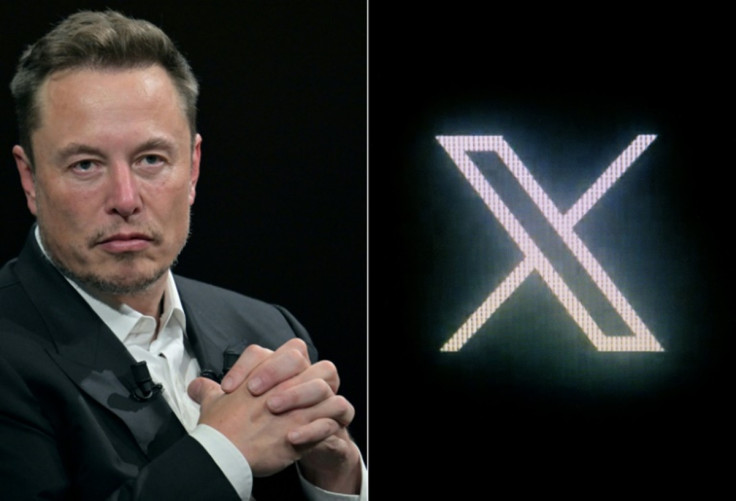
Elon Musk's social media platform X has been ordered by Australia's Federal Court in Melbourne to pay A$650,000 (£340,000) within 45 days after admitting it failed to properly answer a child safety notice from the country's online regulator.
The case centres on a legal notice issued in February 2023 by Australia's eSafety commissioner to what was then Twitter, demanding detailed information on how the company was dealing with child sexual exploitation and abuse material on its service.
Under the Online Safety Act, large tech platforms are required to meet what Australia calls 'basic online safety expectations,' including transparency about how they detect and remove such content.
X Child Safety Case Grew From A Routine Notice
The February 2023 notice required Twitter to prepare a report explaining its systems for identifying and responding to child sexual abuse material. On 15 March that year, Twitter was merged into X Corp following Elon Musk's takeover and restructuring of the company. Two weeks later, on 29 March, X Corp submitted its report to eSafety.
The response did not satisfy regulators. The eSafety commissioner, Julie Inman Grant, identified key gaps in what X had provided and wrote back on 6 April, pressing for further information. According to court documents, the additional material was not supplied until 5 May.

That delay became the heart of a legal battle that would drag on for more than three years. The commissioner argued in federal court that X Corp had breached the Online Safety Act between 29 March and 5 May by failing to properly comply with the original safety notice, despite the merger and rebranding.
X Corp initially tried to fight the case on technical grounds. Its lawyers contended that, because Twitter ceased to exist as a company after the March merger, X Corp was not bound to honour the notice served on its predecessor.
The court did not buy it. In October 2024, Justice Michael Wheelahan rejected that argument and ruled in favour of the eSafety commissioner, ordering X Corp to comply with the notice and accept that the obligations had carried over.
The company then attempted to overturn that decision. The full federal court reviewed the matter and, in July 2025, upheld Justice Wheelahan's ruling, reinforcing the view that corporate restructuring could not be used as a shield against regulatory demands.
X Child Safety Penalty Nears Maximum Available Fine
By the time the case returned to court this week, X Corp had dropped its earlier resistance. On Thursday, the US-based company formally admitted the contraventions, while stressing that they occurred during what it described as a period of 'significant corporate changes' prompted by the Twitter–X Corp merger.
Lawyers for X Corp and the eSafety commissioner agreed on a penalty of A$650,000. Justice Wheelahan accepted the proposal and imposed the fine, noting it sat close to the maximum available penalty of A$687,500 for the breaches in question.
In his written reasons, he said a near-maximum sanction was necessary for a company of X's size and financial clout.
A lower figure, he warned, risked becoming 'simply a cost of doing business' rather than a real deterrent to non-compliance. X was also ordered to pay A$100,000 towards the commissioner's legal costs.
The eSafety commissioner welcomed the judgment, framing it as part of a broader effort to ensure that global social media companies respect Australian rules rather than treating them as optional.
'Meaningful transparency is critical to holding technology companies to account,' Julie Inman Grant said in a statement after the ruling, arguing that the public could not rely on self-reporting by platforms alone when it came to the policing of child sexual abuse content.
X Corp has not publicly elaborated on its internal child safety operations in this case beyond the material provided to the regulator and the admissions recorded in court. The company has, however, accepted the timetable, with the ruling giving it 45 days to pay the combined penalties and costs.
The fine is modest when set against the scale of X's global operations, but the symbolism is harder to brush aside.
The judgment underlines that, at least in Australia, corporate name changes and restructuring will not reset the clock on regulatory demands, particularly in child protection matters.
© Copyright IBTimes 2026. All rights reserved.
- Recommended For You