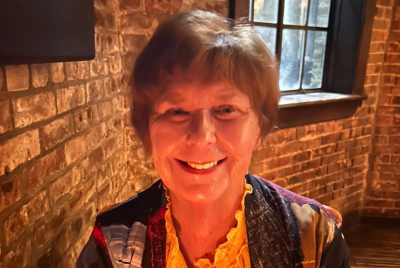
Nancy Guthrie Case Update: Former FBI Agent Suggests New DNA Theory, Questions Sheriff's Secret Leads
With DNA still under review and no suspect named, the case continues to test both local leadership and federal forensics.

Nancy Guthrie's disappearance from her Tucson home has entered its fourth month, and a retired FBI agent is now arguing that the case may hold far more forensic evidence than police have publicly described.
Former agent Steven Moore, speaking on NewsNation, said the single hair reportedly found inside the house is unlikely to be the only trace left behind, while also questioning Sheriff Chris Nanos's handling of the investigation.
Disputed Hair Evidence And 'Invisible' Clues
Retired FBI special agent Steve Moore has emerged as one of the most outspoken outside voices on the Nancy Guthrie case. Speaking to NewsNation correspondent Brian Entin, he seized on one detail that has been repeatedly cited in public briefings – a single strand of hair said to have been recovered inside Nancy's home.
Moore was blunt about the likelihood that only one hair was found. 'Imagine the odds of a person coming into a crime scene, losing only one hair, and you find it,' he said. 'That's not likely. If you find one hair, there are probably 10 others that you've missed.'
In his view, it is 'very possible' investigators collected far more trace evidence than has been disclosed.
He stressed that in cases like the Nancy Guthrie case, the evidence that ultimately convicts someone is often effectively invisible. Fingerprints, skin cells, microscopic fibres and hairs rarely leap out to the naked eye. They have to be deliberately searched for and processed by trained technicians.
'The evidence that convicts people is frequently invisible,' Moore said. 'You're not going to see a fingerprint from more than a foot away.'
Authorities have confirmed that DNA was retrieved from the scene but did not match any entries in the FBI's CODIS database. They say genetic genealogy testing is now being used in the hope of identifying a suspect if a distant familial link appears. Beyond that, they have not detailed what other trace material, if any, has been recovered.
Early 'Confusion' And Crime Scene Criticism
Moore reserves some of his sharpest criticism for how the Pima County Sheriff's Department initially handled the scene in the Nancy Guthrie case. Sergeant Aaron Cross has previously described the first hours as 'chaotic', with conflicting accounts from family members and breakdowns in communication between local deputies and federal agents.
For Moore, that is not an acceptable description of a major crime scene. 'You're not allowed to have confusion at a crime scene,' he said. 'If there's confusion, it means nobody's in charge who knows what they're doing.' He likened a well‑run response to a busy emergency room – fast‑moving but never disorganised – and called the reported disarray 'a sign of inadequate preparation.'
He argued that in any suspected kidnapping, investigators need to act on two tracks at once: secure and compartmentalise the scene, and quickly move family members to a neutral location where they can be calmed and interviewed away from the physical evidence.
'You need to get them in an emotional position where they can provide lucid information,' Moore said. If relatives are allowed to move freely through the house, he suggested, it becomes harder to know which traces belong to whom, and crucial minutes are lost untangling memories described in panic rather than in order.
Those concerns have landed in the middle of an already febrile local atmosphere. Nanos faces a recall effort and questions from county commissioners about his stewardship. Moore accepts that changing leadership mid‑investigation can slow things down – 'a learning curve that's going to stunt the growth of the investigation for a little while' – but he argues it may be a price worth paying if deeper structural failures are at play.
Removing the cause of early missteps, he said, could lead to 'a very short time of stumbling and a vast improvement going forward.'
Sheriff's 'We're Getting Closer' Claim Under Scrutiny
Against that backdrop, Nanos has insisted that progress is being made, telling reporters he has 'secret' information and believes an arrest will eventually follow.
Moore is unconvinced that such statements, on their own, carry much weight in the Nancy Guthrie case.
'I think he didn't feel like saying "same old, different day",' the former agent said of Nanos' recent 'we're getting closer' line. 'I would need something more than that for it to mean anything significant to me.'
He noted that in a purely technical sense, investigators get closer every day simply by ruling people out or discarding dead‑end leads, which makes vague assurances hard to interpret.
Nanos has also stepped back from direct contact with the Guthrie family. In a recent interview with People he confirmed he is 'personally' no longer in touch with them, saying detectives and FBI personnel handle communication instead.
In the early weeks, he had occasionally exchanged texts and calls with Savannah Guthrie, who took leave from Today to support the search, but even then he acknowledged federal agents and his investigative teams were the ones meeting her face‑to‑face.
Today, the structure of the investigation reflects that shift. The Pima County Sheriff's Department remains the lead local agency in the Nancy Guthrie case, but the FBI oversees much of the day‑to‑day forensic work, digital analysis and family liaison, with detectives and federal agents jointly reviewing surveillance footage and processing tips.
Despite this, there is still no named suspect, no confirmed motive and no public indication that prosecutors are close to filing charges.
Doorbell Camera, DNA And The Search For A Body
One of the most haunting pieces of evidence in the Nancy Guthrie case remains the doorbell footage recorded at around 1.47 a.m. on the night she is believed to have been taken. The video shows a masked, armed intruder at her front door, apparently attempting to disable the camera. The FBI later recovered backend data and released stills of the suspect wearing gloves and a backpack. Nancy herself does not appear in any of the images.
Investigators have chased down a series of leads since then, including alleged ransom notes sent to media outlets and individuals posing as abductors. One California man was arrested after falsely claiming to be responsible, but officials said his scheme was unrelated.
Gloves thought to match those seen in the footage were tested; DNA linked them instead to a restaurant worker and they were ruled out. Other DNA samples remain under review by state and federal laboratories.
Moore argues that the case could shift dramatically if Nancy's remains are ever recovered. He said the location alone would offer 'another treasure trove of evidence', from tyre tracks and footprints to environmental markers that could narrow down where the suspect travelled and how.
In his experience, abductors rarely drive 'a hundred miles one direction' to dispose of a body before heading straight back. Geography, he suggested, will matter.
The Guthrie family, for their part, have offered a $1 million (£740,000) reward for information leading to Nancy's whereabouts.
Nancy Guthrie – mother of Today show co‑host Savannah Guthrie – vanished in the early hours of 1 February after being dropped home the previous night. Relatives raised the alarm when she failed to appear for a church livestream that morning.
Deputies who entered the Tucson property reported signs of a violent struggle, an open door, and blood at the entrance later confirmed to be hers. Investigators quickly said they believed she had been abducted against her will and the FBI joined the Pima County Sheriff's Department in what has become one of Arizona's most scrutinised missing‑person cases.
© Copyright IBTimes 2026. All rights reserved.
- Recommended For You