

Frank Sinatra 'Loathed' Donald Trump, Says Daughter Nancy in New Posts Criticising ICE Raids and the President's Policies
Frank Sinatra 'loathed' Donald Trump, a feud sparked by a business insult in 1990. Discover how Sinatra's defiance connects to today's artists protesting ICE raids and controversial immigration policies.

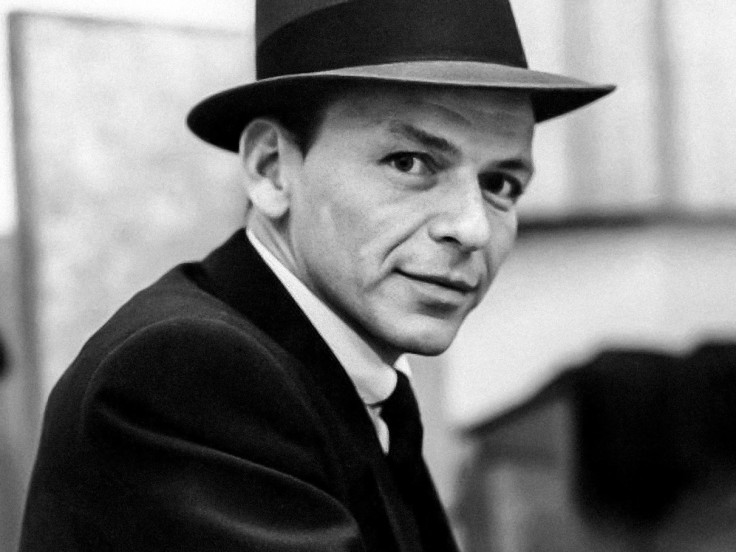
The revelation hit the social media sphere like a rogue wave: Frank Sinatra, arguably the greatest voice of the 20th century, harboured a profound dislike for Donald Trump. This wasn't mere political disagreement; according to his daughter, Nancy Sinatra, the legendary crooner 'loathed' the former US President.
The detail emerged as part of a highly charged series of posts on X (formerly Twitter) in which Nancy condemned the Trump administration and the aggressive nature of the country's ongoing Immigration and Customs Enforcement (ICE) raids.
She had reposted a video purportedly showing an ICE raid, writing: 'This is not my father's America. He would be devastated. Trump is so wrong in so may [sic] ways.'
Do some homework before you make a fool of yourself.
— Nancy Sinatra (@NancySinatra) December 6, 2025
My dad LOATHED trump. https://t.co/q4itQAO0fJ
It was the inevitable reply from an X user—a common social media retort—that fully drew the emotional venom out. The user suggested, 'Your Dad would have loved Trump,' prompting a swift and indignant correction from Nancy. She didn't mince her words, instructing the commenter: 'Do some homework before you make a fool of yourself. My dad LOATHED Trump.'
This single, powerful word—'loathed'—carries the full weight of a long-running, decades-old animosity that stretches far beyond political leanings. It speaks to a profound clash of personalities and business ethics that reportedly came to a head in the glitzy, cut-throat world of Atlantic City casinos.
The Business Battle: The Moment Frank Sinatra Told Donald Trump to 'Go F***ing Himself'
The roots of Frank Sinatra's animosity can be traced back to a high-stakes business negotiation in 1990. Sinatra's former manager, Eliot Weisman, detailed the confrontation in his autobiography, The Way It Was: My Life With Frank Sinatra.
Weisman recounted that he had successfully arranged a lucrative residency deal for Sinatra to perform at Trump's Taj Mahal casino in Atlantic City, New Jersey. The agreement was initially struck with Mark Grossinger Etess, one of Trump's employees at the time, before Etess's untimely death.
However, once the deal landed on Trump's desk, the future President reportedly intervened, attempting to 'lowball' the singer—a move that fundamentally crossed Sinatra, who was famous for his pride and fierce loyalty to his own worth.
The alleged response from Sinatra, as claimed by Weisman, was blunt, furious, and entirely on brand: he told Trump to 'go fucking himself.' The residency was promptly relocated, with Sinatra choosing to perform at the Sands in Las Vegas instead.
This incident offers a crucial human lens, suggesting the 'loathing' was not purely ideological, but rooted in a personal, professional slight against an entertainment giant who demanded respect.
Political Alignments and The Widespread Artist Condemnation
While Sinatra's feelings towards Donald Trump were clear, his own political history was notably diverse, highlighting that his disapproval of Trump transcended simple party lines.
The Chairman of the Board was a long-time, committed civil rights advocate. He campaigned actively for Democratic presidential candidates like Franklin D.
Roosevelt and Harry Truman and was closely associated with John F. Kennedy before the latter entered office. Yet, in a move that surprised many, he officially switched his allegiance in 1972, publicly endorsing Republican candidate Richard Nixon.
He later received the Presidential Medal of Freedom from Ronald Reagan in 1985, who lauded the singer's 'love of country, his generosity for those less fortunate ... make him one of our most remarkable and distinguished Americans.'
Nancy Sinatra has continued this firm stance against the former President, having told The Guardian in 2021 that she would have considered moving country had he won the election the previous year. 'I'll never forgive the people that voted for him, ever. I have an angry place inside of me now. I hope it doesn't kill me,' she confessed.
The entertainment world's opposition to the Trump administration's immigration policies is not isolated to the Sinatra family. Pop star Sabrina Carpenter publicly condemned the White House after they used her song 'Juno' in a promotional video for ICE activity, calling the video 'evil and disgusting.' She demanded: 'Do not ever involve me or my music to benefit your inhumane agenda.'
this video is evil and disgusting. Do not ever involve me or my music to benefit your inhumane agenda.
— Sabrina Carpenter (@SabrinaAnnLynn) December 2, 2025
Although the White House deleted the video, press secretary Abigail Jackson issued a defiant statement, saying they 'won't apologize for deporting dangerous criminal illegal murderers, rapists, and pedophiles from our country.' The White House then doubled down, using a clip of Carpenter from Saturday Night Live in a new deportation video days later.
Other artists also voiced their condemnation, including Olivia Rodrigo, who attended anti-ICE protests and hit out at the agency for using her music to 'promote your racist, hateful propaganda.' Similar takedown requests were issued by representatives for MGMT and The Cure.
Even global stars like Shakira shared that she lived in 'constant fear' as an immigrant in the US, while Bad Bunny declared his world tour would not come to the United States out of fear of ICE agents raiding his shows.
The human impact of the policy, as Nancy Sinatra suggested, has clearly devastated the artistic community.
© Copyright IBTimes 2026. All rights reserved.