

German Intelligence Flags Watermelon Symbol as Extremist Indicator When Used to Outline a Map of Palestine
Controversy arises as Germany's domestic intelligence agency classifies the watermelon symbol as an extremist indicator under specific conditions.
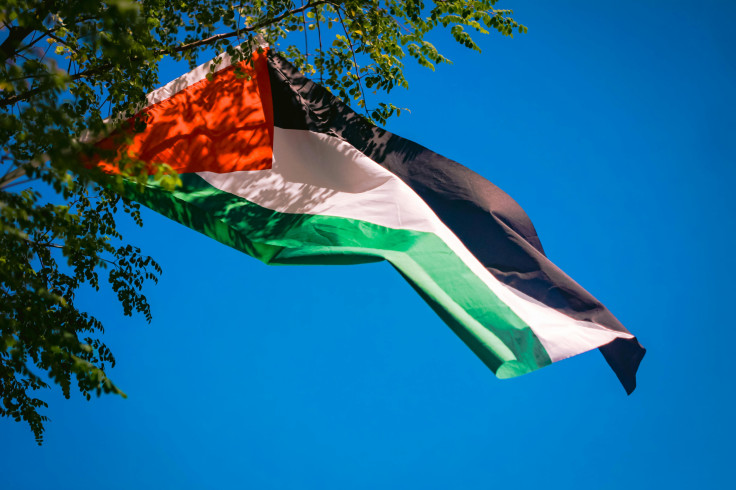
Germany's domestic intelligence agency has classified the watermelon symbol as a potential extremism indicator, but only under one specific condition: when it is used to draw the outline of a Palestinian state in place of Israel.
The Federal Office for the Protection of the Constitution (BfV), Germany's domestic security service, published a new dossier in May 2026 targeting what it calls 'secular pro-Palestinian extremism,' alongside an 80-page companion publication examining antisemitic codes and symbolic language circulating across extremist networks.
Together, the documents represent the most expansive official attempt yet by Berlin to map the ideological boundaries of pro-Palestinian activism in the country. The release has prompted an immediate and sharp debate over civil liberties, the limits of political expression and the role of state surveillance in shaping acceptable public discourse.
Watermelon as an Extremist Marker
The BfV's dossier includes a dedicated section on 'symbols and identifying marks' associated with what the agency describes as secular pro-Palestinian extremism. Among these is the watermelon image, although the agency's classification is narrower than initial headlines suggested. It does not flag the watermelon as inherently extremist across all contexts; it targets a specific visual application.
'The watermelon, alluding to the colours of the Palestinian flag, is a symbol of solidarity with Palestine,' the BfV states in the report, as cited by multiple outlets including Middle East Eye and Anadolu Agency. 'Here, the outline of the entire State of Israel is depicted in the colours of the Palestinian flag (as a sliced watermelon), thereby denying Israel's right to exist.' The agency frames this specific use not as cultural expression but as a territorial denial, arguing it functions to erase Israel's internationally recognised borders.
⚡ JUST IN - Germany classified the watermelon as an extremist and antisemitic symbol when used to depict the map of Palestine pic.twitter.com/dAyAN4KlQE
— Ounka (@OunkaOnX) May 15, 2026
Alongside the watermelon, the BfV flagged several other symbols in its dossier. These include Handala, a barefoot Palestinian refugee boy drawn facing away, created in 1969 by the late cartoonist Naji Al-Ali as a symbol of the Palestinian experience.
The agency also identified the red inverted triangle, the slogan 'From the river to the sea, Palestine will be free,' and an octopus motif historically linked to antisemitic conspiracy theories. The BfV argues these images collectively serve as 'bridge narratives,' connecting otherwise disparate extremist factions, from the far-right and far-left to Islamist movements, around a shared anti-Israel ideology.
A Symbol Born Inside Occupied Territory
The watermelon has carried political weight in Palestinian culture for decades, predating the current conflict by more than half a century. Its origins as a symbol of resistance trace directly to a military prohibition. Following Israel's seizure of Gaza and the West Bank during the Six-Day War in 1967, the Israeli government made public displays of the Palestinian flag a criminal offence in occupied territory.
Palestinians began using sliced watermelons as a covert act of solidarity, since the fruit's flesh, rind, seeds, and skin replicate the four colours of the Palestinian flag: red, white, black and green. A pivotal moment arrived in 1980, when Israeli forces shut down an exhibition at 79 Gallery in Ramallah, featuring work by Palestinian artists Sliman Mansour, Nabil Anani and Issam Badr. According to accounts documented by The National, officers told the artists that even using the flag's colours in artwork was forbidden.
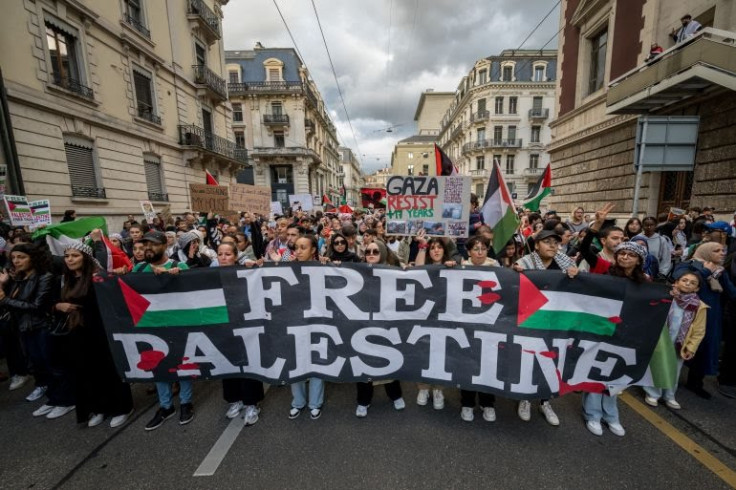
When artist Issam Badr asked whether painting a watermelon would be permissible, an Israeli officer replied: 'It would be confiscated. Even if you do a watermelon, it will be confiscated.' The fruit entered Palestinian visual culture as an explicit symbol of defiance from that moment.
The Israeli flag ban was formally lifted in 1993 via the Oslo Accords, but the watermelon remained embedded in Palestinian artistic and protest vocabulary, resurfacing prominently during the 2021 war in Gaza, and again at demonstrations worldwide after October 2023.
Civil Society Pushback Against Expanded Surveillance
Critics of the BfV report argue that the agency has conflated political expression with genuine incitement. Pro-Palestinian networks have characterised the dossier as an attempt to suppress peaceful demonstrations by attaching security-service classifications to deeply rooted cultural symbols. Regional authorities, beginning with Bavaria, are expected to use the updated BfV guidance to increase surveillance and tighten restrictions on public demonstrations, according to reports.
The controversy does not exist in isolation. Germany has systematically tightened its approach to pro-Palestinian activism since the Hamas-led attacks of 7 October 2023. In mid-2024, the BfV's Constitutional Protection Report formally placed the Boycott, Divestment and Sanctions (BDS) movement under suspicion of being an extremist group, making Germany the only EU member state to do so. Civil liberties advocates argued that step effectively placed legitimate economic protest under secret service surveillance.
German courts have provided a partial legal counterweight. Previous rulings established that the slogan 'From the river to the sea' only becomes illegal under specific circumstances, rather than being categorically prohibited, a position at odds with the BfV's framing of it as a marker of extremist activity. The European Legal Support Center and Forensic Architecture have documented 766 incidents of state action against pro-Palestinian voices in Germany between 2019 and April 2025, spanning arrests, demonstration bans, funding cuts and professional sanctions.
Germany is also Israel's second-largest arms supplier after the United States. According to Middle East Eye, the country briefly suspended some arms shipments in October 2025 following Israel's approval of a renewed ground offensive in Gaza, before resuming transfers in November 2025. Critics argue this posture makes it difficult for Germany to position its intelligence classifications as neutral or procedural, rather than politically motivated.
As Berlin continues to redraw the boundaries of permissible political expression, the watermelon, a fruit first politicised by military occupation, has become the unlikely symbol at the centre of Germany's most charged civil liberties debate in years.
© Copyright IBTimes 2026. All rights reserved.