

US Forces Rehearse Nuclear Crisis Response With E-6B 'Doomsday Planes' and B-52s in Global Thunder Drill
Long-planned annual nuclear command exercise runs as the Pentagon advances FORTRESS plans for major US bases to sustain essential operations independently for 90 days

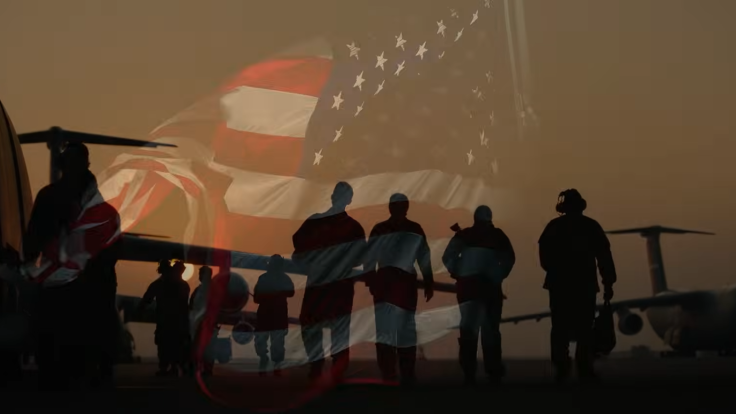
US Strategic Command began Global Thunder 27, its annual nuclear command-and-control exercise, on 22 October.
Published reports described E-6B Mercury aircraft operating over the United States and B-52H Stratofortress bombers flying north from Minot Air Force Base in North Dakota into Canada. The exercise was publicly announced by US European Command on 27 October. Some reports have described the drill as lasting roughly 10 days, although US Strategic Command (USSTRATCOM) has not publicly specified its duration.
The exercise coincides with the Pentagon's separate FORTRESS America initiative, which aims to keep major US military installations operating through prolonged disruption to civilian infrastructure and supply chains. Fox News reported on 25 October, citing documents it said it had reviewed, that major installations in the continental United States would be expected to sustain essential operations independently for at least 90 days, covering electricity, water, fuel and communications.
Global Thunder 27 Tests Nuclear Command Readiness
USSTRATCOM oversees the US military's strategic nuclear forces and conducts Global Thunder annually to test the systems and personnel responsible for directing them. The exercise assesses decision-making, coordination and logistical readiness across multiple domains, including the command networks required to manage complex nuclear scenarios.
US European Command's 27 October statement said the public could notice increased strategic bomber and support-aircraft activity during the drill. It also stated that Global Thunder was not being conducted in response to any nation, other actor or current world event.
The US nuclear triad comprises land-based intercontinental ballistic missiles, ballistic-missile submarines and strategic bombers. Global Thunder tests the command-and-control capabilities needed to coordinate these forces, including the communications required to transmit orders during a crisis.
E-6B Mercury Aircraft and B-52 Bombers Tracked
The E-6B Mercury is a US Navy aircraft that relays strategic commands and serves as an airborne command post. Its Take Charge and Move Out (TACAMO) mission connects national command authorities with strategic forces, including ballistic-missile submarines. Its separate Looking Glass mission provides an airborne launch-control capability for US land-based intercontinental ballistic missiles.
E-6B aircraft have been tracked operating over the United States during the exercise period. B-52H bombers have also been observed flying north from Minot Air Force Base into Canada. These movements show aircraft activity, but tracking data alone cannot establish the precise task assigned to every flight or confirm that each observed movement formed part of Global Thunder.
The B-52H is a long-range US Air Force strategic bomber capable of carrying nuclear and conventional weapons. Public flight-tracking data does not establish which weapons, if any, an aircraft carried on a particular sortie. The aircraft's presence on a tracked route therefore cannot, by itself, establish that nuclear weapons were involved in that flight.
FORTRESS America Targets 90 Days of Base Resilience
US Secretary of War Pete Hegseth announced FORTRESS America on 30 September 2026. The initiative aims to strengthen military installations against disruption by increasing energy independence, reinforcing supply chains, expanding strategic reserves and improving protection against physical and cyber threats. Hegseth has emphasised the need for major bases to generate electricity independently of civilian power grids.
Fox News reported that documents it reviewed set an expectation for major military installations in the continental United States to sustain essential operations independently for at least 90 days. The reported scope includes electricity, water, fuel and communications. The specific standard has not been confirmed publicly in the same detail as the broader initiative.
Public information does not establish that every major US base already possesses the infrastructure and reserves needed to operate independently for that period. The reported target describes an expected level of resilience, rather than a verified capability across all installations.
Prolonged disruption to civilian power grids, water systems, fuel supplies or communications could affect military bases that rely on those services. FORTRESS America seeks to strengthen installations against such vulnerabilities through greater energy independence and more resilient supply arrangements.
New START Expiry Provides Nuclear Arms-Control Context
Global Thunder 27 is the first iteration of the annual exercise since the New START treaty between the United States and Russia expired on 5 February 2026. The agreement was the last major treaty imposing verifiable limits on the two countries' deployed strategic nuclear forces. It capped each side at 1,550 deployed strategic nuclear warheads and 700 deployed strategic delivery vehicles.
There is no public evidence that the treaty's expiry determined the timing or purpose of Global Thunder 27. USSTRATCOM has described the exercise as an annual readiness event and stated that it is not a response to current events.
© Copyright IBTimes 2026. All rights reserved.