'They Aren't': Reporter Rebuts Trump's 'Delusional' Claim That People Say He Is the Greatest President Ever
A reporter's blunt correction of Trump's boast goes viral, sparking widespread discussion
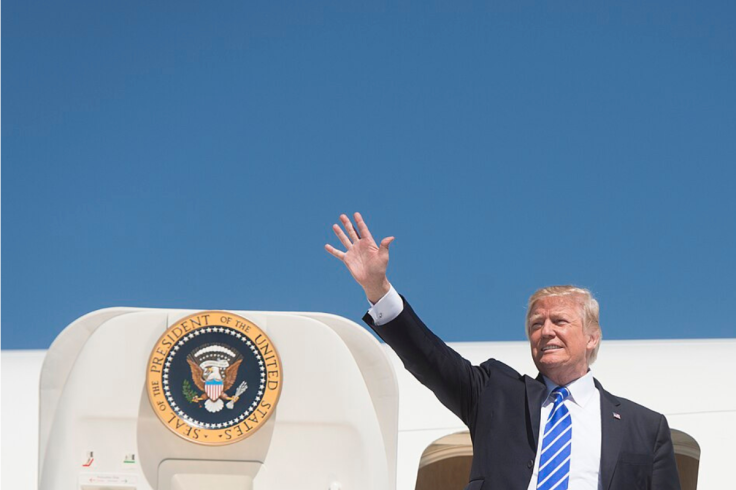
A single deadpan interjection from a veteran Washington reporter punctured one of Donald Trump's favourite boasts, and the internet did the rest.
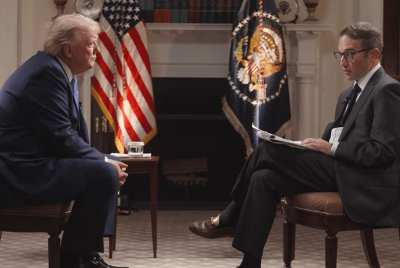
During an interview this week, the president responded to a question about Democratic impeachment threats by declaring that many people considered him one of the greatest presidents in history. The journalist, Punchbowl News co-founder Jake Sherman, cut in with a flat correction, 'They aren't saying that.'
The On-Camera Exchange That Went Viral
The moment came as Sherman pressed Trump on the political threats facing him. After the reporter noted that Democrats intended to try to impeach him again, the president pivoted to his standing in history.
'A lot of people are saying I'm one of the greatest presidents ever,' Trump said. Sherman did not let the assertion pass. 'They aren't saying that, though,' he replied, according to footage of the interview that spread rapidly online after it was posted on 7 August.
Single best comment from an interviewer of Trump yet…
— Brian Krassenstein (@krassenstein) August 7, 2026
Trump: “A lot of people are saying I'm one of the greatest presidents ever.”
Reporter: “They aren't saying that.” pic.twitter.com/X4ercb1l6i
The correction was delivered without heat, as a simple statement of fact, which is part of why it resonated so widely. Clips of the exchange circulated across social media within hours, shared by accounts ranging from anti-Trump Republican groups to ordinary users marvelling at the bluntness of the pushback.
The reaction turned a routine interview exchange into one of the most-watched political moments of the week, precisely because the reporter declined to treat the boast as a matter of opinion.
A Boast Trump Has Made Many Times Before
The claim to presidential greatness is a recurring feature of Trump's rhetoric rather than a one-off. He has long insisted he belongs among the finest occupants of the office, once recounting that the late Senator Orrin Hatch had called him the greatest president in US history. However, a spokesman for Hatch later clarified that the senator had said Trump 'can be' the greatest, not that he 'is'.
The president has made similar superlative claims about his poll numbers, his economic record and his election performance, several of which do not withstand scrutiny. He has repeatedly asserted that he won the 2020 presidential election, which he lost to Joe Biden, and has described his approval ratings as the highest of any president in years, despite independent surveys placing them well below that.
Polling on his historical standing tells a different story from the one he prefers. Surveys have consistently found that large shares of Americans rank Trump among the worst presidents rather than the best, while historians' rankings have tended to place him at or near the bottom of the list. Taken together, that body of evidence makes the 'greatest ever' framing difficult to sustain.
Why the Clip Struck a Nerve
The exchange landed at a moment when Trump's public statements have been drawing sharper scrutiny over their detachment from verifiable fact. The same week, a White House-produced promotional video for the MAGA movement drew comparisons to state propaganda, feeding a broader conversation about the administration's relationship with reality.
Sherman's correction resonated because it modelled a form of real-time fact-checking that critics say is too often absent from interviews with the president.
Rather than allowing a grandiose claim to stand unchallenged and be addressed later, the reporter simply noted, in the moment, that the premise was false, an approach that media commentators have held up as a template for covering a politician prone to sweeping superlatives.
For Trump, the episode became a minor but telling embarrassment: a boast deflated not by an opponent or political commentator, but by a straightforward observation from the reporter sitting across from him. In a presidency defined in part by contested claims about his own popularity, this week's sharpest rebuttal required only two words, and the willingness to say them out loud.
© Copyright IBTimes 2026. All rights reserved.
- Recommended For You