The Growing Influence of Wealthy Donors in British Politics
Offshore millions and undeclared gifts raise the question: who truly owns Britain's politics
Britain has long prided itself on a political culture of accountability — a democracy where those who seek power must answer for how they use it. Parliament, a free press and an independent electoral commission form the architecture of that accountability. Yet the question of where public scrutiny ends and private life begins has never been fully resolved, and it is a tension that has returned sharply to the centre of British political debate.
Politicians expect their privacy to be upheld, even when the nature of their job makes it impossible for them to live a normal life free from the scrutiny of the media. They enjoy the privilege of free publicity, and whatever they do or fail to do automatically becomes news. That is the ultimate price of public office.
Yet they often crave privacy on the most sensitive public issues. Does this mean they always have something to hide? Not necessarily. It simply means they do not see why their business should be everyone else's concern.
The Public's Right To Know
This tension has become a recurring feature of modern British political life, as politicians are increasingly caught in the glare of public scrutiny over their private affairs. The argument that the public has no more right to know what politicians carry in their private dealings than anyone else is, on its face, a fair one.
Many, however, disagree. For them, a politician's private activities shape the public image of Britain and the lives of its people. They argue that the public is directly subject to the outcomes of private political dealing and therefore deserves the right to know.
A 2025 YouGov poll found that only 14% of British respondents trust elected representatives, and just 18% agreed that party funding is open and transparent, figures that reflect not public indifference to politics, but a population watching more closely and trusting less. It is precisely that collapse in confidence that has sharpened public appetite for scrutiny of both the public and private lives of those in power.
The Money Behind Reform
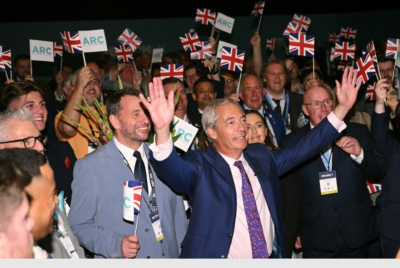
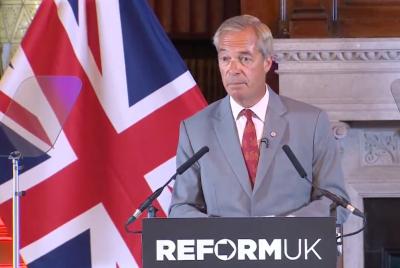
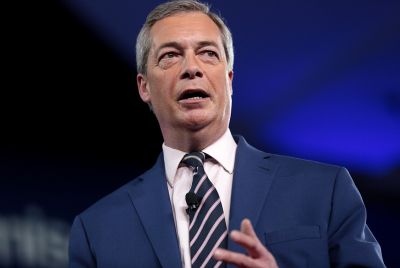
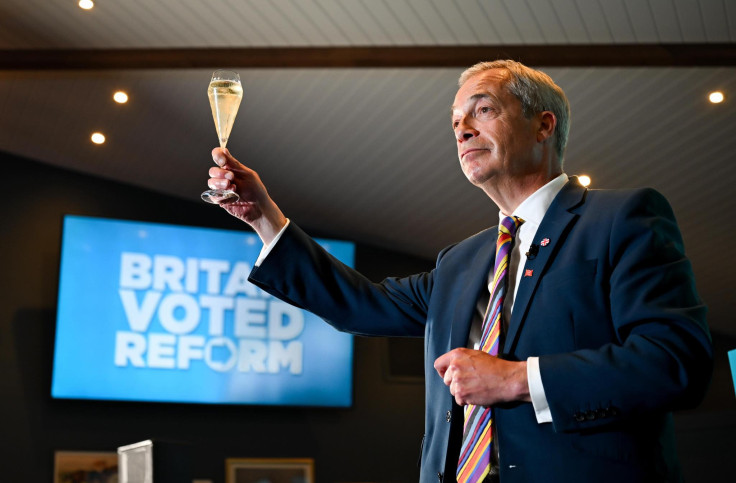
Nowhere has that argument been more sharply illustrated in recent British politics than in the scrutiny now surrounding the financial networks sustaining Reform UK leader Nigel Farage — a politician who has reshaped the British political landscape while facing mounting questions about who is funding his rise and on what terms.
Liberal Democrats leader Ed Davey has taken a dig at Farage, accusing him of pocketing what the Reform leader himself described as a personal reward for campaigning for Brexit for 27 years, while, in Davey's words, 'the rest of us are left with soaring energy bills, political chaos and a broken economy.' He named Christopher Harborne as Farage's 'top financial backer,' warning that 'it is up to all of us to make sure he never becomes prime minister.'
The figures involved are striking. Harborne, a British cryptocurrency investor and aviation entrepreneur based in Thailand, donated £9 million to Reform UK in August 2025 confirmed by the Electoral Commission as the largest single donation ever made by a living individual to a British political party. Reform UK's total third-quarter fundraising reached £10.5 million, surpassing the Conservative Party, which received just under £7 million, and Labour, which received £2.5 million.
Electoral Commission analysis published in May 2026 shows that of the £18.6 million donated to Reform UK throughout 2025, nearly £15 million, close to 80%, came from donors with offshore connections. The most consequential political financing, it appears, frequently operates without public attention.
The £5 Million Question
Scrutiny intensified when it emerged that Harborne had separately made Farage a personal gift of £5 million. The Parliamentary Standards Commissioner launched an investigation into Farage's potential failure to declare the donation.
Home Office Minister Mike Tapp said it was right the matter be properly investigated, arguing that Farage had been 'dodging questions on this ever since it came out.' Farage responded by saying the gift 'wasn't political in any sense at all,' claiming he had been 'the most physically attacked politician of modern times' and that the money was 'the only way I can look after myself and protect myself for the rest of my life.'
Vested Interests And The Limits Of Reform
The public, many argue, has every right to scrutinise such arrangements. Politicians do not merely hold opinions — they initiate legislation, influence policy and shape the conditions under which millions of people live. When those decisions are informed by the interests of private donors operating largely out of public view, the case for transparency becomes difficult to dismiss.
Breaking up vested interests and dispersing power lies at the centre of British politics, and that tussle is as significant as ever. But taking power away from powerful vested interests is an interesting side of British politics: touch it and gain one hell of a shock.
Attempts to curb the influence of big money in politics have often encountered great resistance. The number of active public inquiries in Britain has reached a record 21, a figure that reflects a growing public demand for transparency, accountability and systemic reform that shows no sign of abating.
The Influence Industry
Britain's influence industry is estimated to be worth £2 billion, answers to no-one and operates largely out of public sight. As Tamasin Cave and Andy Rowell document in A Quiet Word, "the corporate takeover of democracy is no conspiracy theory , it's happening, and it affects every aspect of our lives: the food we eat, the places we live, the temperature of our planet, how we spend our money and how our money is spent for us. And much more."
The Electoral Commission's transparency registers now make that analysis measurable in pounds and pence. Whether the existing disclosure framework is equal to the scale of influence it has revealed remains an open and pressing question for British democracy.
© Copyright IBTimes 2026. All rights reserved.
- Recommended For You