

Inside America's Hidden 'MAJESTIC' War Plan Built for UFO Disclosure and Mass Deception
Newly-examined records suggest MAJESTIC was less about aliens attacking and more about managing truth
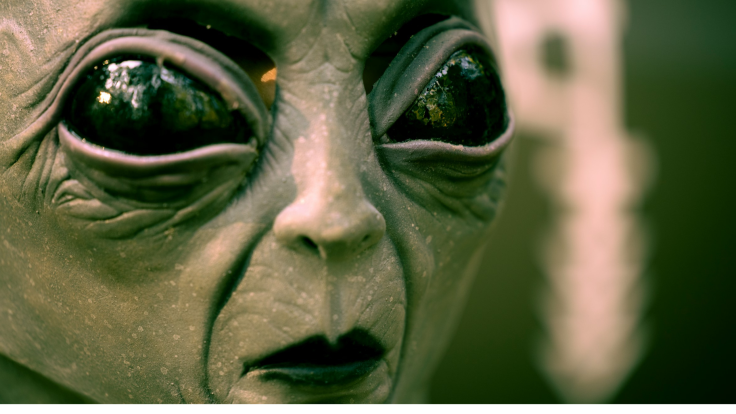
America has always planned for the unthinkable, but buried deep in Cold War archives is a war plan that reads less like a defence strategy and more like a manual for managing belief itself. Known as MAJESTIC, the emergency plan was drafted in 1952 at the height of a national UFO panic.
By June 1952, reports of strange objects in American airspace were exploding. Military pilots, radar operators and civilians were all seeing craft that defied known technology. Concern inside the Pentagon grew rapidly. The Joint Chiefs of Staff quietly commissioned an Emergency War Plan for a conflict beginning 1 July 1952. Its code name was MAJESTIC.
Why the Military Prepared for UFO Disclosure in 1952
Unlike traditional war plans, MAJESTIC focused heavily on psychological operations, unconventional warfare and deception. It instructed commanders not to exaggerate Soviet capabilities when explaining sightings, a detail that suggests officials feared misattribution more than invasion. Just days after the plan was finalised, Washington DC experienced its most famous UFO flyovers, forcing radar alerts and fighter scrambles over consecutive weekends.
At the top of the chain sat General Nathan F. Twining, Chairman of the Joint Chiefs of Staff. Twining was no sceptic. In a 1947 memo later declassified, he stated clearly that the UFO phenomenon was real and not imaginary. MAJESTIC was created in a climate where senior military leaders privately accepted that something unknown was operating in US airspace.
What the MAJESTIC Documents Actually Show
Only fragments of MAJESTIC have survived public release. The plan, held by the National Archives, appears to be at least sixteen pages long, with multiple appendices. Just five pages were partially declassified in 1976. One appendix focuses entirely on logistics, suggesting preparation for long term disruption rather than a short battle.
The available pages reveal strict reporting rules, including physical verification of the plan's existence every quarter. Curiously, only the Navy distribution list signed by Admiral Arleigh Burke appears in the released material. The equivalent directives from the Army, Air Force and Marine Corps are missing, raising questions about selective declassification.
The absence of any reference to nuclear strikes or conventional troop movements is striking. For a Cold War emergency plan, MAJESTIC is silent on bombs and battles. Instead, its language mirrors later documents linked to information control, influence campaigns and public narrative management. This has led researchers to argue that MAJESTIC was designed for a scenario where reality itself became the battlefield.
The CIA, JFK and the Rewriting of the Plan
The story does not end in the 1950s. By the early 1960s, President John F. Kennedy reportedly began asking questions about classified UFO related programmes, including activities tied to MAJESTIC and the elusive MAJESTIC-12 group. According to later accounts, this alarmed CIA Director Allen Dulles.
In 1961, a set of controversial directives known as the Burned Memo emerged. These instructions emphasised psychological warfare, deception and public manipulation in the event of sensitive disclosures. Researchers have noted strong similarities between these directives and the earlier MAJESTIC framework, suggesting the plan was revised rather than abandoned.
The revised version reportedly accounted for two unlikely but dangerous scenarios. One was open UFO disclosure. The other was a sitting president sharing secrets outside approved channels. In both cases, the solution was the same. Control the message, control the reaction and protect institutional power at all costs.
What 'MAJESTIC' Reveals About Power and Truth
The most unsettling aspect of MAJESTIC is what it implies about government priorities. If the plan truly focused on psychological operations rather than defence, then the perceived threat was not alien hostility but public awareness. Officials appeared more concerned about panic, loss of authority and uncontrolled narratives than physical attack.
This perspective aligns with later Cold War strategies where perception management became central to national security. MAJESTIC may represent an early blueprint for information warfare, using UFOs as both a trigger and a test case.
Decades later, the question remains unanswered. Was MAJESTIC a contingency for extraterrestrial contact, a cover for secret technology, or a rehearsal for mass deception? What is clear is that the plan existed, it was taken seriously, and much of it remains hidden.
In the end, MAJESTIC tells us less about what was in the sky and more about what governments fear most. Not invasion, but revelation.
© Copyright IBTimes 2026. All rights reserved.