

James Van Der Beek's Cancer Revelation In 2024: What He Said Then
Facing Stage 3 cancer, James Van Der Beek tried to turn fear into a lesson about time, love and paying attention — and that may be the part of him that outlives the rest.

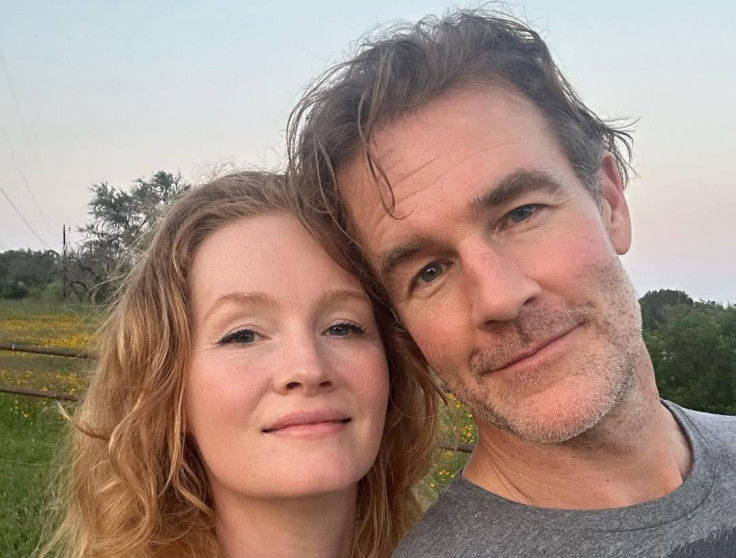
The question arrived on phones in the most brutal, ungainly way the internet can manage: 'Is James Van Der Beek dead?'
By then, the answer was already yes. The Dawson's Creek star had been reported dead in Travis County, Texas, at just 48 years old. But the blunt wording obscures something important: for more than a year before his death, Van Der Beek had been unusually open about the illness that upended his life and, in his own words, completely rewired his sense of what mattered.
To understand the loss, it is worth going back to what he chose to tell the world in 2024, when he first said the word 'cancer' out loud.
James Van Der Beek's Cancer Revelation In 2024: 'A Full‑Time Job'
In late 2024, Van Der Beek sat down with People magazine and, with a calm that sounded almost rehearsed, walked through the moment everything changed.
The then 47‑year‑old had gone in for a colonoscopy in August 2023 after experiencing symptoms he didn't ignore. 'The gastroenterologist said, in his most pleasant bedside manner, "It is cancer." And I think I went into shock,' he recalled.
Further scans confirmed Stage 3 colorectal cancer. There was, he said, a sliver of hope in the detail: 'Found out it was still localised. It had not spread, but it was Stage 3, which is not what you want to hear.'
Anyone who has sat in a consulting room and heard that kind of sentence will recognise what came next. His life, he said, was swiftly taken over by what he called 'the full‑time job of having cancer'.
'Signing up for all the various medical portals and getting on the phone with insurance and creating appointments ... I was not prepared for just how much of a full‑time job that it really is,' he told the magazine. It is a line that cuts through the usual Hollywood gloss. For all the talk of 'journeys' and 'battles', much of serious illness is admin, fear and waiting.
And yet Van Der Beek refused to frame it purely as a death sentence. 'I really didn't feel like this was going to end me,' he insisted. 'I really felt like this is going to be the biggest life redirect. I'm going to make changes that I never would have made otherwise, that I'm going to look back on in a year, five years, 30 years from now and say, "Thank God that happened."'
It reads now like an act of defiance against the very thing that has killed him — but also like the most human of coping mechanisms: the need to believe there will be a future in which you get to make sense of the present.
What He Said Then: Awareness, Family And A Life Re‑Scaled
By the time of that interview, Van Der Beek had already hinted publicly at what he was going through. On 4 November 2024, in a post to his Instagram followers, he wrote that he had 'been dealing with this privately until now, getting treatment and dialling in [on his] overall health with greater focus than ever before'.
Speaking later, he was explicit about why he chose to go public. 'I've found it helpful and cathartic to share things publicly because I found a lot of support,' he said. 'But almost more than that, I really wanted to raise awareness.'
It was not a vanity project. Colorectal cancer is often silent until it is advanced; screening saves lives, and men in their 40s and 50s are still notoriously reluctant to talk about it, let alone get scoped. That a former teen idol would describe a colonoscopy on record is not trivial. It is exactly the kind of mundane, slightly embarrassing detail that tends to jolt people into action.
At the same time, Van Der Beek refused to let cancer colonise his whole identity. In that last year, his social media accounts were still crowded with family scenes rather than hospital shots. The actor and his wife, Kimberly, are parents to six children. They became, he said simply, his anchor.
'I don't get through this without her,' he said of Kimberly. The kids, too, were everywhere in his feed: a Halloween post, shared just weeks before he disclosed his diagnosis, showed him in a pirate costume, telling a small story about his six‑year‑old daughter being devastated that her shop‑bought angel costume would not arrive in time.
Instead of shrugging it off, he turned it into a project. She spent 'HOURS', he wrote, wrapping yellow yarn around garden wire to make her own halo. 'The look of pride on her face upon seeing the final project in the mirror was, for me... my favourite moment of Halloween.'
There is something quietly devastating about reading that now. Not because it is sad in itself, but because it is so ordinary — the kind of modest, domestic joy people cling to when everything else feels precarious.
He was equally unguarded about his pride in his eldest daughter, Olivia, when she appeared on the US series We Are Family, singing Lee Ann Womack's 'I Hope You Dance'. 'I'm a very proud papa tonight,' he said in an Instagram video, describing how, watching her perform, 'all I could see was the newborn in the bassinet who I could not stop looking at in awe.'
That was the story he wanted to tell about himself in the shadow of Stage 3 cancer: not tragic patient, but working actor and slightly soppy dad. Even as he underwent treatment, he kept acting, appearing in an episode of Walkerand lining up his next job, the Tubi original film Sidelines: The QB and Me, due to premiere on 29 November.
The professional detail matters, because it speaks to something stubborn in him. Many people vanish from public life when they fall ill. Van Der Beek quite deliberately did not.
Which is why the clinical summary of his death, relayed by a representative of the Travis County Medical Examiner's Office — reported at 6.44am, no cause yet given — feels so brutally thin against the texture of what he had shared. In 2024, he tried to turn a frightening diagnosis into a reason to talk more plainly about bodies, fear, family and time. If his words have any afterlife, it should be in more men booking that colonoscopy, and more people with power over health systems remembering that, for their patients, cancer is not just a statistic. It is, as he put it, a job you never applied for.
James Van Der Beek was 48. He should have had those extra 30 years he talked about. We do not get to give him that. We can, at the very least, listen to what he was trying to tell us on the way.
© Copyright IBTimes 2026. All rights reserved.