

Marco Rubio Accuses Iran and Cuba of Funding Antifa: 'They Despise the West'
US Secretary of State Marco Rubio highlights the growing threat of far-left extremism, linking it to Iran and Cuba.
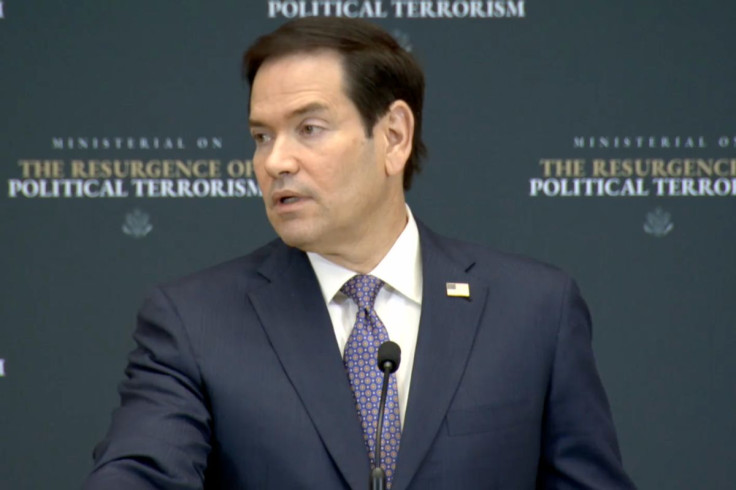
Marco Rubio has accused Iran-linked networks and Cuba's intelligence apparatus of helping fuel violent far-left extremism, warning world leaders that political terrorism 'can no longer be ignored.'
The US secretary of state made the remarks during a State Department ministerial on the resurgence of political terrorism, attended by representatives from more than 60 countries. Rubio said the United States and its allies were facing a new wave of violent political extremism that had been overlooked for too long.
SECRETARY RUBIO: "These are not distinct and isolated cells, they are interconnected networks. They do not recognize our borders. They do not believe in the nation-state itself." pic.twitter.com/cYYmGBZYNW
— Department of State (@StateDept) July 16, 2026
'Today, we face a new wave of this old evil,' Rubio said. 'Here in the United States, the share of left-wing terrorist attacks and plots has risen to levels not seen in decades.'
He urged governments to treat the issue as a global counterterrorism priority, arguing that violent far-left groups now operate across borders through shared financing, propaganda, encrypted communications and safe houses.
'You are here because this is real and it is getting worse,' Rubio said. 'It is time to crush this evil forever.'
Iran and Cuba Accused of Aiding Networks
Rubio specifically pointed to Antifa militants and allied groups, claiming they travel between Europe and the Americas to participate in attacks, share training materials and coordinate through underground networks. He also alleged that hostile foreign states had helped sustain the movement.
According to Rubio, Iranian proxy networks are becoming 'increasingly intimately tied' to leftist militant groups around the world. He also accused Cuba's intelligence and ideological networks of helping build the far left in the United States and across the hemisphere.
'They despise the West because the West is great,' Rubio said, framing the threat as ideological as much as operational.
The claims mark one of the Trump administration's strongest attempts yet to link domestic political violence, foreign adversaries and anti-Western radical movements into a single global threat picture.
New Terror Designations Expected
Rubio said more Foreign Terrorist Organization designations are coming after the State Department designated four foreign far-left groups in November 2025.
Those groups included Antifa Ost, the Informal Anarchist Federation/International Revolutionary Front, Armed Proletarian Justice and Revolutionary Class Self-Defense, which the administration says operate in Germany, Italy and Greece.
A Foreign Terrorist Organization designation makes it a crime to provide material support to the group, allows US authorities to freeze assets under American jurisdiction and blocks members from entering the United States.
Treasury Secretary Scott Bessent and White House Deputy Chief of Staff Stephen Miller were also expected to address the ministerial, with sessions focused on terrorist financing, intelligence sharing and protecting critical infrastructure.
Critics Warn of Overreach
The push has drawn concern from analysts and civil liberties advocates who question whether violent far-left groups form a cohesive international terrorism threat comparable to jihadist organisations. Some warn that governments could use counterterrorism language to target political opponents, activists or protesters.
A senior State Department official rejected that concern, saying the administration is focused on criminal violence, not beliefs.
'In America, you can believe anything you want,' the official said. 'The minute that you cross the legal threshold, that changes.'
Rubio further described radical leftism as 'a poisonous resentment cloaked in the language of equality and justice.' Administration officials argue that Western governments have spent two decades concentrating on Islamist terrorism while failing to recognise a revived threat from violent far-left networks. They cited recent attacks in Greece and Germany, including firebombings and infrastructure sabotage, as examples of why international cooperation is needed.
© Copyright IBTimes 2026. All rights reserved.