

Trump Plans to Let Political Appointees Control $1 Trillion in Federal Grants, Earning Pushback From Scientists
Scientists and university leaders warn Trump's proposed overhaul could hand political appointees unprecedented influence over $1.1 trillion in federal grants.
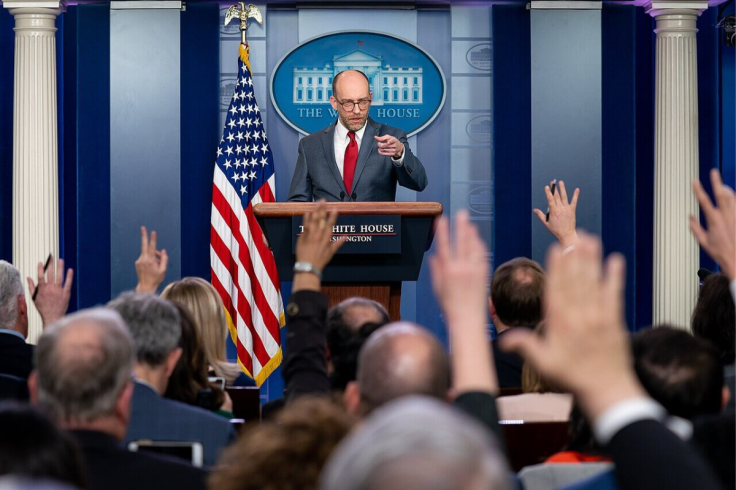
The Trump federal grants proposal is triggering alarm across the US research community after the White House unveiled a sweeping plan that could give political appointees far greater influence over how more than $1.1 trillion (£810 billion) in federal grants is awarded.
At the heart of the debate is a simple but consequential question: who should decide which taxpayer-funded research moves forward? For decades, that responsibility has largely rested with independent experts. Under the proposal, critics say political officials would gain significantly more authority over funding decisions, raising fears that politics could begin shaping scientific priorities.
Supporters argue federal spending should reflect national interests. Scientists and university leaders, however, warn the changes could reshape America's research landscape for years to come.
The Trump administration wants political appointees—not experts—to decide which federal grants get funded.
— EDF (@EnvDefenseFund) July 15, 2026
Politics don’t belong in science—that's why EDF and others are fighting back. Learn more: https://t.co/JcWV2ylvzh pic.twitter.com/CdJO37WV08
A Fundamental Shift In Federal Grant Funding
Published by the White House Office of Management and Budget on 29 May, the 412-page draft would overhaul how federal financial assistance is managed across government agencies.
Perhaps its most controversial provision would shift grantmaking away from advisory peer review panels and towards political appointees. The proposal would also convert long-standing federal grant guidance into binding regulations, a move higher education groups say could permanently alter the relationship between Washington and research institutions.
The scale is enormous. The $1 trillion (£740 million) federal grants system supports universities, hospitals, state and local governments, non-profit organisations, public health programmes, education, farming, transport projects and countless scientific initiatives across the country.
Why Scientists Are Sounding The Alarm
Much of the criticism centres on peer review in scientific research, the process through which specialists assess proposals based on scientific merit, originality and potential impact rather than political priorities.
Lynn Pasquerella, president of the American Association of Colleges and Universities, warned that replacing expert evaluation with political decision-making could weaken one of America's greatest competitive advantages.
'For decades, the United States has led the world in research because experts in the relevant fields, not political officials, have evaluated proposals for their quality, originality, and potential impact,' Pasquerella stated.
She added that substituting political or ideological judgement for independent scientific review risks distorting research priorities, discouraging innovative work and undermining confidence in the integrity of the federal research enterprise.
Those concerns explain why scientists oppose Trump grant plan provisions that they believe could place scientific decisions under greater political influence.
JUST IN: 🇺🇸 A new White House OMB rule shifts control of over $1.1 trillion in federal funds to political appointees.
— Zubiqo (@zubiqo) July 12, 2026
The rewrite of 2 CFR Part 200 pulls external peer-reviewers, advisors, and the majority of federal workers out of the direct decision-making process.
The Trump… pic.twitter.com/lY1fhQJxg7
Grants Could Be Cancelled Mid-Project
Beyond changing who awards grants, the proposal would also allow federal agencies to terminate funding if projects are considered inconsistent with 'evolving national interests'.
For researchers working on projects that often span several years, that possibility has become one of the proposal's most contentious elements. Universities warn that long-term studies could face uncertainty even after funding has been approved, potentially disrupting research and wasting taxpayer investment already committed to ongoing work.
Pasquerella acknowledged that federal funding should reflect national priorities but cautioned against treating international scientific collaboration as a national security threat.
'Our research enterprise has flourished because it attracts exceptional talent from around the world,' she said, arguing that limiting international researchers could ultimately weaken American science without delivering meaningful security gains.
Universities Warn Of Long-Term Consequences
The American Council on Education has also urged the administration to reconsider the proposal.
In comments submitted to Office of Management and Budget Director Russell Vought, the organisation said the federal government's partnership with higher education has long been built on merit-based decision-making, institutional autonomy and freedom of inquiry.
ACE warned the proposed regulation could have 'historic negative consequences' extending well beyond the current administration. It argued the changes would weaken the foundation of federal research funding, slow scientific discovery and risk turning legal requirements into instruments for partisan purposes.
International Collaboration Faces Fresh Uncertainty
The proposal arrives as research partnerships between US universities and overseas institutions are already facing increased scrutiny.
It would extend restrictions similar to NASA's Wolf Amendment to university researchers receiving federal funding, making collaboration and co-authored studies with scientists outside the United States more difficult.
Researchers also fear the proposal would increase bureaucracy by replacing fixed grant awards with cost-reimbursement funding, requiring significantly more paperwork throughout a project's lifespan.
At the same time, some scientists are already choosing research opportunities in Europe amid growing uncertainty over the future of academic freedom and research stability in the United States. Critics warn the proposal could accelerate that trend, allowing competing countries to attract talent and discoveries that might otherwise have remained in America.
The public comment period closed on 13 July after attracting nearly 99,000 submissions. Whatever happens next, the debate has already grown beyond universities. It has become a broader argument over who should shape America's scientific future: independent experts assessing research on its merits, or political leaders determining which projects best serve the nation's evolving priorities.
© Copyright IBTimes 2026. All rights reserved.