

Netanyahu Corruption Trial Weakens as Judges Recommend Dropping Key Case, Giving Him Political Edge
The Jerusalem District Court judges stressed that their recommendations were not a verdict, while the developments could affect coalition negotiations after Israel's election
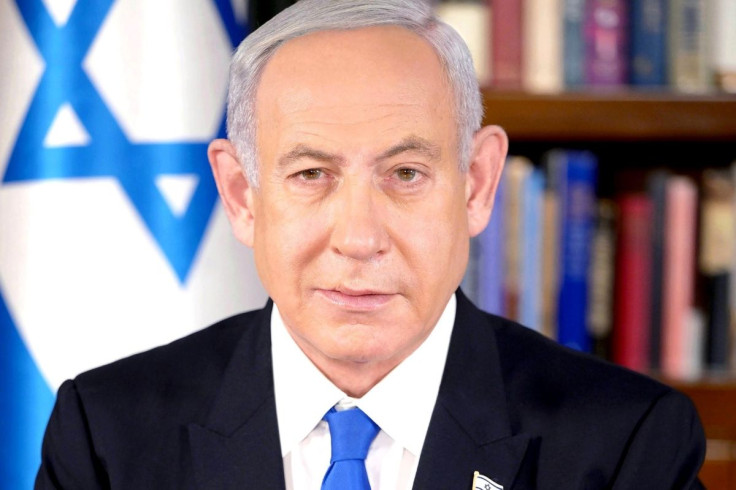
Benjamin Netanyahu received a political boost on Wednesday 25 November 2026 after three judges at the Jerusalem District Court recommended dropping one of the three cases in his corruption trial and reconsidering another.
Their intervention could strengthen his position in negotiations over Israel's next government, although neither case has formally been dropped. Israel's attorney-general announced the decision to indict Netanyahu on charges of bribery, fraud and breach of trust on 21 November 2019.
The indictment was formally filed on 28 January 2020. Netanyahu denies all charges and has pleaded not guilty. On 10 December 2024, he became the first sitting Israeli prime minister to testify in his own corruption trial.
Netanyahu Corruption Trial Faces Judicial Scrutiny
The three judges summoned Israeli Attorney-General Gali Baharav-Miara on Wednesday and recommended dropping Case 4000 and reconsidering Case 2000. They questioned whether the charges against Netanyahu in Case 4000 could be proved, stressing that their assessment did not constitute a verdict.
Case 4000, the most serious of the three, concerns allegations that Netanyahu granted regulatory favours benefiting telecommunications company Bezeq in exchange for favourable media coverage on the Walla news website, controlled at the time by businessman Shaul Elovitch. Elovitch and his wife Iris have denied wrongdoing.
Judge Rivka Friedman-Feldman said the bribery charge presented 'considerable difficulties'.
'The chances of conviction are low, to an extent that warrants reconsidering the matter,' Friedman-Feldman stated, as reported by The Times of Israel.
The judges also questioned whether the alleged conduct in Case 2000 constituted a criminal offence. That case concerns alleged discussions in 2014 between Netanyahu and Arnon Mozes, publisher of Yediot Aharonot, over potentially favourable coverage in exchange for legislation that could weaken rival newspaper Israel Hayom.
The Netanyahu Corruption Trial and Case 1000
The judges did not express comparable doubts about Case 1000 and encouraged a speedier resolution. The principal evidence in that case has already been presented.
Prosecutors allege Netanyahu received expensive cigars and champagne from billionaire Arnon Milchan between 2011 and 2016, alongside additional gifts from Australian billionaire James Packer. They allege Netanyahu sought to assist Milchan with visa and tax-related matters in return.
Addressing the prospects of bringing the proceedings to a close, Friedman-Feldman stated, as reported by The Times of Israel, 'It seems to us that it is possible to get to a conclusion. We are open to all possibilities; we need to find the procedural way to get there.'
Netanyahu Corruption Trial Complicates Coalition Negotiations
Netanyahu's political opponents have cited his trial as a reason not to work with him. The judges' doubts could weaken that argument. The judicial recommendations arrive while his rival Gadi Eisenkot is attempting to form a government following the 27 October election.
In a televised address, Netanyahu portrayed the proceedings as a campaign against himself and his family.
'Ten years of terrible suffering for me, my wife and my sons,' Netanyahu stated. 'Of delusional interrogations. Of character assassination. Of grave incitement that wounds the soul. Who will give us back those 10 years?'
Eisenkot's Change Bloc secured 48 seats in the 120-seat Knesset, leaving it short of the 61 required for a governing majority. With obstacles to securing support from Arab or ultra-Orthodox parties, Eisenkot has continued negotiations with Netanyahu's Likud over a possible unity government.
Eisenkot has until 6 December to form a government and could receive an extension of up to 14 days from President Isaac Herzog. If he fails to form a government, the mandate could pass to another member of the Knesset. Fresh elections could follow if subsequent attempts to form a government fail.
© Copyright IBTimes 2026. All rights reserved.