

'Clinical' Signs Show Midterm Losses Triggered Decline in Donald Trump, Neuroscientist Suggests
Trump's post-midterm behaviour draws scrutiny from a neuroscientist, but his medical claims remain unverified by clinical evidence
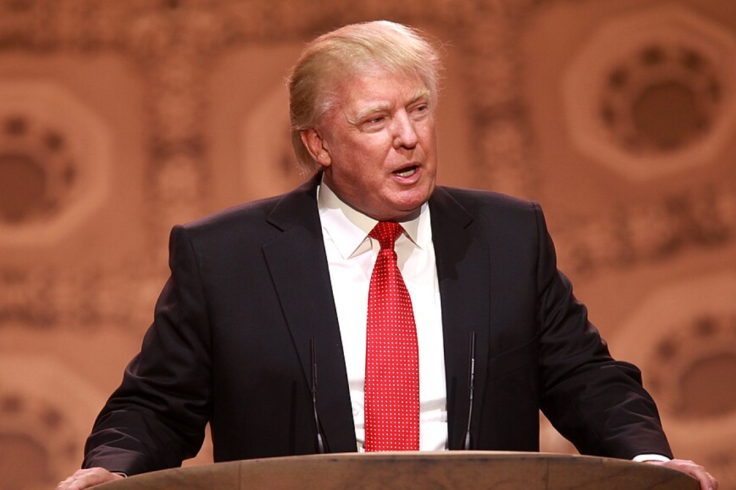
US President Donald Trump's post-midterm behaviour has drawn scrutiny from neuroscientist Frank George, whose latest observation was reported on Wednesday, 25 November.
George questioned the president's conduct following Republican electoral defeats, offering psychological interpretations that remain unsupported by clinical evidence.
Writing in his newsletter,The Gaslight Report, George examined Trump's public appearances, exchanges with journalists and willingness to negotiate with Democrats. However, his observations do not constitute a medical diagnosis.
Donald Trump's Post-Midterm Behaviour Faces Renewed Scrutiny
Donald Trump's post-midterm behaviour draws scrutiny from a neuroscientist, but his medical claims remain unverified by clinical evidence
AlterNet reported the observation by George, who identifies himself as a neuroscientist with a doctorate in psychology, and has previously published critical commentary about Trump's behaviour.
Among the appearances George examined was Trump's address at the Lincoln Memorial Reflecting Pool in Washington, DC, on 2 November, the day before the elections.
During the speech, documented in an official White House recording, Trump discussed construction projects, including his planned White House ballroom and helipad, alongside his election message.
George offered psychological interpretations of the president's emphasis on construction projects and his exchanges with journalists. However, the reporting provides no clinical evidence supporting his interpretations of Trump's motivations or behaviour.
The president's willingness to negotiate with Democrats also featured in George's commentary. Trump addressed the prospect of bipartisan cooperation during a White House press conference on 20 November.
'I'm open to great healthcare,' Trump said, according to the White House. He acknowledged the possibility of reaching agreements with Democrats while emphasising his presidential veto powers.
Public opinion offers important political context for those remarks. A Pew Research Center survey published on 19 November found that 53% of Republicans wanted Trump to attempt to work with Democratic leaders.
Conversely, 72% of Democrats wanted their congressional leaders to stand up to Trump. The findings highlight contrasting expectations surrounding bipartisan cooperation following the elections.
Donald Trump's Health and What Official Medical Records Reveal
George also described what he perceived as changes in Trump's public demeanour following the midterms, raising the possibility of frontotemporal dementia. However, the report provides no clinical evidence establishing that Trump has the condition.
According to the NHS, frontotemporal dementia is an uncommon form of dementia that can affect behaviour, personality and language.
Diagnosing the condition requires a medical evaluation. Investigations may include cognitive assessments, blood tests and brain scans to help identify or exclude potential causes.
Trump's publicly released medical findings provide relevant context. A presidential physician's memorandum dated 29 May 2026 reported the results of Trump's annual medical examination at Walter Reed National Military Medical Center.
The memorandum reported normal neurological findings and a score of 30 out of 30 on the Montreal Cognitive Assessment, a screening tool used to evaluate cognitive function.
Those findings relate to an examination conducted on 26 May, several months before the midterm elections. They should not be interpreted as a fresh medical assessment of the president's current condition.
While presidential health is a matter of public interest, political setbacks, public appearances and changes in negotiating strategies cannot substitute for appropriate medical evaluation.
The reporting reviewed contains no direct White House response to George's latest commentary. IBTimes UK cannot independently substantiate his medical claims, which remain interpretations of public behaviour rather than established clinical findings.
© Copyright IBTimes 2026. All rights reserved.