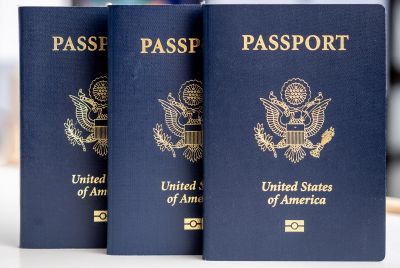
New EU Entry-exit System Creates 'Nightmare' Lines with Flights Being missed Up and Down Europe.
One country has already dropped EES for Britons

The new EES system has plunged European airports into chaos with long lines being reported and some countries delaying the introduction of EES until months later.
What is this New Entry-exit System
The first time they use the new system, people from most non-EU countries will have to register biometric information while having their passport scanned.
Flight passengers will register at their destination airport and at these places, most passengers will have to follow the instructions at special kiosks.
The machines will scan each passport, then take fingerprints and a photo. Children under 12 won't have to provide fingerprints. Staff should be on hand to help.
'The screen will also present travellers with four questions about their trip, such as confirming where they will be staying and that they have enough money,' according to the BBC.
'It Was Ridiculous'
Some travelers responded to a survey by The Guardian where some of them described their experiences with EES.
'Travellers described problems with fingerprints not being accepted and additional delays when travelling with children. Many said there was little guidance on using the kiosks. Some also said they had to repeat the registration process on each leg of their journey, despite having already completed it, with no explanations from staff – or no staff available to ask.'
'Dylan Thomas, 23, an HR associate from Lincolnshire, experienced delays using the system on two recent trips. He said there had been a two-hour wait on arrival in Madeira on 15 March and on his return journey from a solo trip to Brussels on the Eurostar on 6 April.'
'It was ridiculous,' he said. 'There must have been about 20 machines, but they all had plastic wrapping on them and couldn't be used ... There was only one person manually checking everyone.'
Paul Coleman, a retired volunteer from Southend-on-Sea, said staff at Kraków airport in early February had resorted to using their own mobile phones. He and his wife, Nicolette, faced a three-hour wait at passport control.
'The cameras on the machines weren't working, so they got their mobile phones out and took pictures of us. It was just crazy,' he says. 'There was no explanation of what the hold-up was, no apology.'
What is Next for EES and ETIAS's Introduction?
Clearly EES has run into some major problems and Greece has already dropped the checks for Britons ahead of the busy summer travel season.
Eleni Skarveli, director of the Greek National Tourist Office for the UK and Ireland, says that the move is expected to 'significantly reduce waiting times and ease congestion at airports.' She adds: 'UK travellers will not need to undergo additional biometric procedures for EES and they will have a smoother arrival experience in Greece. We remain committed to ensuring a seamless and welcoming journey for all visitors from the UK,' according to The Times.
Still to come is the new European Travel Information and Authorisation System (ETIAS).
'An entry requirement for visa-exempt nationals traveling to any of these 30 European countries. It is linked to a traveller's passport. It is valid for up to three years or until the passport expires, whichever comes first. If you get a new passport, you need to get a new ETIAS travel authorisation.'
'With a valid ETIAS travel authorisation, you can enter the territory of these European countries as often as you want for short-term stays - normally for up to 90 days in any 180-day period. However, it does not guarantee entry,' according to the ETIAS website
ETIAS is not scheduled to come into effect until the final quarter of 2026 and the EU will notify people months in advance of the launch.
© Copyright IBTimes 2026. All rights reserved.
- Recommended For You